Due Apr 3
Baroque Art: Embracing Passion
Reading: Strickland 46-57.
Viewing:
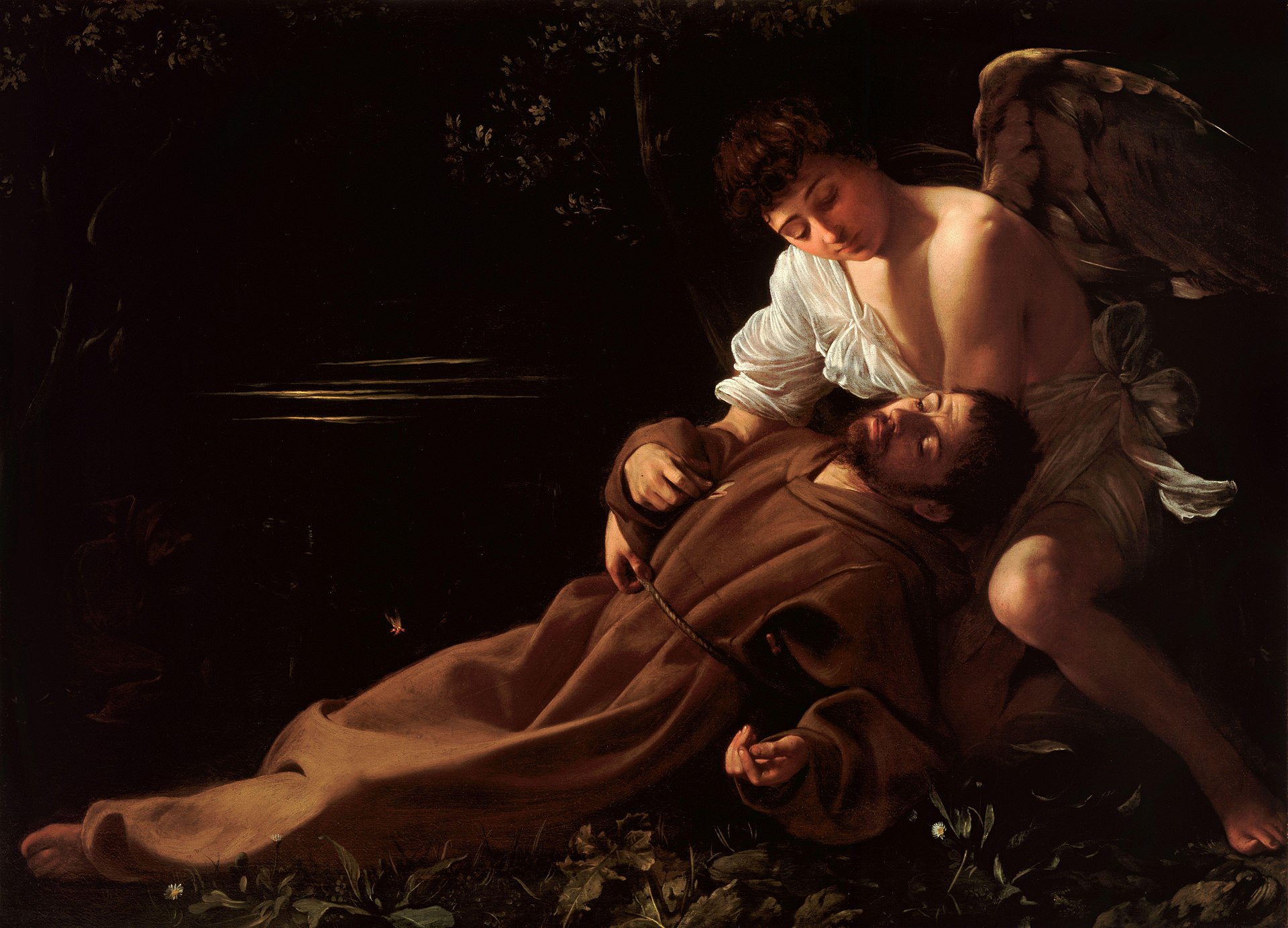
- Caravaggio, Saint Francis of Assisi in Ecstasy (Rome, 1595)
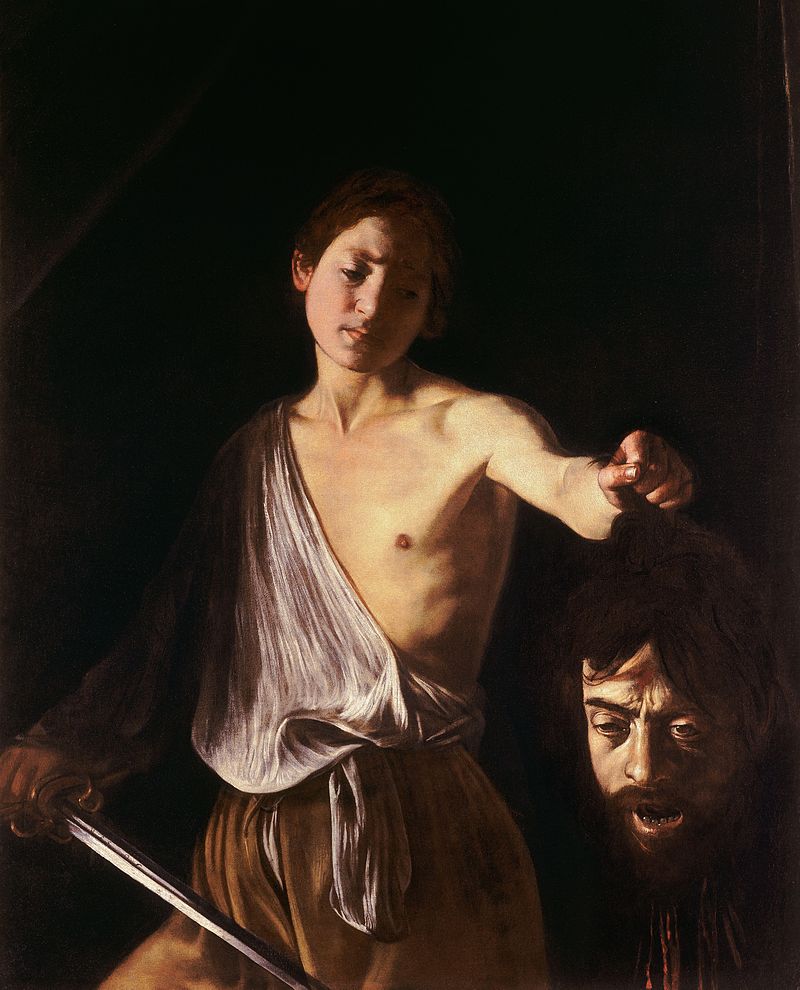
- Caravaggio, David with the Head of Goliath (Rome, 1610)
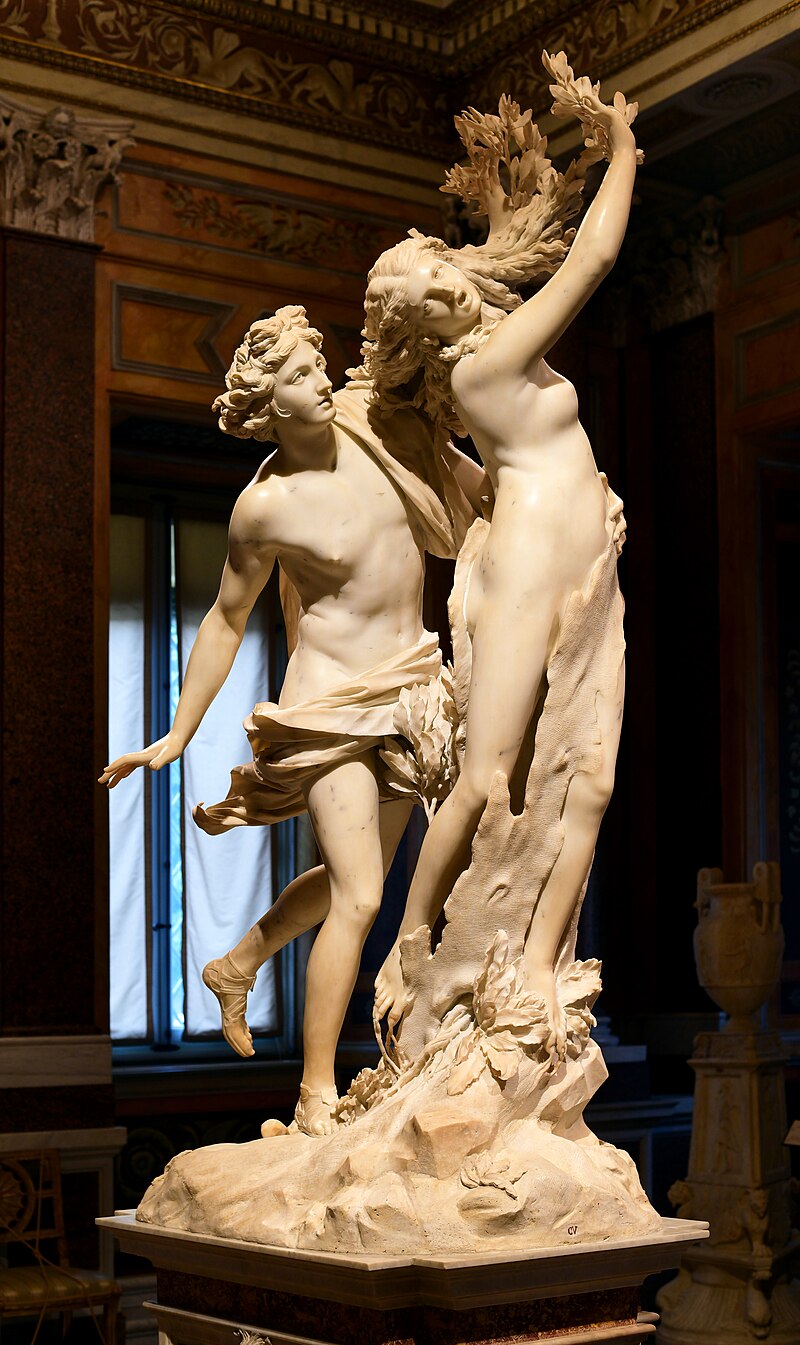
- Bernini, Apollo and Daphne (Rome, 1625)
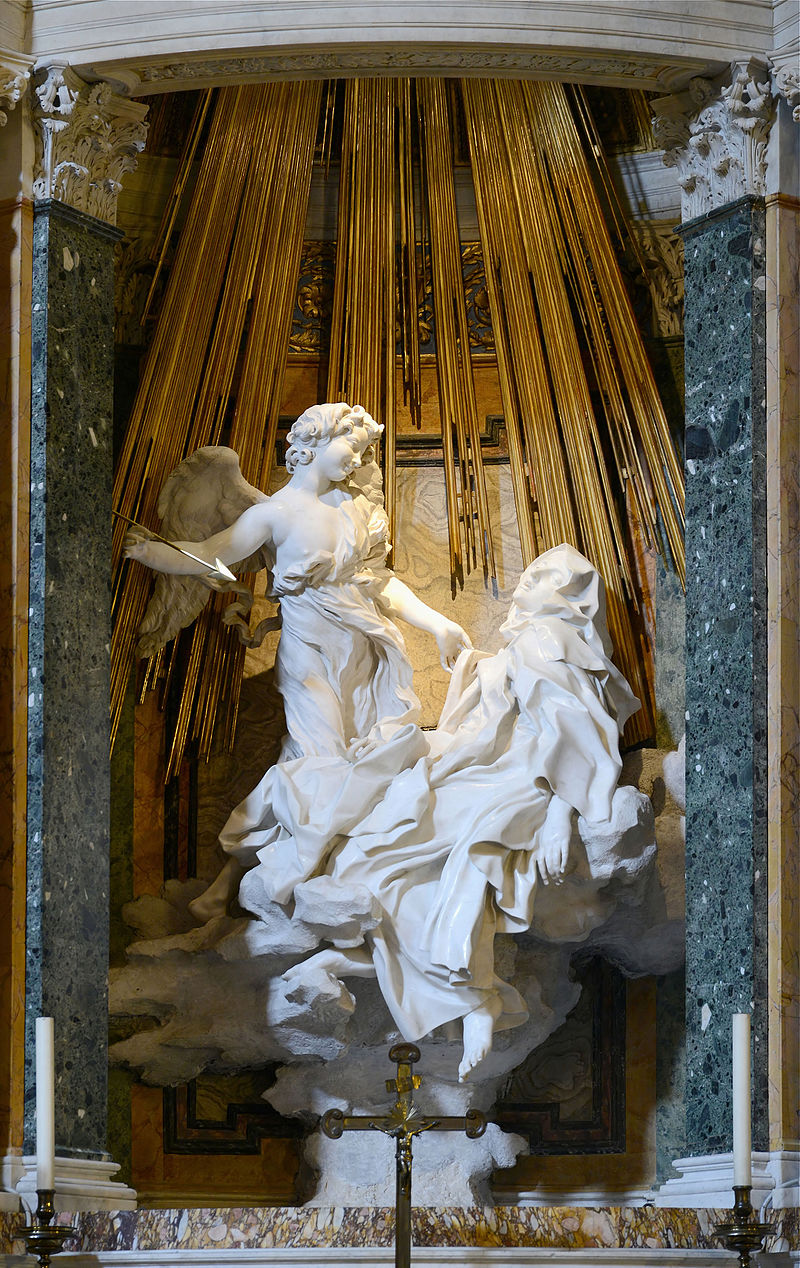
- Bernini, The Ecstasy of Saint Teresa (Rome, 1652)
Writing: Respond to ONE of the following prompts:
- Focus our attention on a compelling detail from one of the artworks above, and comment on what makes it appealing.
- Based on your reading in Strickland or elsewhere, post the image of a Baroque artwork and (briefly) make the case for why it should be included on today’s assignment.
Compelling Details
⤹Click the reply button just below.
I find the art piece, “David with the Head of Goliath” to be very compelling due to the lighting and the facial expressions. The painting has a very dark background, but the lighting illuminates David’s body and Goliath’s head. This lighting makes the painting feel much more intimate. The illuminated people in the dark room makes it feel like there is nothing else there except for the two of them. David’s facial expression is also very interesting because holding a sword and Goliath’s head like one would do after a triumphant killing. However, David’s face appears very somber. It makes me think that he either didn’t want to kill Goliath and was forced to or he just regretted his actions afterwards.
I agree with the idea that the background lighting certainly contributes to an intimate and eerie theme. The artwork for some reason doesn’t look happy even though David’s triumph should be a moment of celebration, it instead seems more melancholy. I wanted to point out Goliath’s facial expression because even though he is dead, he has a wide stare and his mouth is open. It seems like he is shocked that he lost, this only furthers the belief that there is something that occurred that doesn’t add up. Why are all aspects of this artwork pointing at something somber, when it should be a moment of celebration?
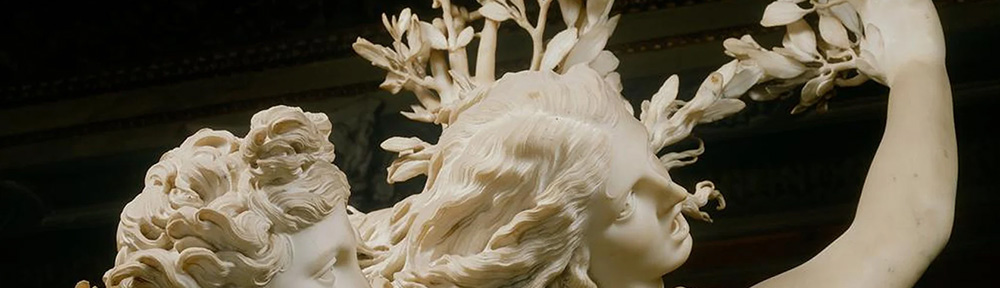
I love Bernini’s Apollo and Daphne. The pose is just super beautiful to look at, especially from the angle the photo is taken from. Daphne’s hands are lifted up, sprouting leaves that merge with her hair. Her body, starting at her legs, I believe, is turning into a trunk. This is the scene from Metamorphoses, when Apollo turns Daphne into a tree. I love the look of Daphne’s hands, the pose of her body, the leaves, and her hair. I can’t quite put my finger on why I like it so much, maybe the pose creates a scene that rises. That way, your eyes kind of easily follow the scene up from the bottom. Also, maybe it’s because as she reaches up, and she is higher than Apollo, it makes her seem more divine. The sculpture almost certainly calls your eyes to look at Daphne alone. And Daphne looks very pretty in it.
I agree with you, I think this piece is very beautiful. The details of the leaves, her hands, and her hair are very intricate and beautiful to look at, but I think the most compelling detail of the piece is her and Apollo’s facial expression. In his expression, you can see the admiration and absolute love he has for her in his eyes. Although it is an expression of love, it looks lustful and unnerving, showing how obsessed he is with her. Daphne’s face looks almost haunted. She exclaims in fear, and in her tragic expression, you can see how she wants to be free from the chase. I also agree with you that her pose makes her look divine as well. Her body is positioned towards the heavens, doing as much as she can to get away from Apollo while also succumbing to her fate of turning into the Laurel.
I concur with your interpretation of Apollo and Daphne. However, I find it interesting how Apollo was depicted. It’s as if catching Daphne was no trouble and he can afford to gaze upon her beauty. Although I wouldn’t say it’s lustful, I’m not sure what emotion it displays. However, I recall that in the Metamorphoses, Apollo follows after Daphne in an unhurried manner and when he becomes impatient he finally tries to catch her. It’s as Apollo finally lunges for her that she turns into a tree. Therefore, I’d argue Apollo should instead have a face and body displaying some fatigue. This would make his final dash towards Daphne seem less “final” or concrete. A god had to try to get to her, and yet it wasn’t enough.
On the artwork Bernini, The Ecstasy of Saint Teresa, I find it appealing that the woman has wings. This is interesting because angels have wings, and the title describes her as a saint. Connecting this to religion, it would make sense that a divine figure, such as a saint, would have holy wings.
Some compelling details that I see in Bernini’s The Ecstasy of Saint Teresa are the surrounding scenery and details on the draping of the fabric. The golden bars in the background look like sunbeams from heaven as the two subjects sit on a cloud. It brings that heavenly feeling that connects the angel and Mother Teresa. The details on the draping are very impressive, with the amount of wrinkles and folds.
I agree, I think the background is really what makes the sculpture. The golden bars to show the holiness of the whole action really paints the picture. It’s meant to be a grand spectacle, and the golden bars do just that for it. The facial expressions also serve for the picture that’s supposed to be set here. The face of Teresa is very telling of how her emotions of come, and how intense the the holiness is.
The way the angel is supporting Saint Francis of Assisi in Ecstasy is one detail that truly sticks out. The angel holds him upright while his body seems totally relaxed, as if he has lost all physical strength. This is particularly appealing because of how subtle the moment is, and it feels intimate and quiet rather than dramatic or overpowering. Caravaggio emphasizes the two figures’ physical proximity, which gives the spiritual experience a more genuine and human quality. In addition to highlighting their interaction, the soft lighting creates a serene, contemplative atmosphere that makes the scene seem both realistic and poignant.
I find the “David with the Head of Goliath” to be very striking. The way the lighting is done it draws you to David first kinda moving your eyes to his. Following his gaze is when the head of Goliath really pops out giving it an almost shocking effect. It feels like the piece is ment to draw your eyes to the violence of man in a way by making David the first thing that catches your eye. The artist wants you to know it is David that did this with intention. The fact the background is a simple black also helps emphasize this. There is no one else there but him. The whole piece together creates a chilling feeling as your eyes move from this example of almost a perfect figure to the severed head whose facial expression is not one of pain but rather more sorrow or acceptance.
Baroque artworks to add
⤹Click the reply button just below.
Attachment
From the reading, I think Rubens’s “The Descent from the Cross” should be added because he was a widely known and successful Baroque painter who passionately embraced religious themes and female figures, and used particular brush strokes to animate his paintings. He produced a vast amount of paintings which in themselves were individually comparable to those of Picasso, and he dedicated every hour of his life to art. His use of lighting drew attention to central themes of his work, while his impressive brushstroke techniques painted the skin of his muses to perfection, which many other artists of the time marveled at. His background of extensive travel, charm, and higher education gave him a broader perspective beyond what the public could grasp, which he used to motivate his lifelong production of one-of-a-kind paintings.
Attachment
I think that Rembrandt’s The Storm on the Sea of Galilee should be included in the paintings listed above. The Baroque era in Rome began with the Catholic church. According to Strickland, the Pope financed amazing biblical art to draw worshippers back to Catholicism in the 1600s. This painting shows a biblical scene and plays with motion and the contrast of light, all of which are hallmarks of Baroque style.
It was also displayed in the Isabella Stuart Gardener until it was STOLEN in the 1990s! This is an interesting factoid that’s close to home and I think it makes this painting even more suited for a Boston University class.