The Unicorn Tapestries

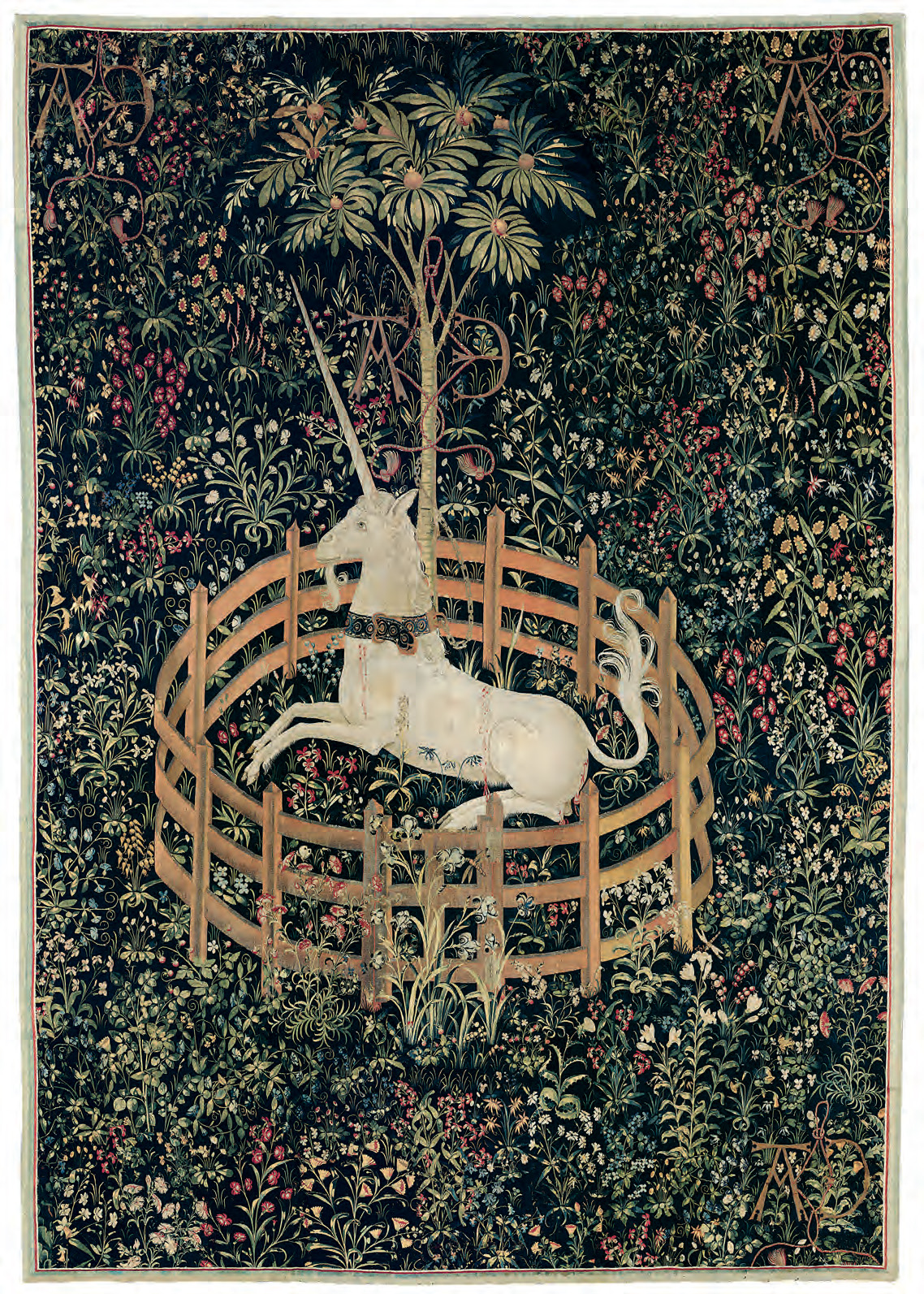
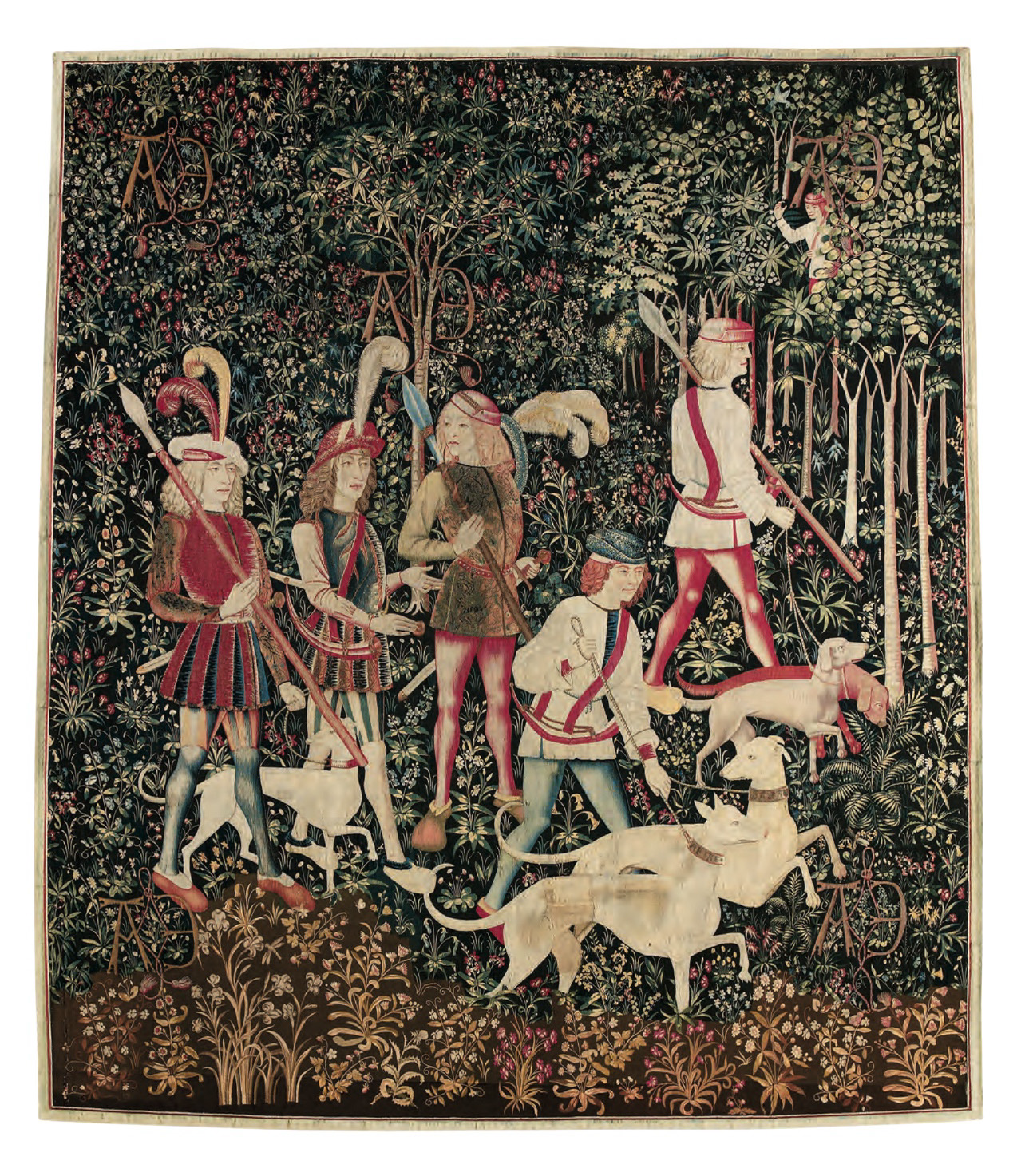
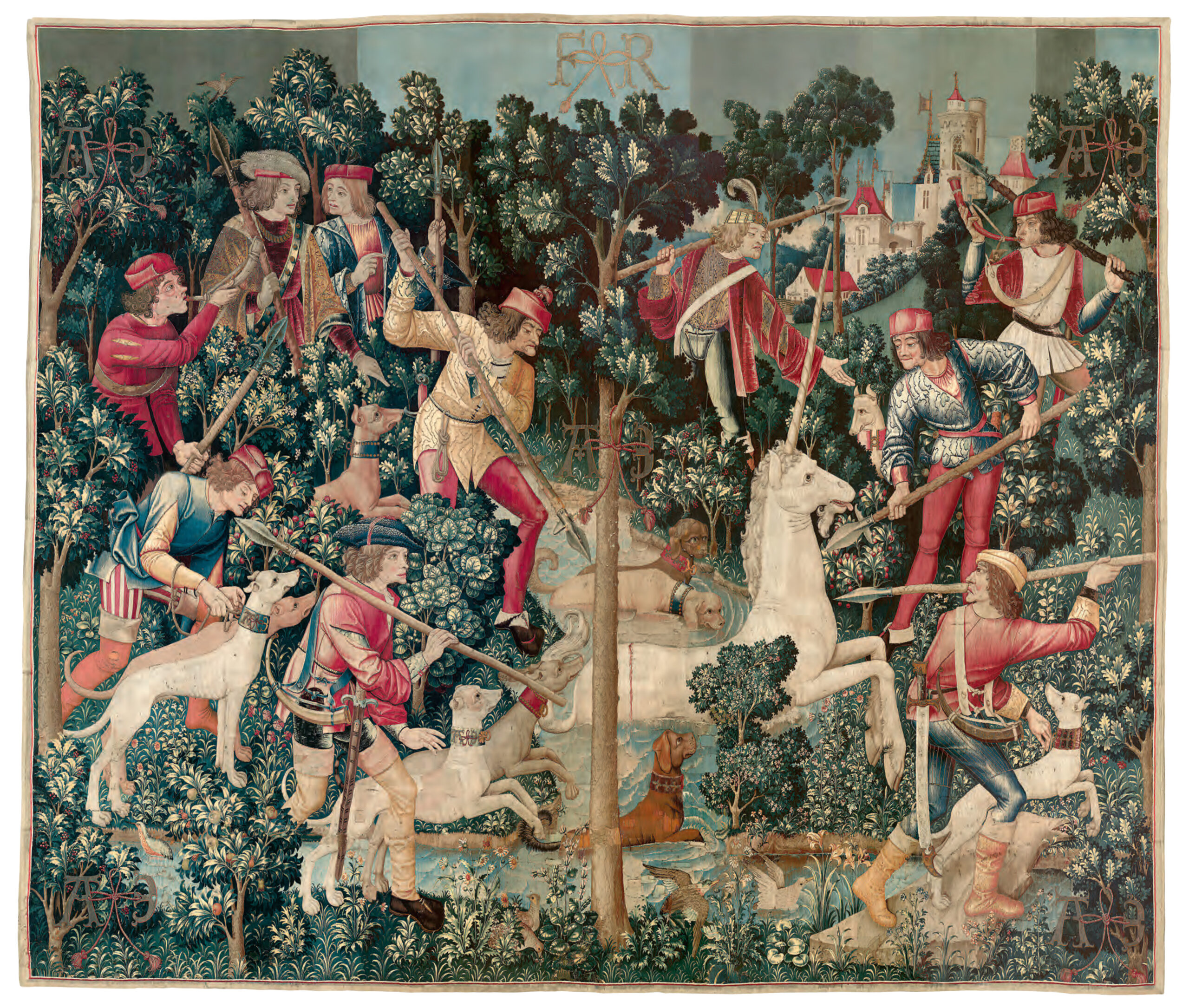
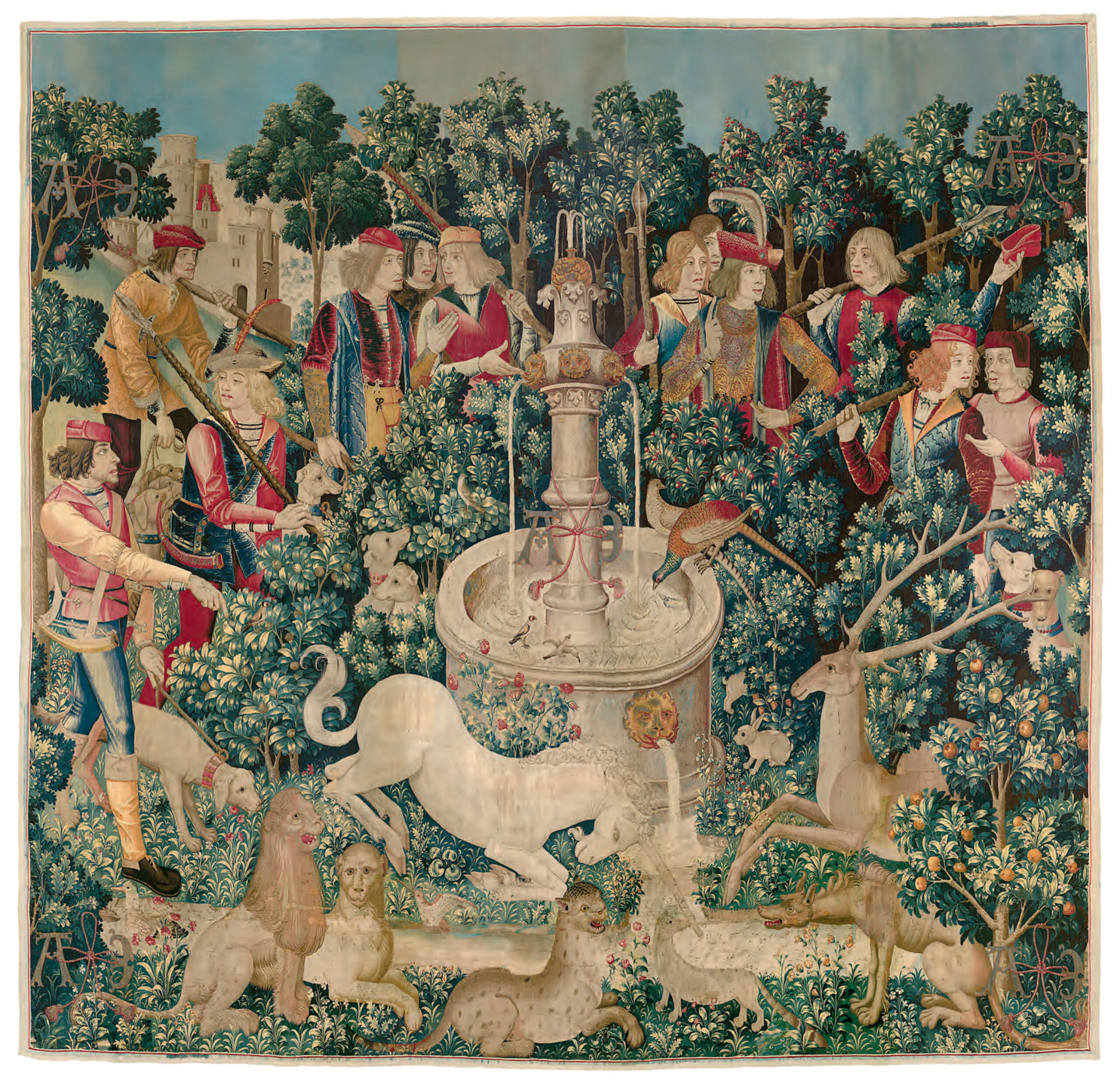
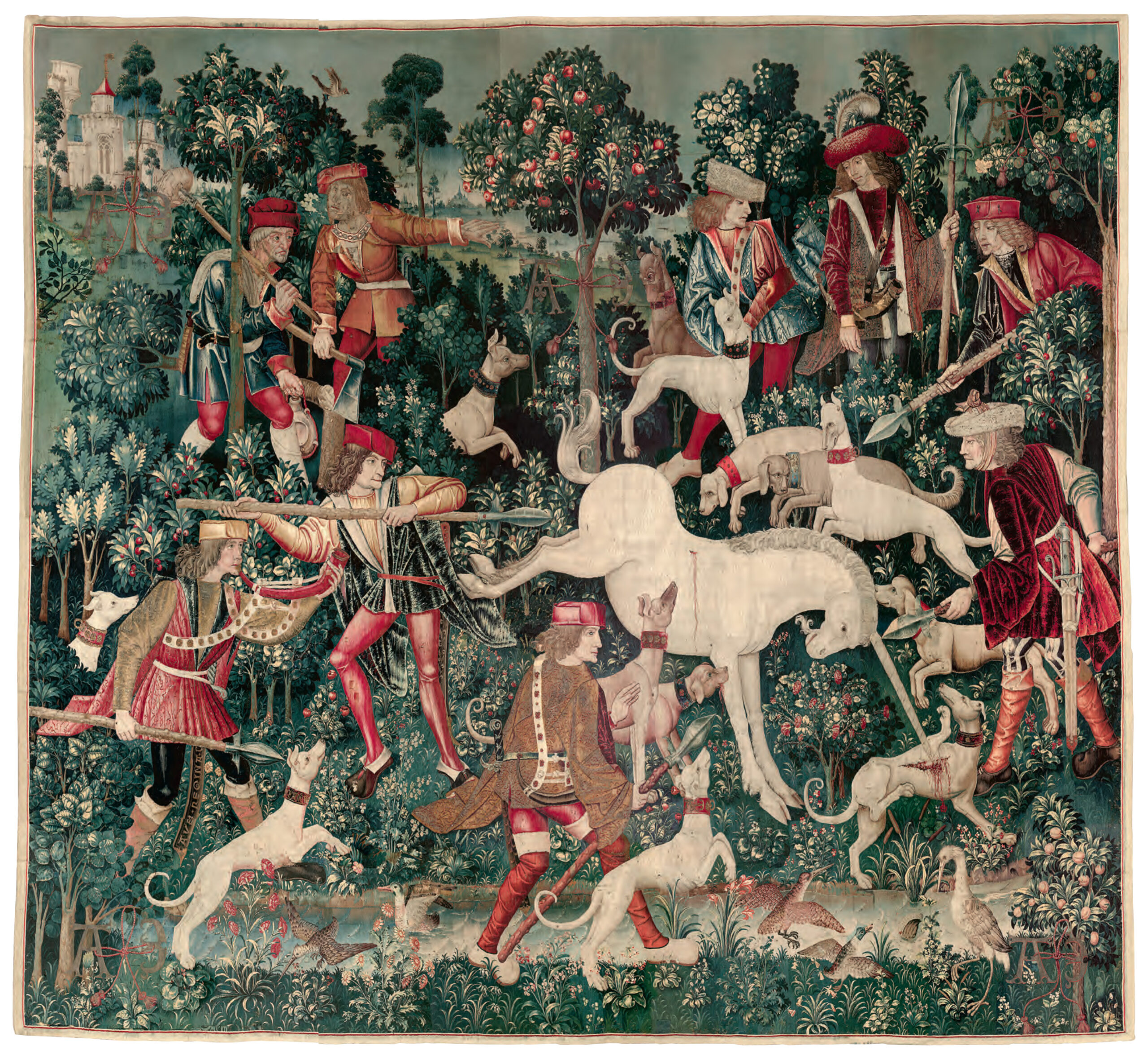
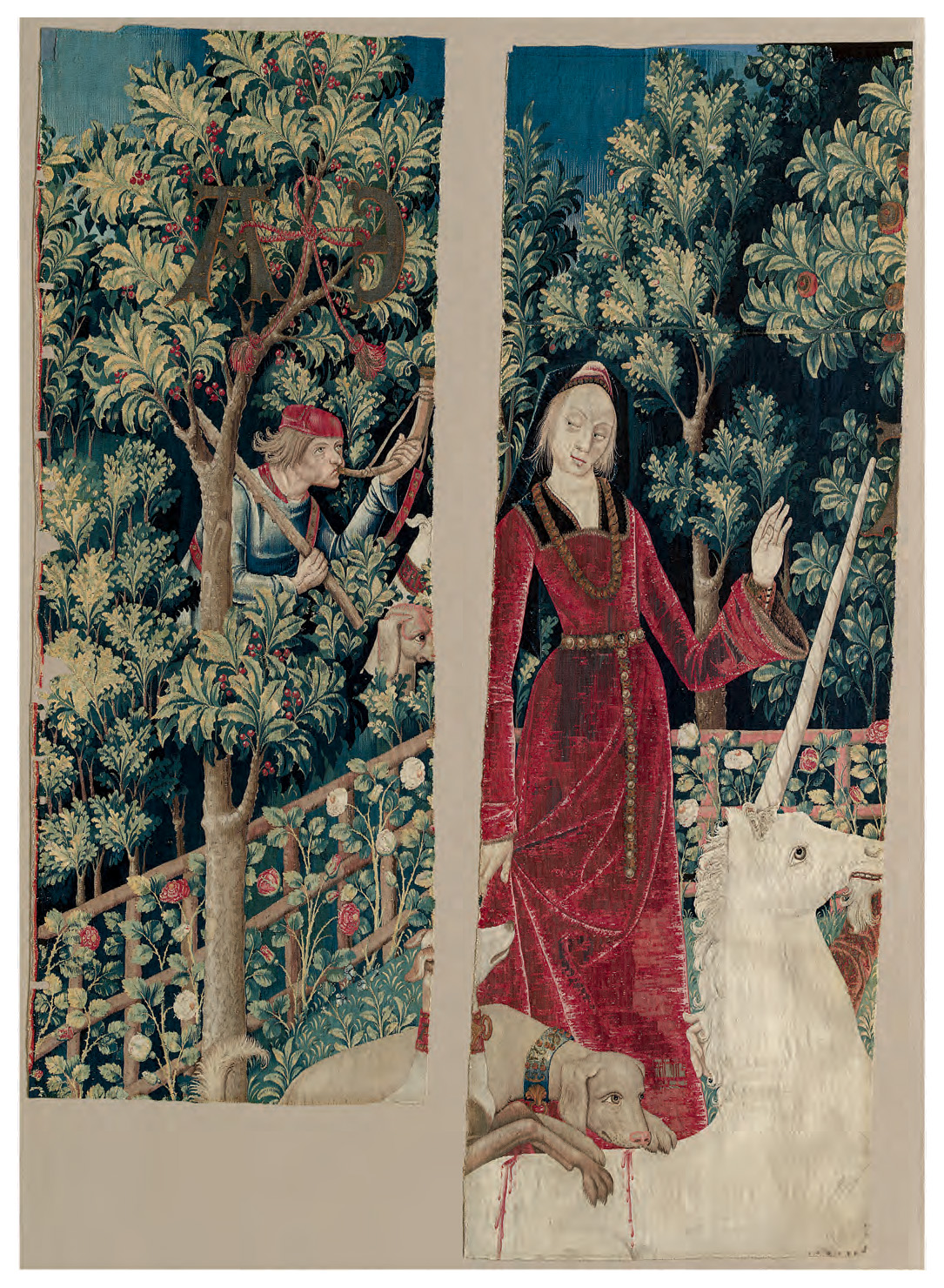
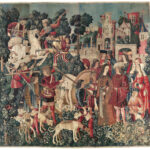
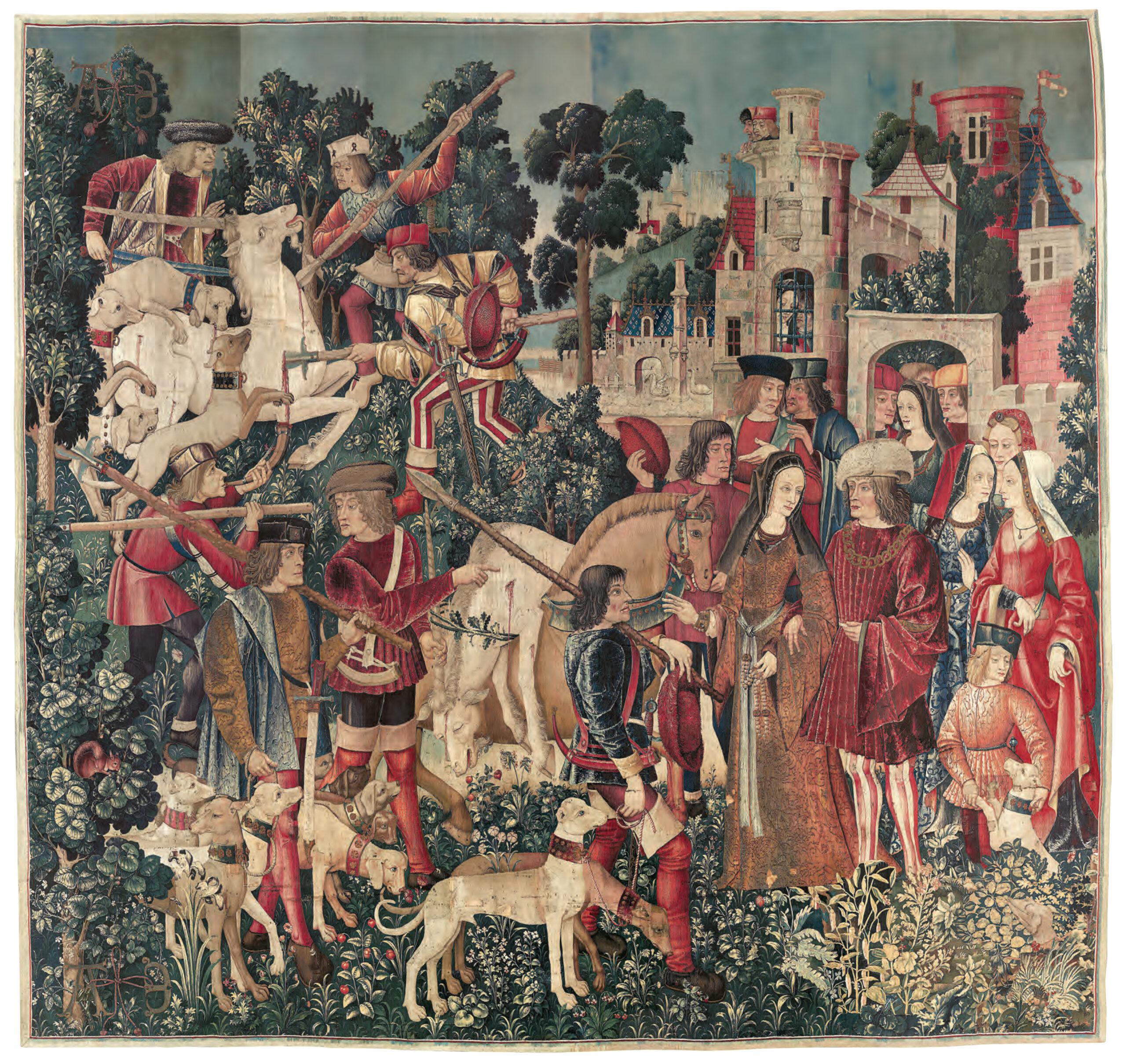
A series of tapestries produced in the Low Countries and dating to the early 1500s. Likely designed as a decorative suite, the tapestries can be strung together to tell the story of a unicorn hunt, though the first and sixth images are hard to place in the sequence. The tapestries draw on medieval lore which claimed (1) that the touch of its horn could nullify poison and (2) that the beast was fleet of foot but could be captured by a maiden’s touch. The linked images are all high quality thanks to the generosity of the Metropolitan Museum of Art in New York. If you want a fuller account of the tapestries meaning and history, feel free to consult Barbara Boehm’s short account, downloadable here—but see what you can work out for yourself first!

The titles given below are those assigned by curators at the MET.

Ozymandias

Shelley and Smith, “Ozymandias”

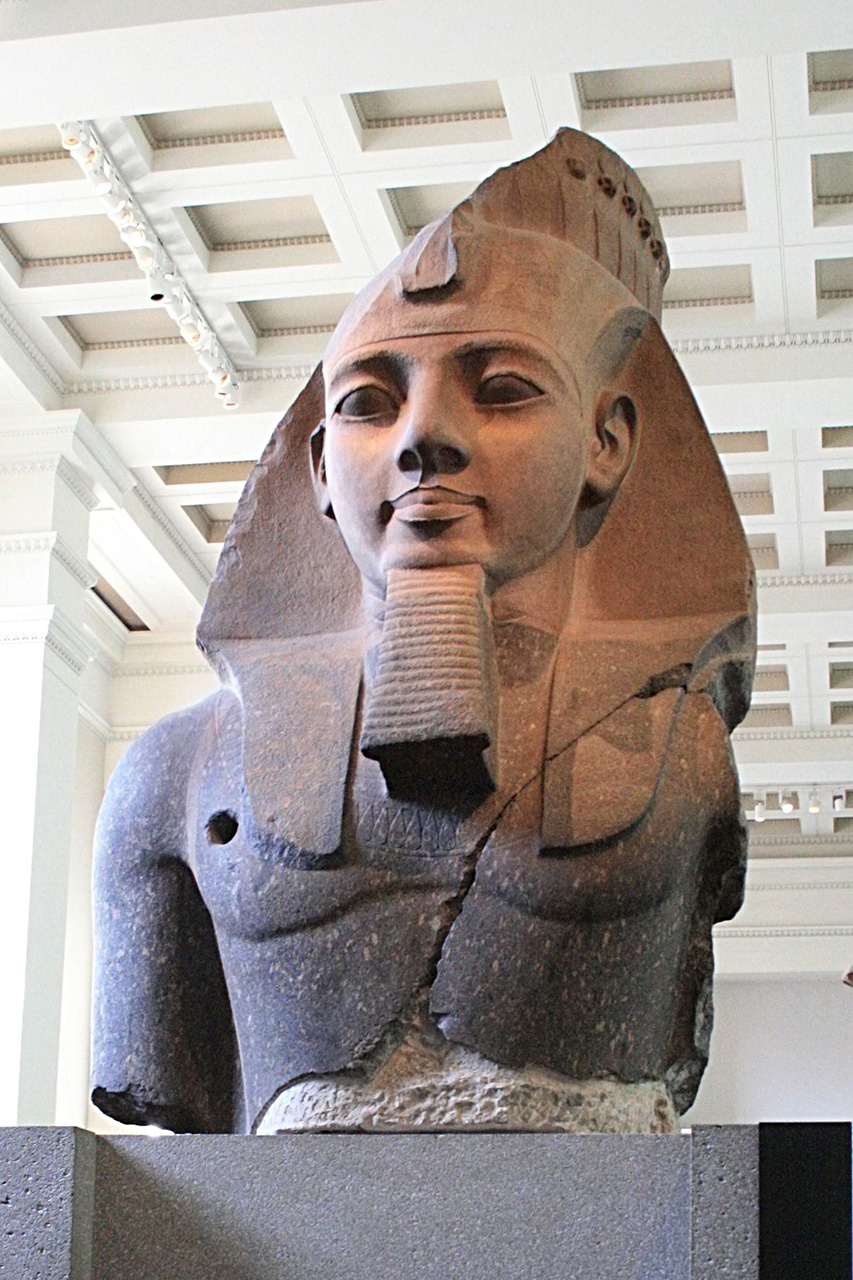
In December 1817, Horace Smith vacationed with Percy Bysshe Shelley and Mary Shelley (author of Frankenstein). During the holiday, news broke that a giant Egyptian bust of Ramesses II had been acquired for the British Museum by the Italian archaeologist Giovanni Belzoni. (Archaeology was then in its infancy: Belzoni, a former circus strong man, was less a scientist than a smash-and-grab antiques dealer; fifteen years earlier, Napoleon’s men had attempted to acquire the same sculpture for France, but it proved too bulky for extraction.) In a spirit of friendly rivalry Shelley and Smith agreed to write poems about Belzoni’s find, which at the time was just beginning the long voyage to London. Relying on written reports of the statue’s size, they drew also on the ancient Greek historian Diodorus Siculus, who described encountering a giant Egyptian statue with the inscription “King of Kings Ozymandias am I. If any want to know how great I am and where I lie, let him outdo me in my work.”

Percy Bysshe Shelley
Ozymandias

I met a traveller from an antique land
Who said: Two vast and trunkless legs of stone
Stand in the desart. Near them, on the sand,
Half sunk, a shattered visage lies, whose frown,
And wrinkled lip, and sneer of cold command,
Tell that its sculptor well those passions read
Which yet survive, stamped on these lifeless things,
The hand that mocked them and the heart that fed:
And on the pedestal these words appear:
“My name is Ozymandias, king of kings;
Look on my works, ye Mighty, and despair!”
Nothing beside remains. Round the decay
Of that colossal wreck, boundless and bare
The lone and level sands stretch far away.

Horace Smith
Ozymandias

In Egypt’s sandy silence, all alone,
Stands a gigantic Leg, which far off throws
The only shadow that the Desert knows:—
“I am great OZYMANDIAS,” saith the stone,
“The King of Kings; this mighty City shows
The wonders of my hand.”— The City’s gone,—
Naught but the Leg remaining to disclose
The site of this forgotten Babylon.
We wonder,—and some Hunter may express
Wonder like ours, when thro’ the wilderness
Where London stood, holding the Wolf in chace,
He meets some fragment huge, and stops to guess
What powerful but unrecorded race
Once dwelt in that annihilated place.

Keats

John Keats, “Ode on a Grecian Urn”

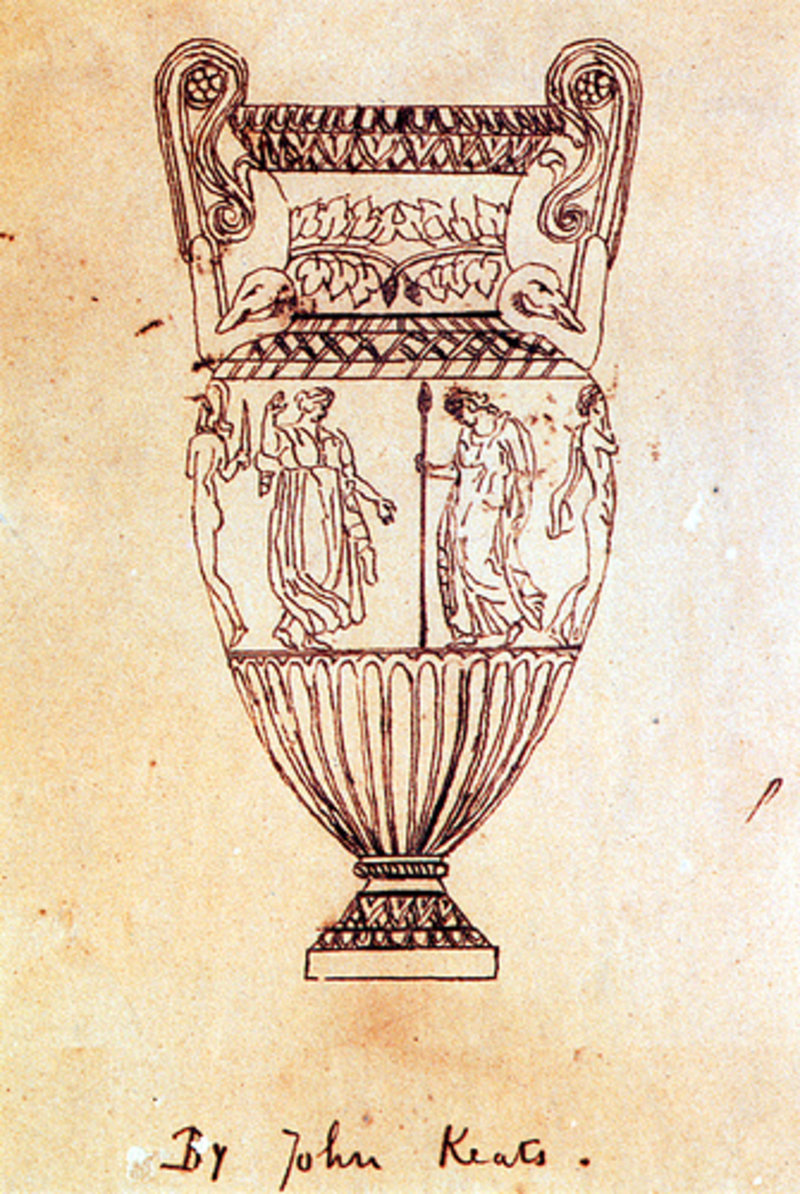
In 1819, Keats sketched the urn shown at right from a book of engravings. The original, a famous piece by the ancient Greek Sosibios, was (and is) on display at the Louvre. The same year, Keats wrote the following poem.

John Keats
Ode on a Grecian Urn

Thou still unravish’d bride of quietness,
Thou foster-child of silence and slow time,
Sylvan historian, who canst thus express
A flowery tale more sweetly than our rhyme:
What leaf-fring’d legend haunts about thy shape
Of deities or mortals, or of both,
In Tempe or the dales of Arcady?
What men or gods are these? What maidens loth?
What mad pursuit? What struggle to escape?
What pipes and timbrels? What wild ecstasy?

Heard melodies are sweet, but those unheard
Are sweeter; therefore, ye soft pipes, play on;
Not to the sensual ear, but, more endear’d,
Pipe to the spirit ditties of no tone:
Fair youth, beneath the trees, thou canst not leave
Thy song, nor ever can those trees be bare;
Bold Lover, never, never canst thou kiss,
Though winning near the goal yet, do not grieve;
She cannot fade, though thou hast not thy bliss,
For ever wilt thou love, and she be fair!

Ah, happy, happy boughs! that cannot shed
Your leaves, nor ever bid the Spring adieu;
And, happy melodist, unwearied,
For ever piping songs for ever new;
More happy love! more happy, happy love!
For ever warm and still to be enjoy’d,
For ever panting, and for ever young;
All breathing human passion far above,
That leaves a heart high-sorrowful and cloy’d,
A burning forehead, and a parching tongue.

Who are these coming to the sacrifice?
To what green altar, O mysterious priest,
Lead’st thou that heifer lowing at the skies,
And all her silken flanks with garlands drest?
What little town by river or sea shore,
Or mountain-built with peaceful citadel,
Is emptied of this folk, this pious morn?
And, little town, thy streets for evermore
Will silent be; and not a soul to tell
Why thou art desolate, can e’er return.

O Attic shape! Fair attitude! with brede
Of marble men and maidens overwrought,
With forest branches and the trodden weed;
Thou, silent form, dost tease us out of thought
As doth eternity: Cold Pastoral!
When old age shall this generation waste,
Thou shalt remain, in midst of other woe
Than ours, a friend to man, to whom thou say’st,
“Beauty is truth, truth beauty,—that is all
Ye know on earth, and all ye need to know.”

Beethoven

Beethoven’s Eroica: a Case Study

In this mini-module, we explore Beethoven’s third symphony, Eroica, as a case study in Romantic ideas about the role of genius in artistic expression and social transformation.

As background for this assignment, it helps to have a sense of the cultural cachet of Napoleon for Romantics. Romantic radicals in both England and Germany had high hopes for the French Revolution as marking a break with the sclerotic aristocratic order. And Napoleon’s seizure of power in 1799 renewed those hopes, not simply by ending the Terror, but because he embodied the Romantic ideal of the great man: someone who rose to prominence not thanks to high birth but merely on the strength of his genius and determination.

Beethoven’s worship of Napoleon is the more striking because, like many composers in this era, he was supported by the patronage of Austrian nobles—the very people most threatened by Napoleon’s rise to power. Indeed, the Eroica had its premiere at the Vienna palace of Prince Lobkowitz; a year later Napoleon briefly occupied Vienna during his successful invasion of Austria, securing significant concessions from the Hapsburgs.

Reading: Christopher Gibbs, “Notes on Beethoven’s Third Symphony.” Three elements to consider: (1) Napoleon as inspiration; (2) Beethoven’s personal angst as expressed in the Heiligenstadt Testament; (3) the initially mixed reception of the public to this symphony as “more sublime than beautiful.”

Listening: Frankfurt Radio Symphony, “Beethoven: 3. Sinfonie (»Eroica«).” Feel free to play the symphony in the background while you do other work. But keep alert for moments that feel particularly striking, perhaps where the mood shifts unexpectedly. Make note of the time, so you can reference this in the homework.

Writing: Respond to ONE of the following prompts. Keep your response short, posting as a reply under the appropriate heading in the comments section:

  1. Call our attention to a particularly striking moment from the Eroica symphony, giving a brief description of what you hear and the emotion(s) it arouses. If you’re musical, feel free to use technical terms in describing what you hear; if not, make up for your lack of vocabulary with vivid language: “short, high-pitched notes,” “deep, languid strings,” etc. Include a link to the moment from the symphony by clicking YouTube’s “clip” feature and pasting the resulting link into your comment (don’t paste the embed code; just the link!).
  2. Draw a connection between what you hear in the Eroica symphony and what you learned from Christopher Gibbs. In your comment, point to a particular section of the symphony, describing in general terms what you hear—a “relentless beat,” “energetic horns,” etc. Explain how what you hear relates to some particular element of Gibbs’ commentary. As above, use YouTube’s clip feature to creat a link to the moment in the symphony you’re talking about.

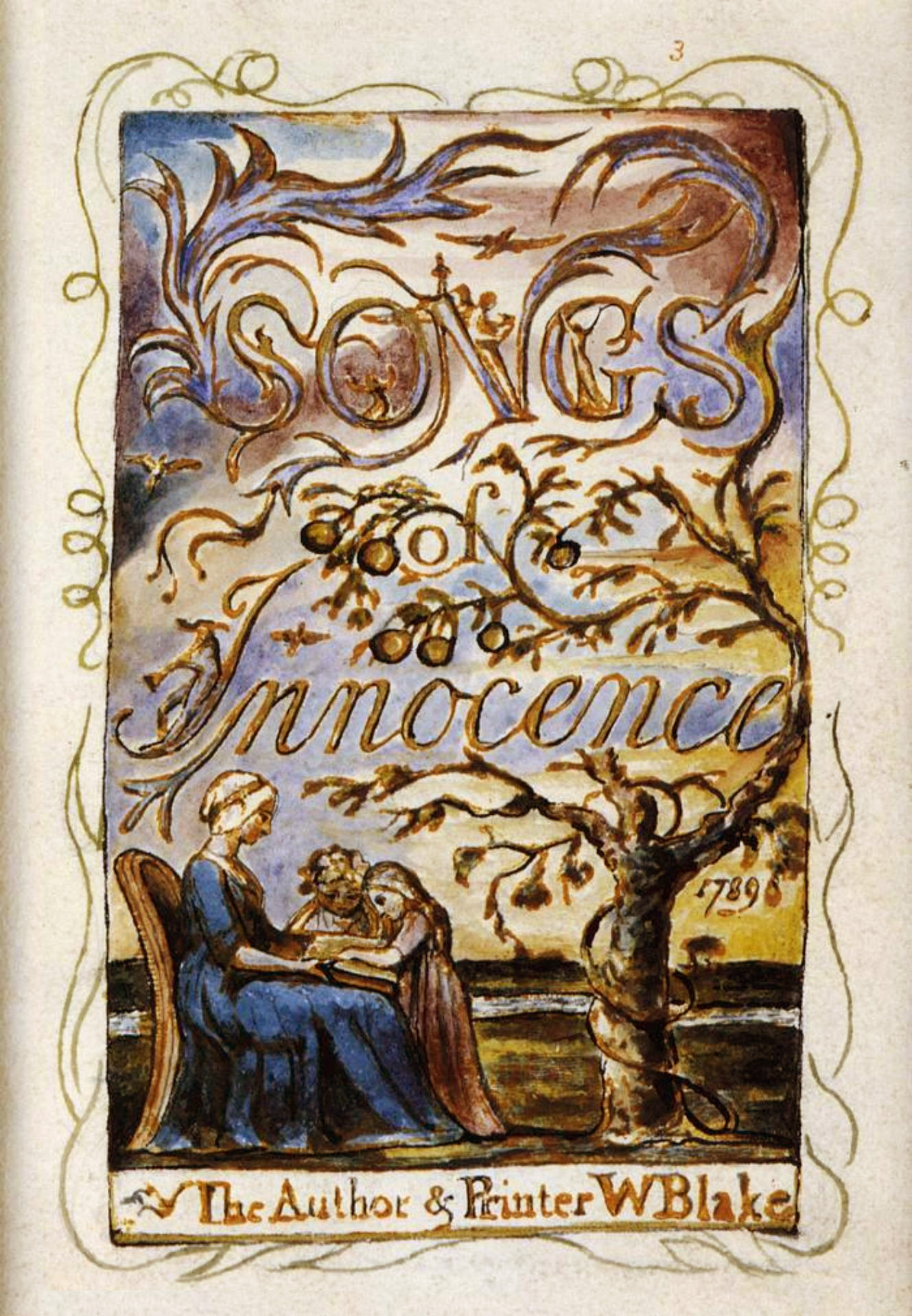
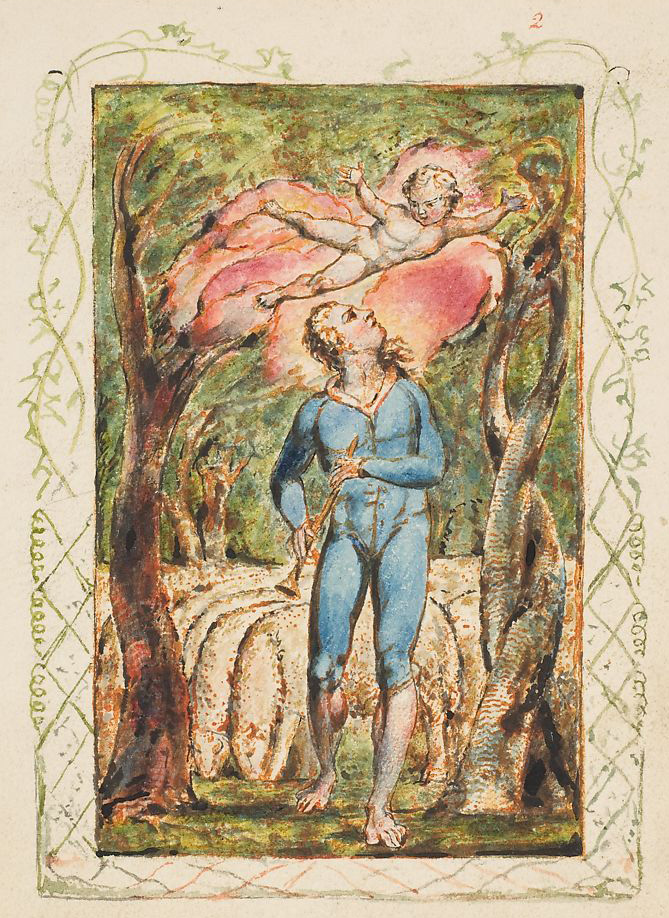
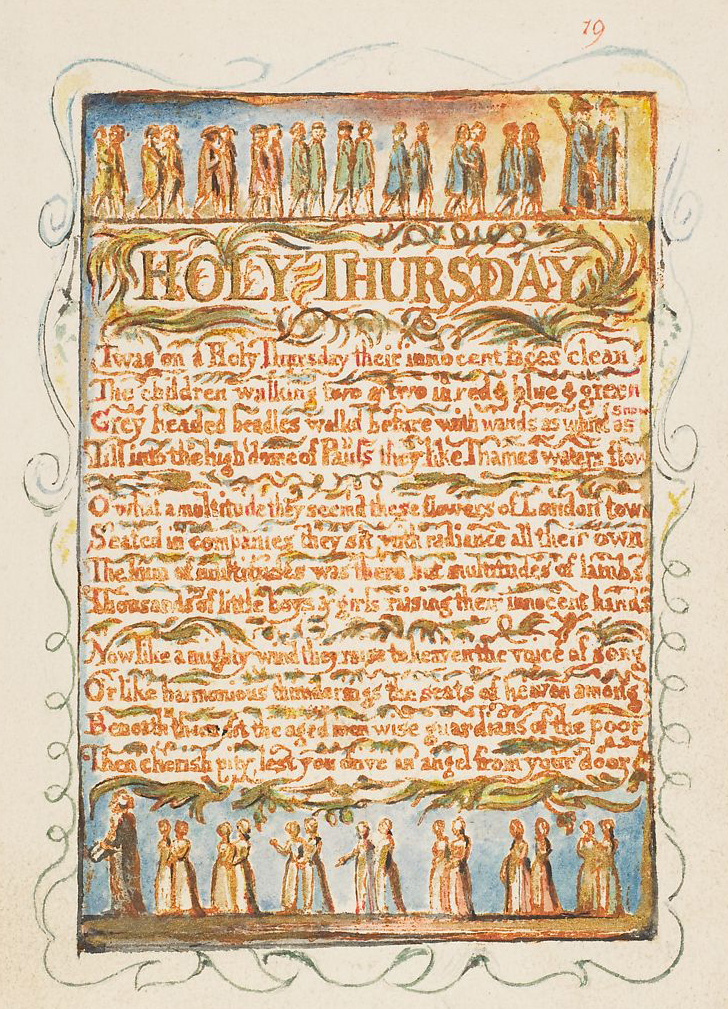
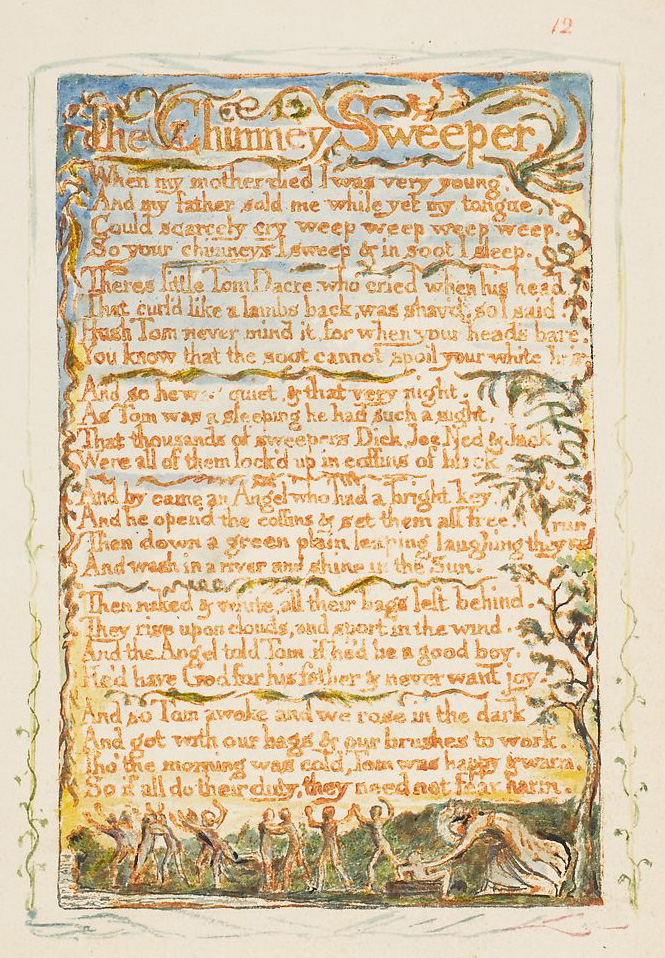
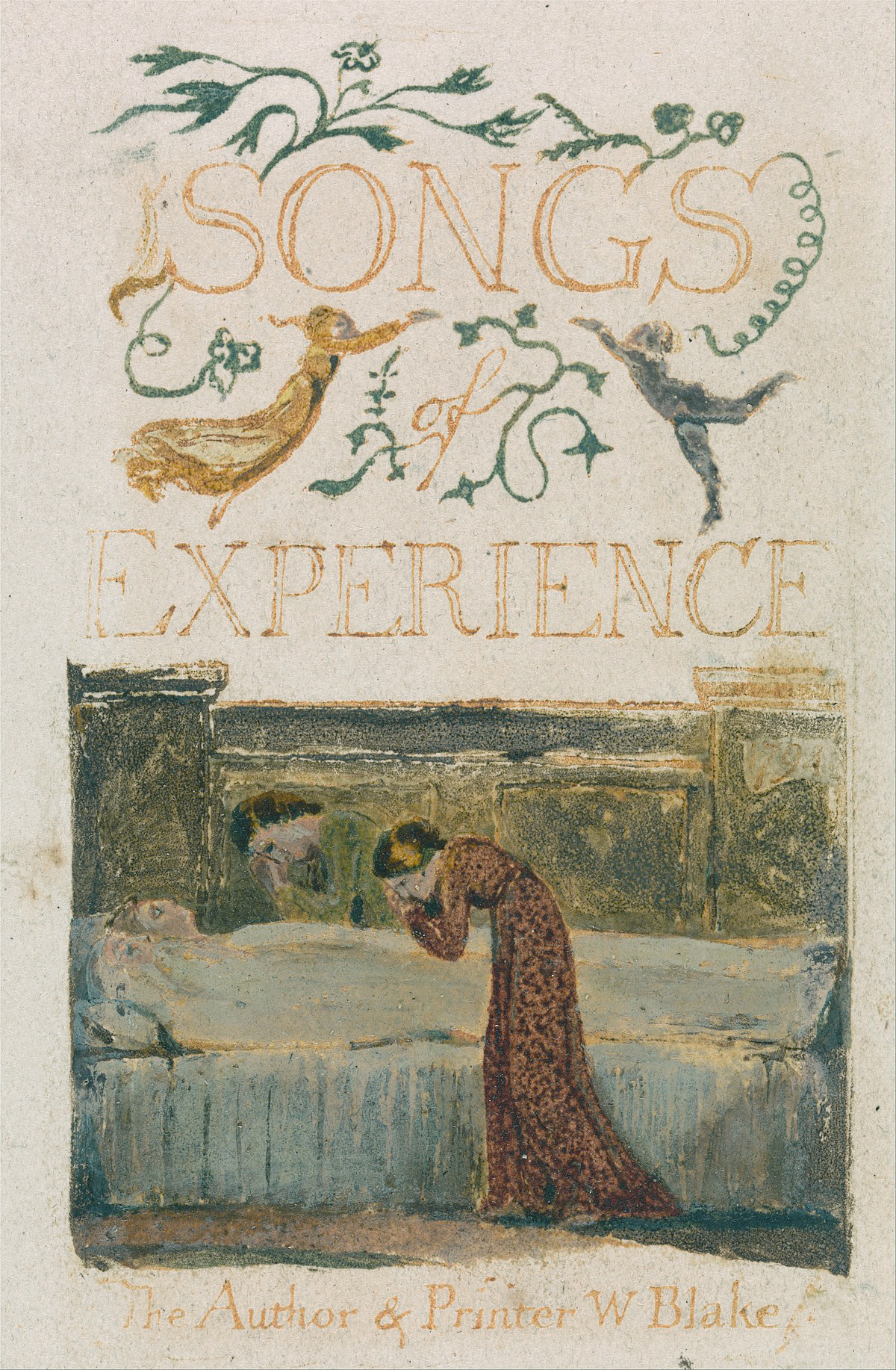
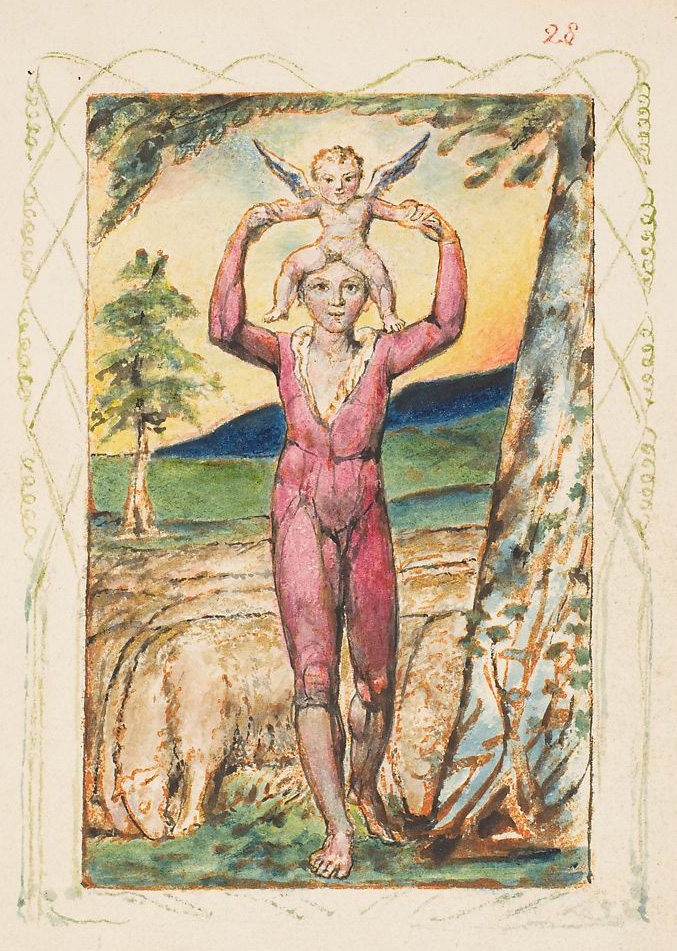
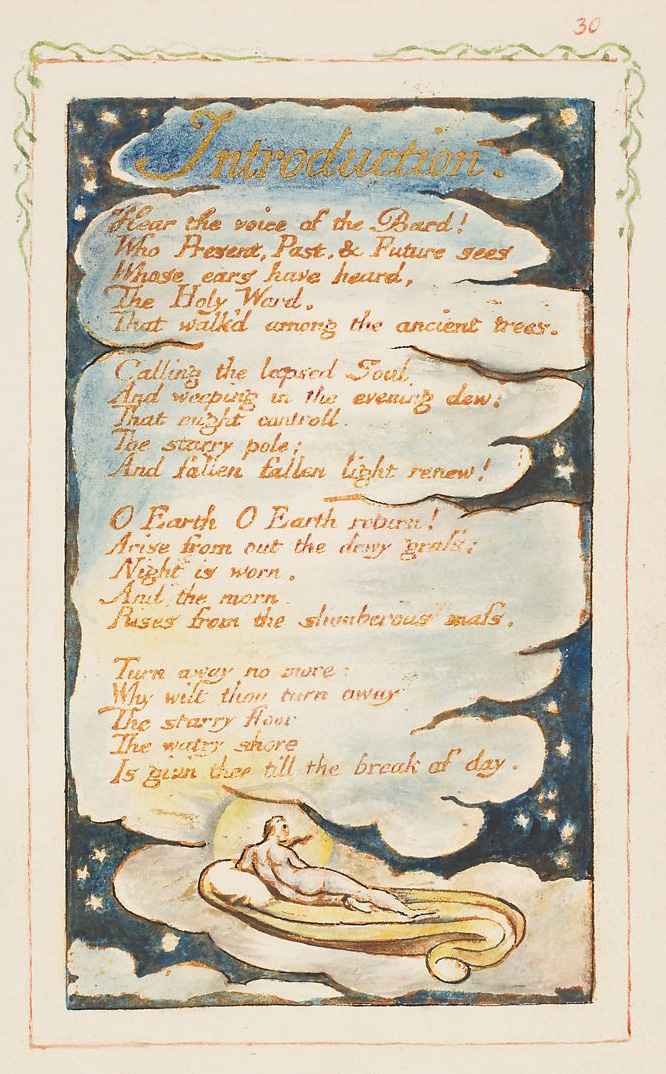
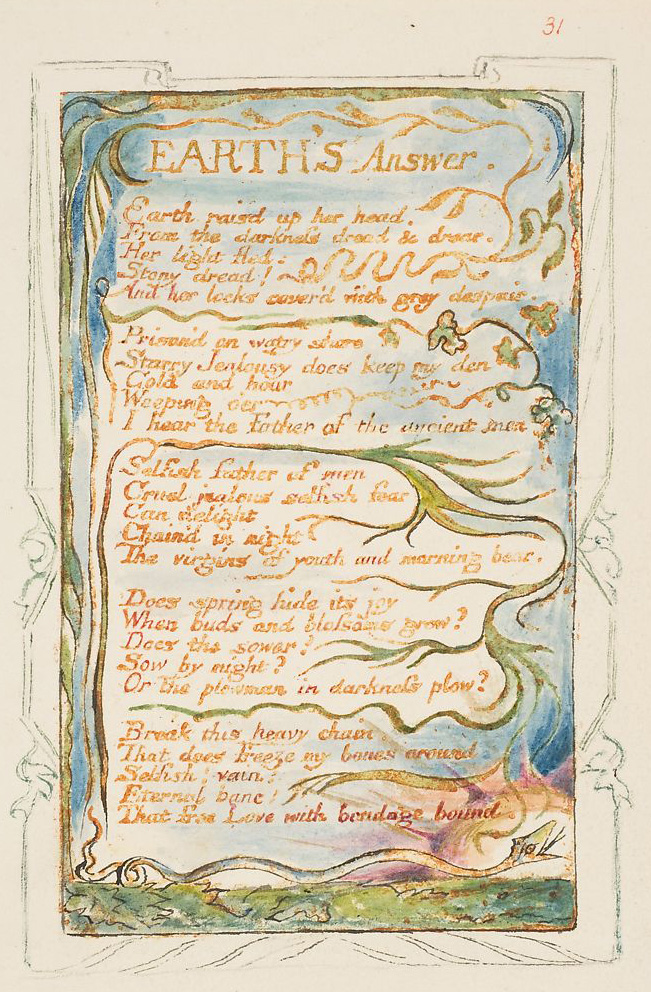
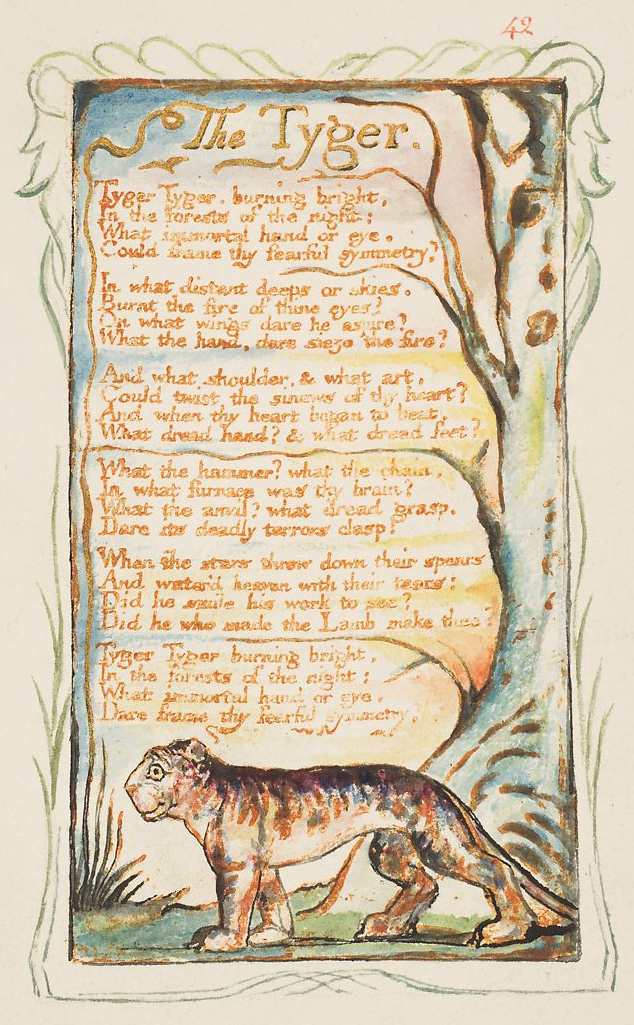
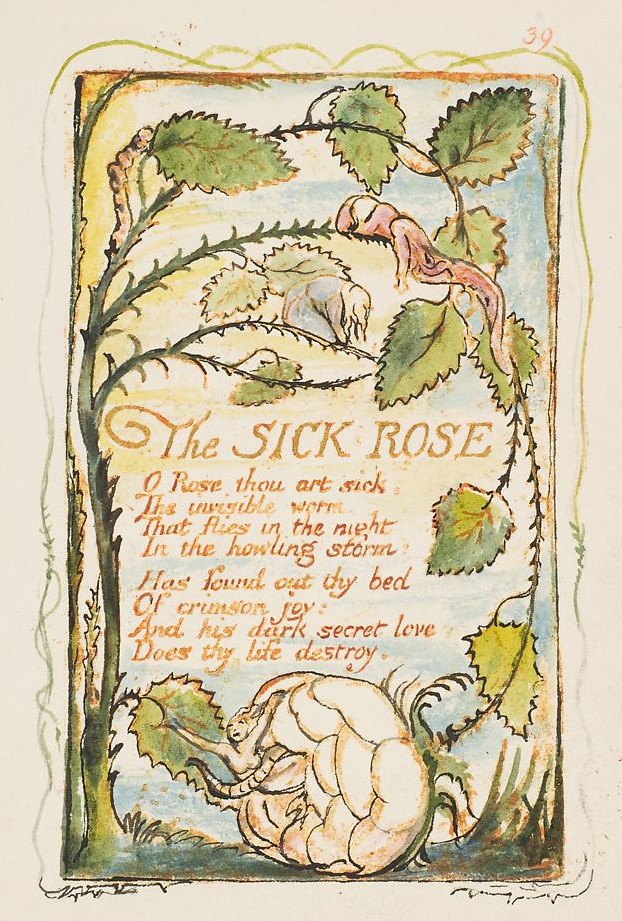
Songs of Innocence and of Experience

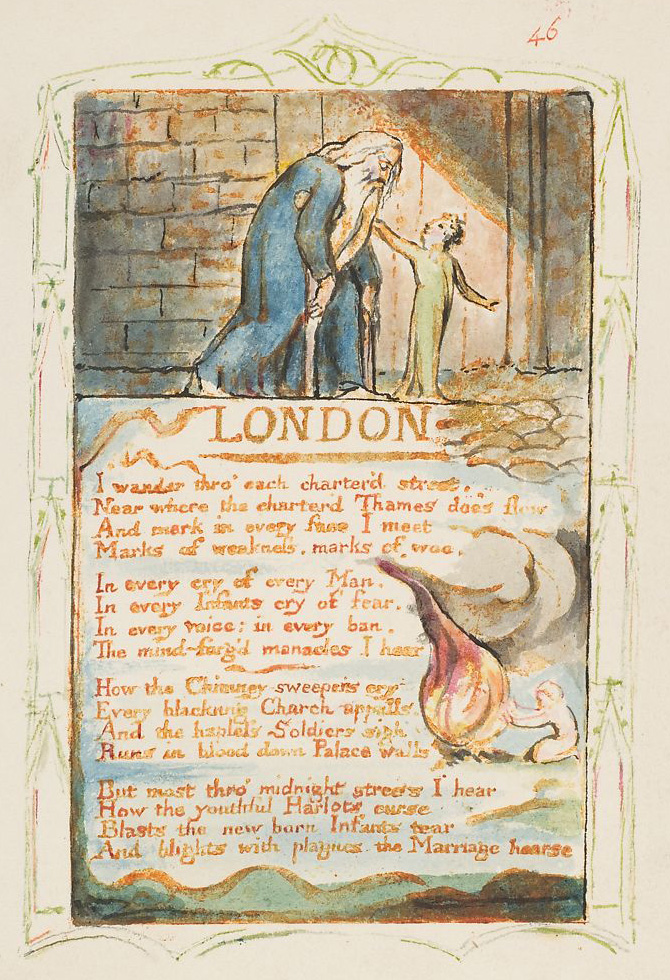
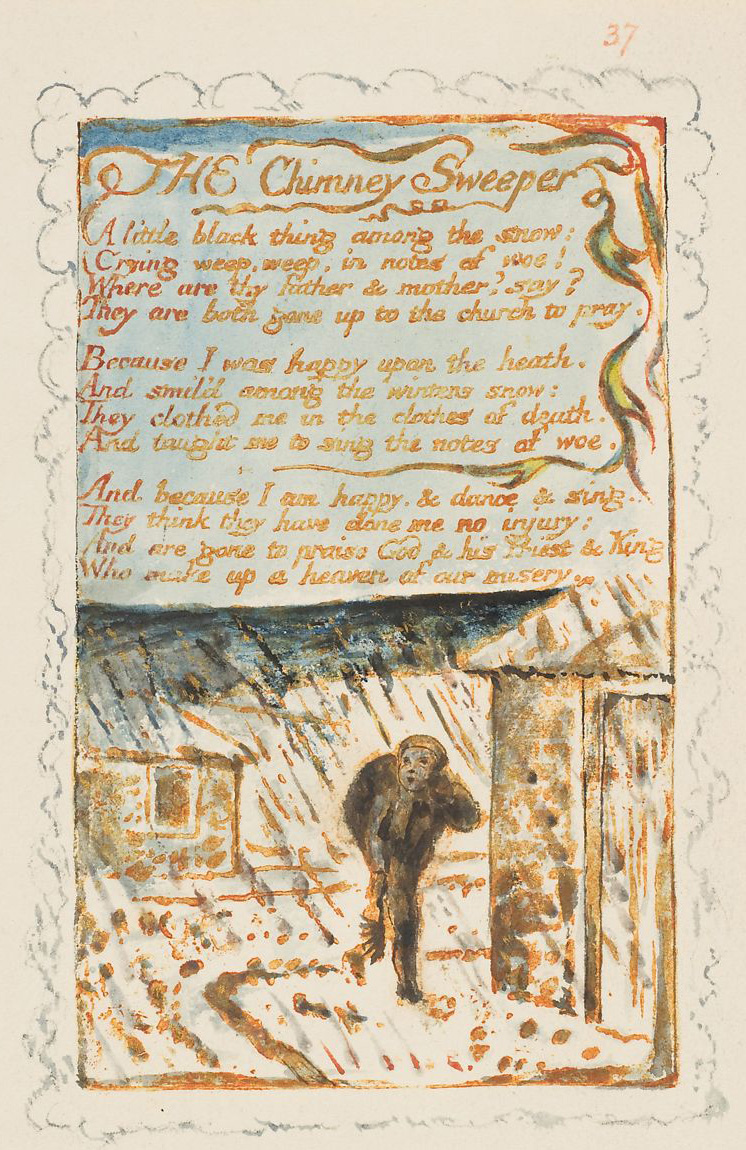
William Blake was better known during his lifetime for his work as an engraver and printer. While he never attained the renown of William Hogarth, his illustrated editions of Milton’s Paradise Lost have long been prized by collectors.

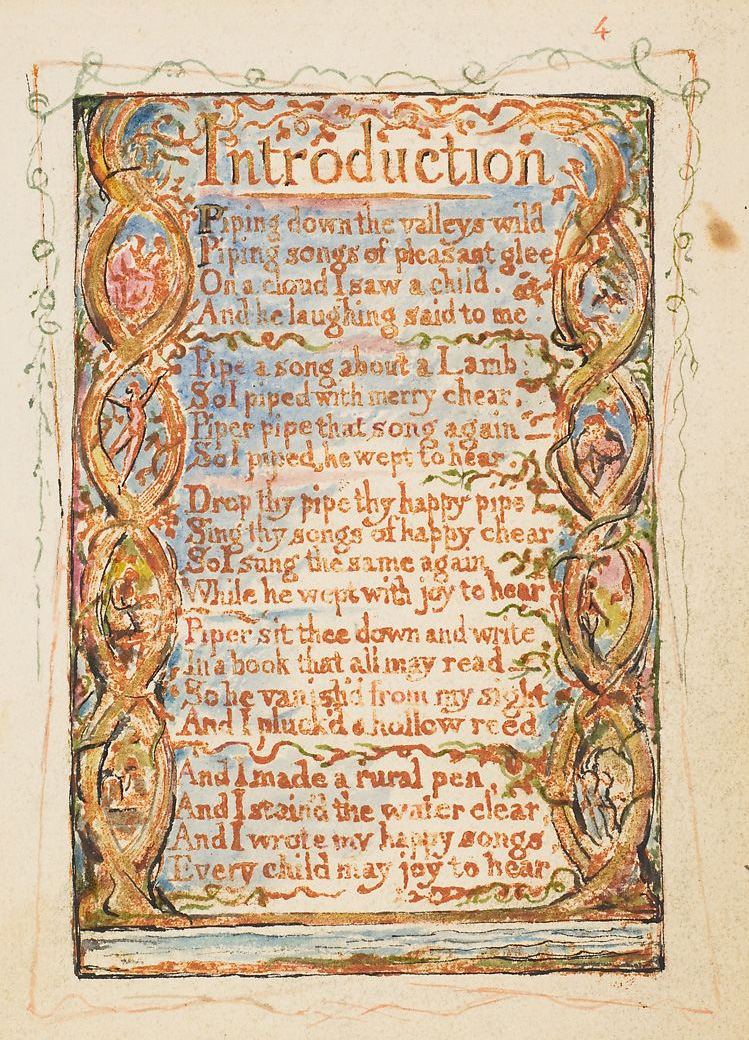
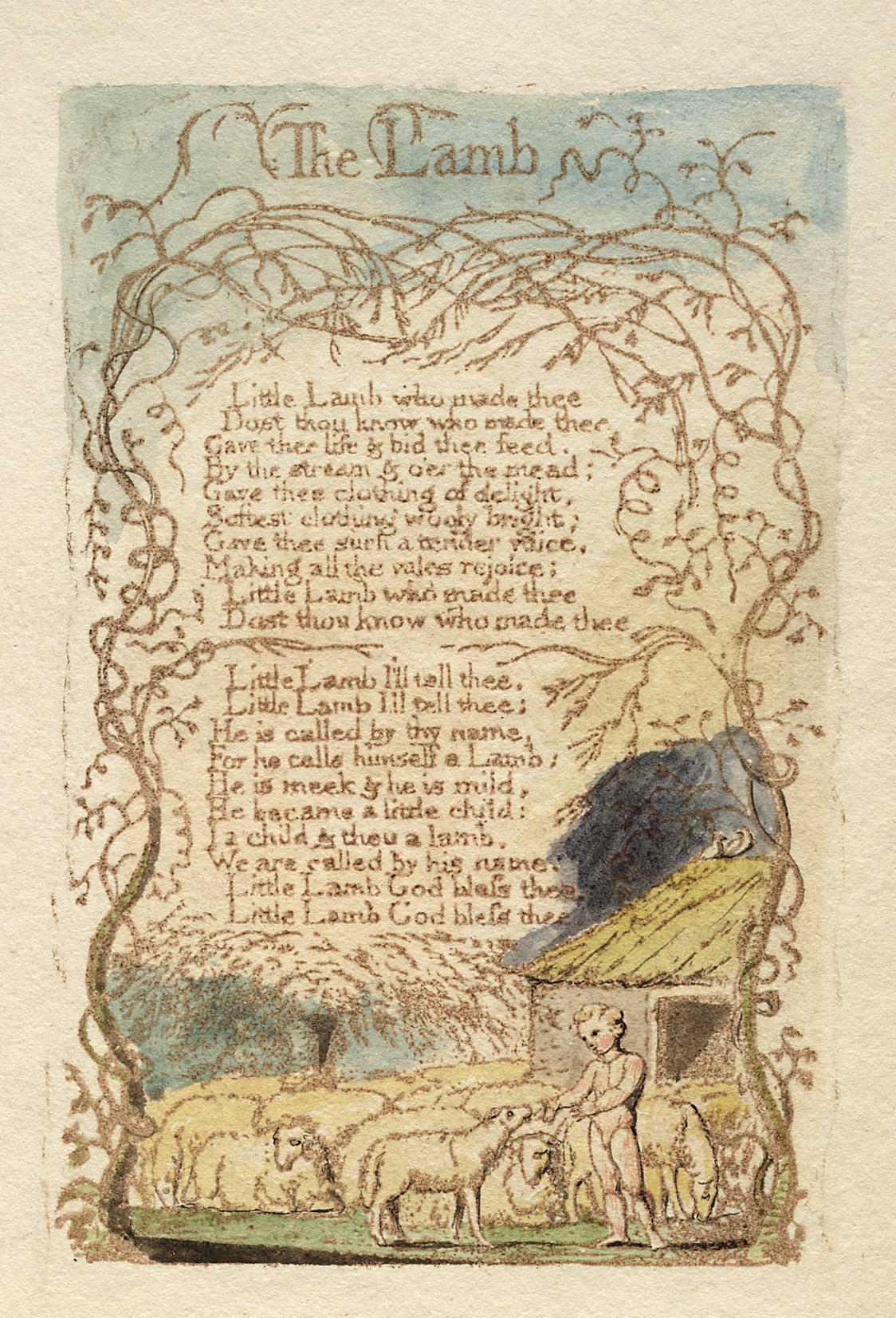
Blake self-published his poetry in lavishly illustrated editions. Because each page had to be separately colored by the artist after printing, these were never produced in large numbers. Songs of Innocence was first published in 1789; Songs of Experience followed in 1794. The two were later republished as a single volume, titled Songs of Innocence and of Experience.

Due to the coloring process, each copy of these books is unique; all but one of the images below derive from a copy in the collection of the Metropolitan Museum of Art.

Songs of Innocence

Songs of Experience

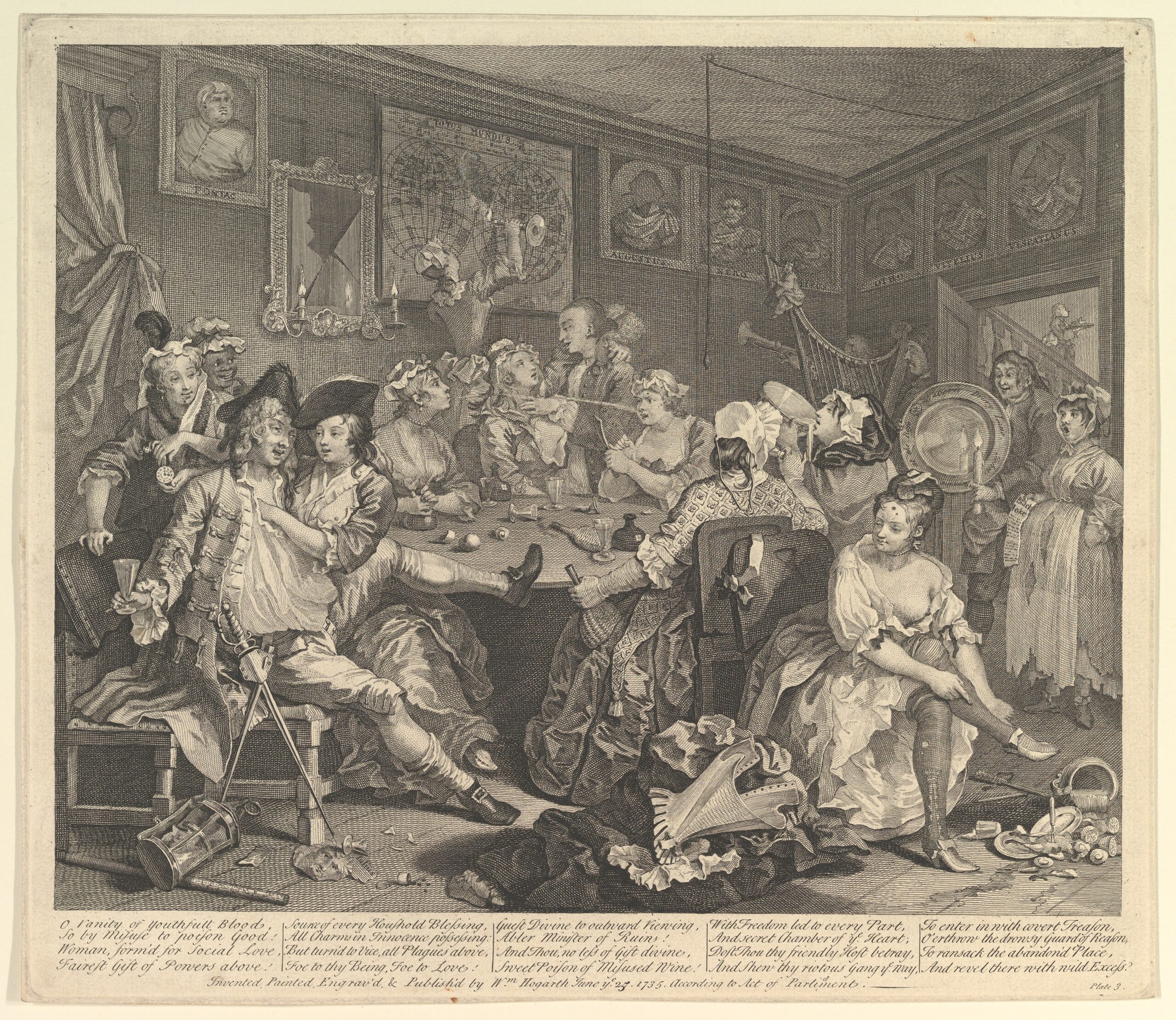
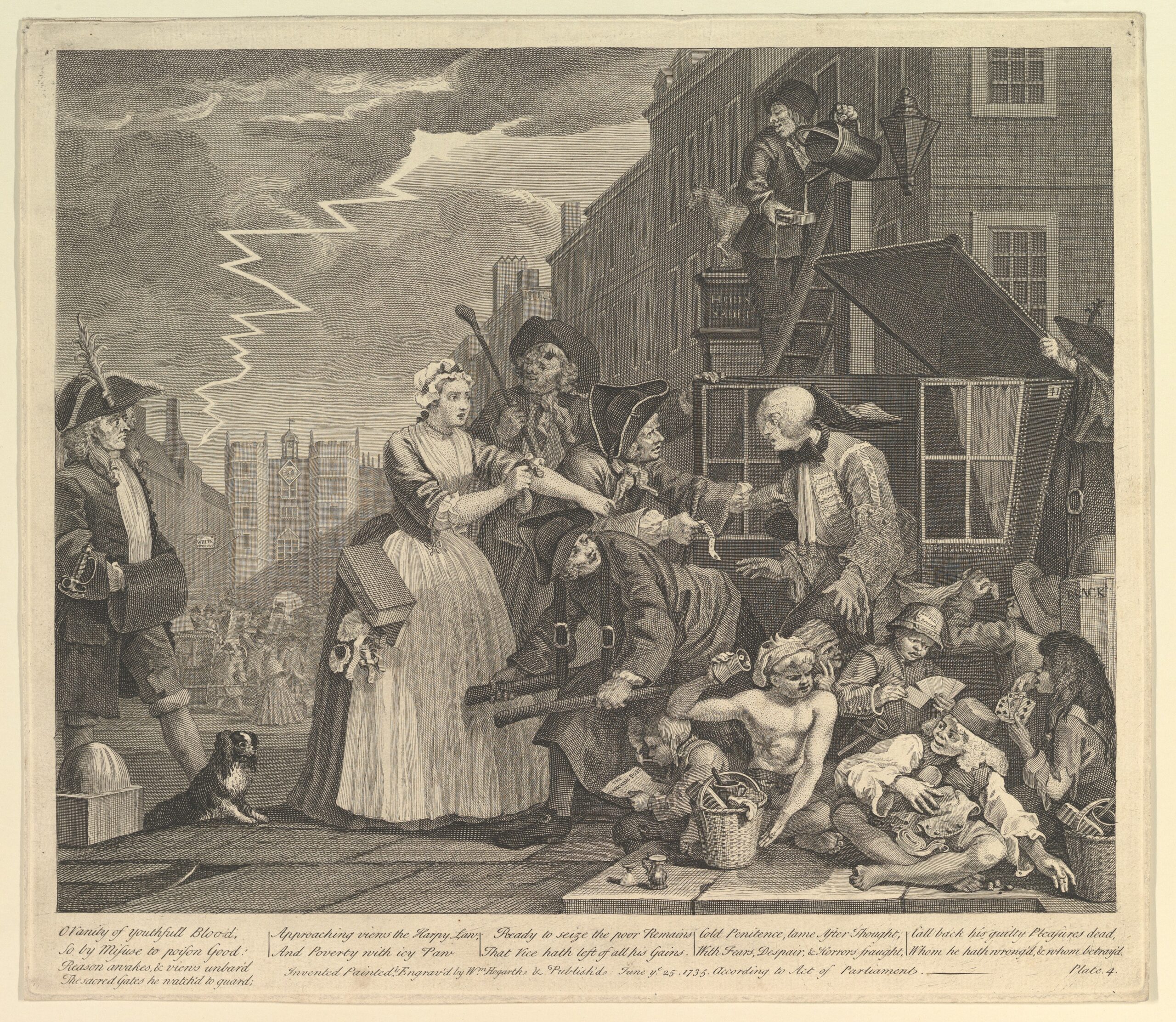
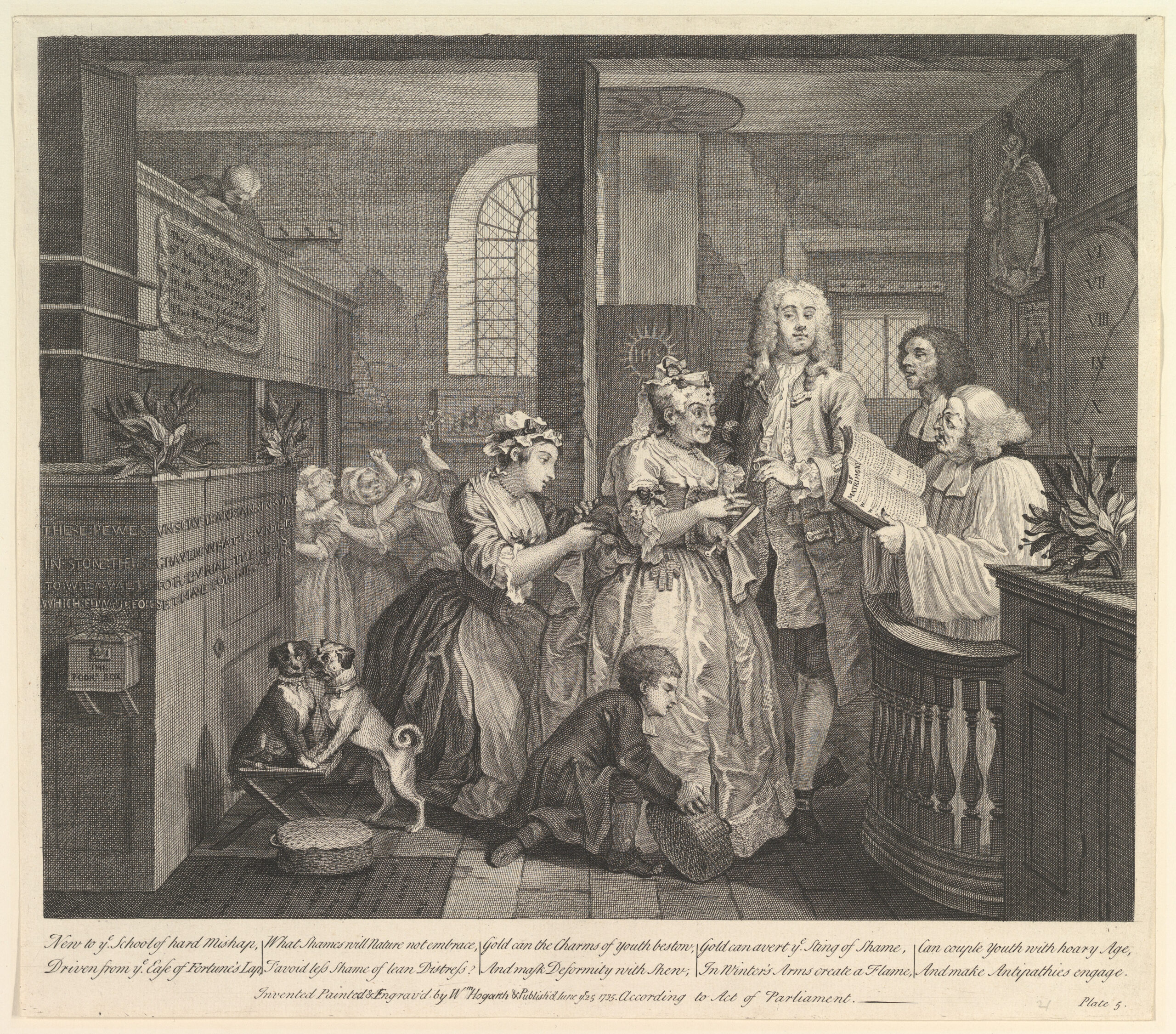
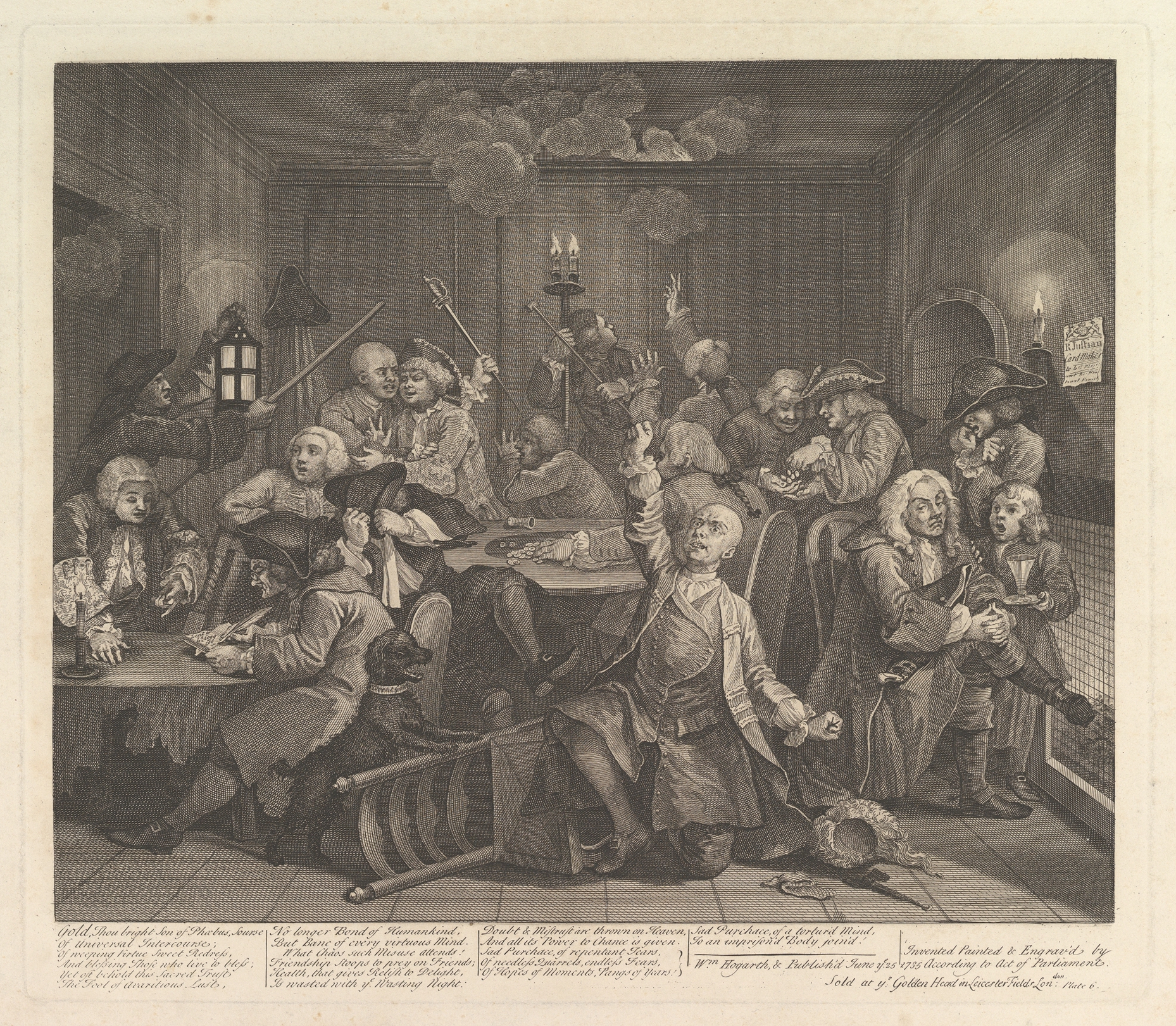
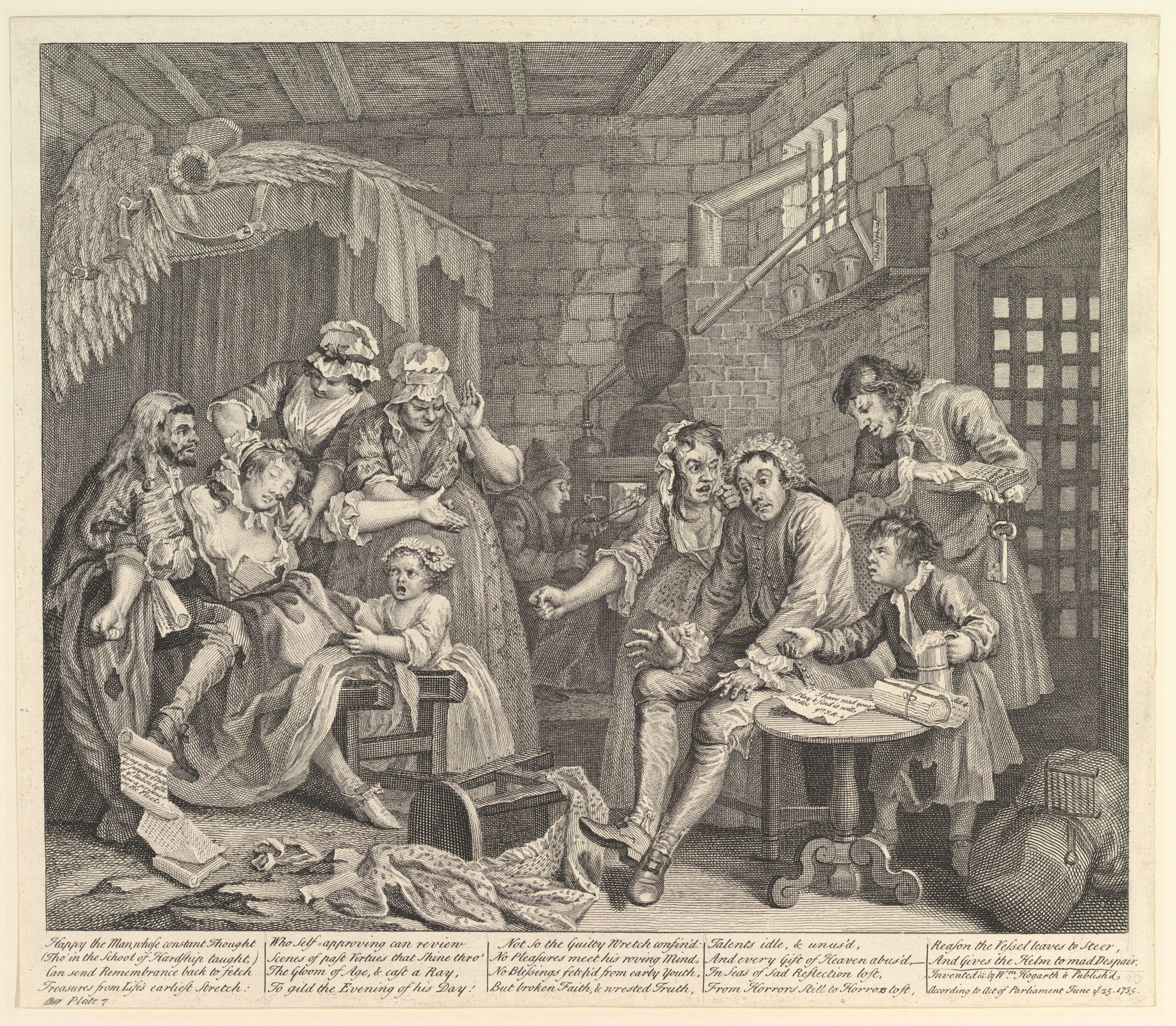
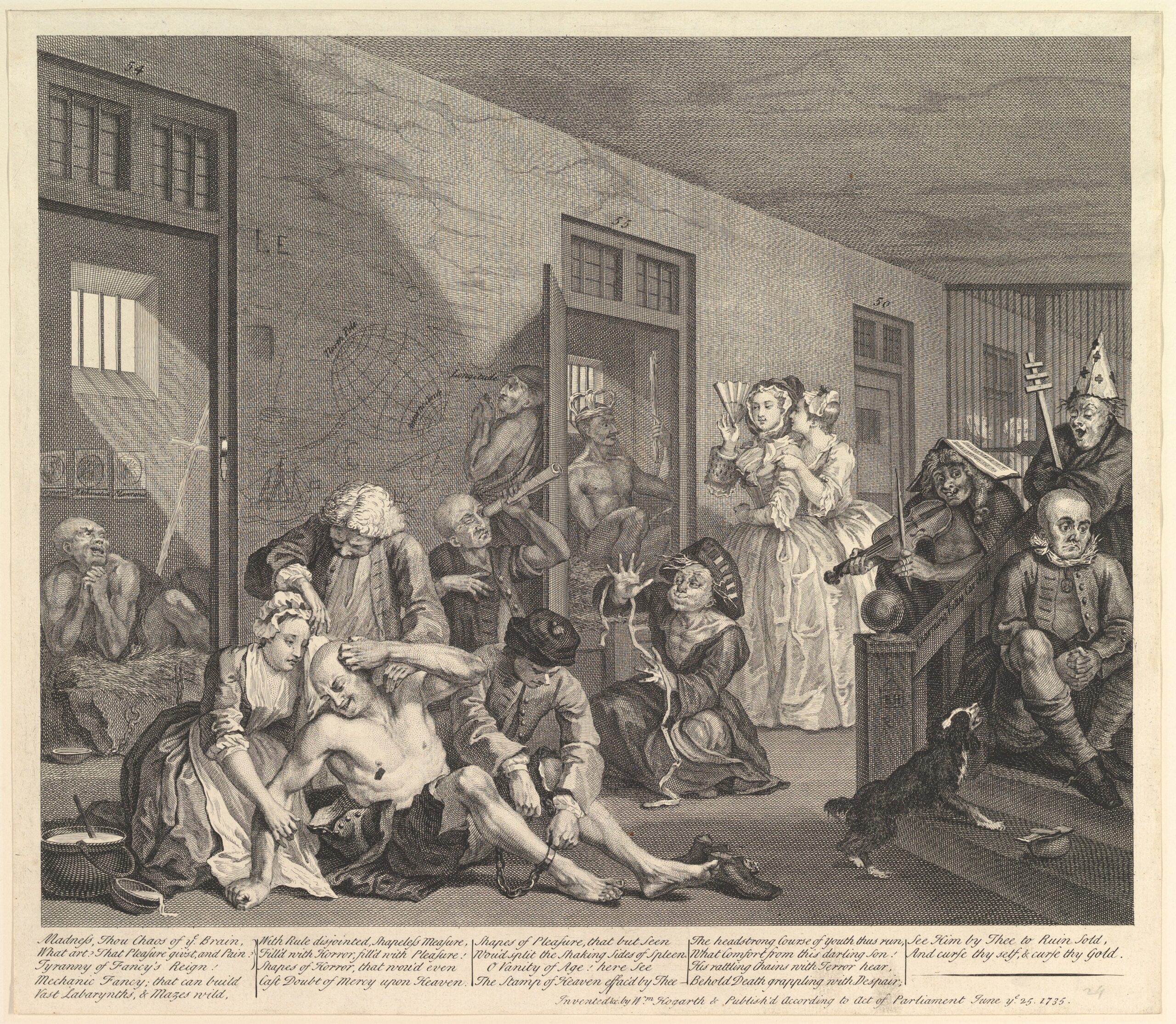
A Rake’s Progress

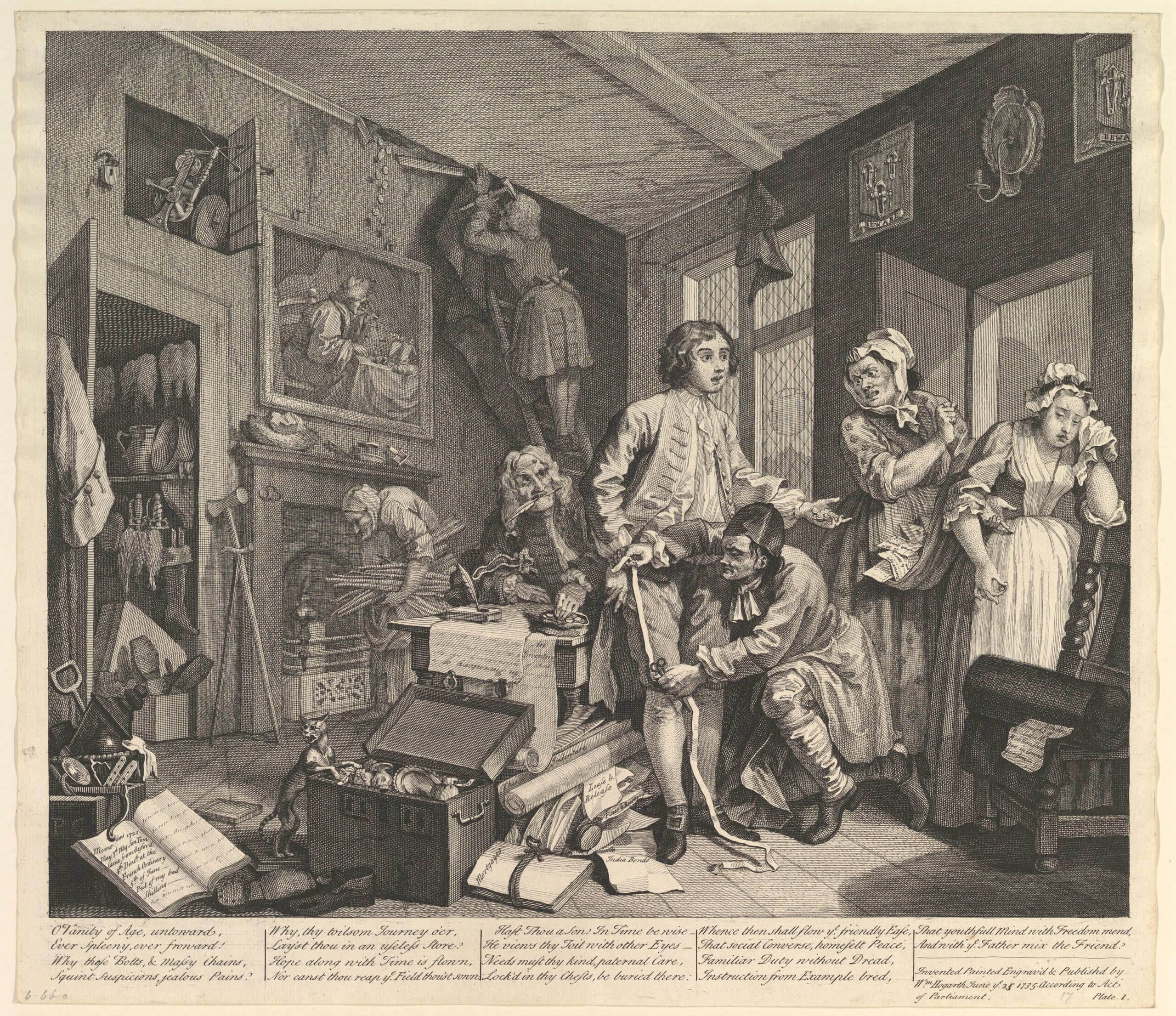
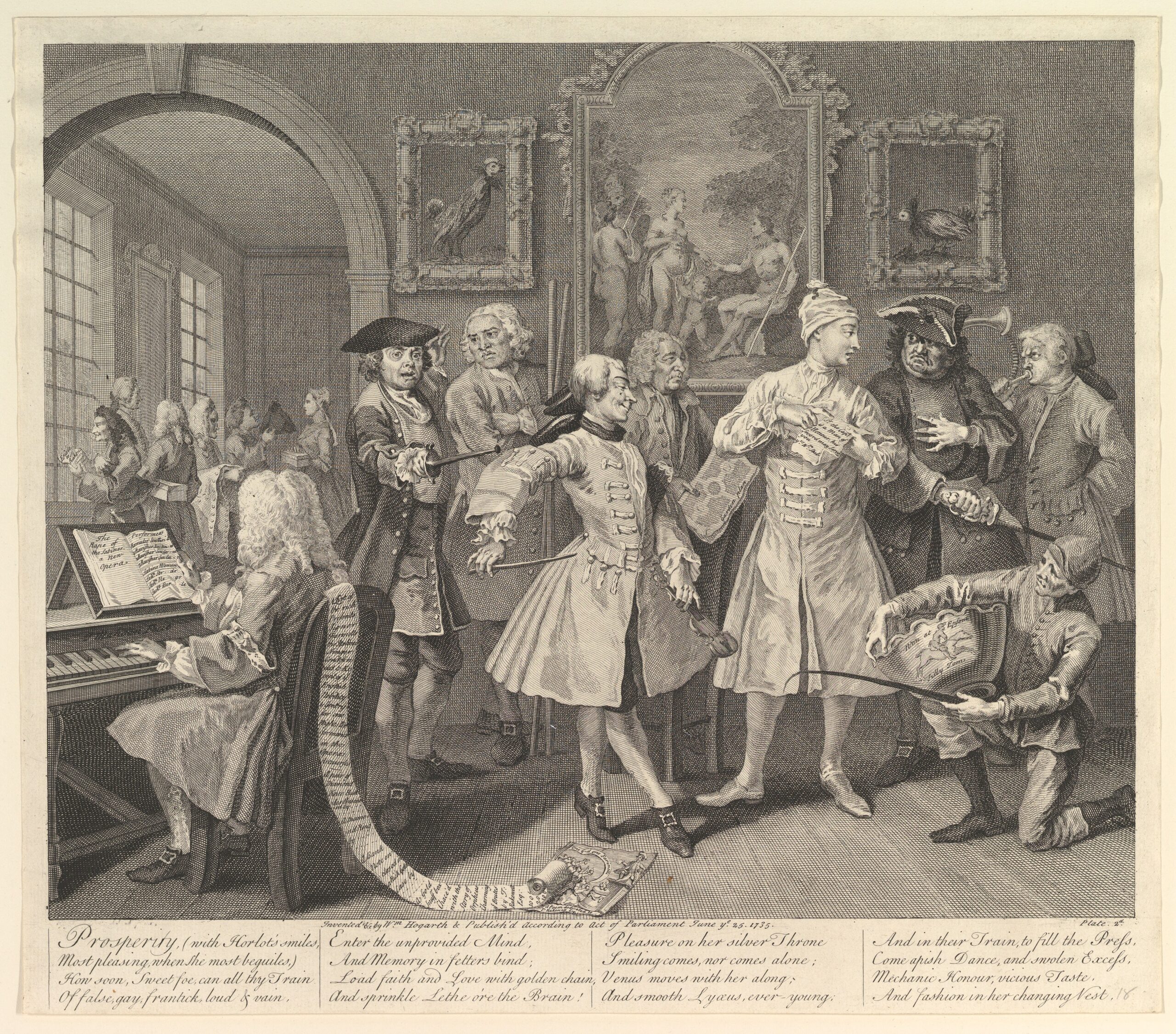
A series of engravings produced in 1734 by William Hogarth, telling the story of a young man who goes to wrack and ruin after inheriting a fortune from a miserly relative. The linked images are all high quality, thanks to the generosity of the Metropolitan Museum of Art in New York. If you want a fuller account of what’s gong on in these images, feel free to consult wikipedia—but see what you can work out for yourself first!

Note that the titles given below are not official—I created them to outline the plot for you.

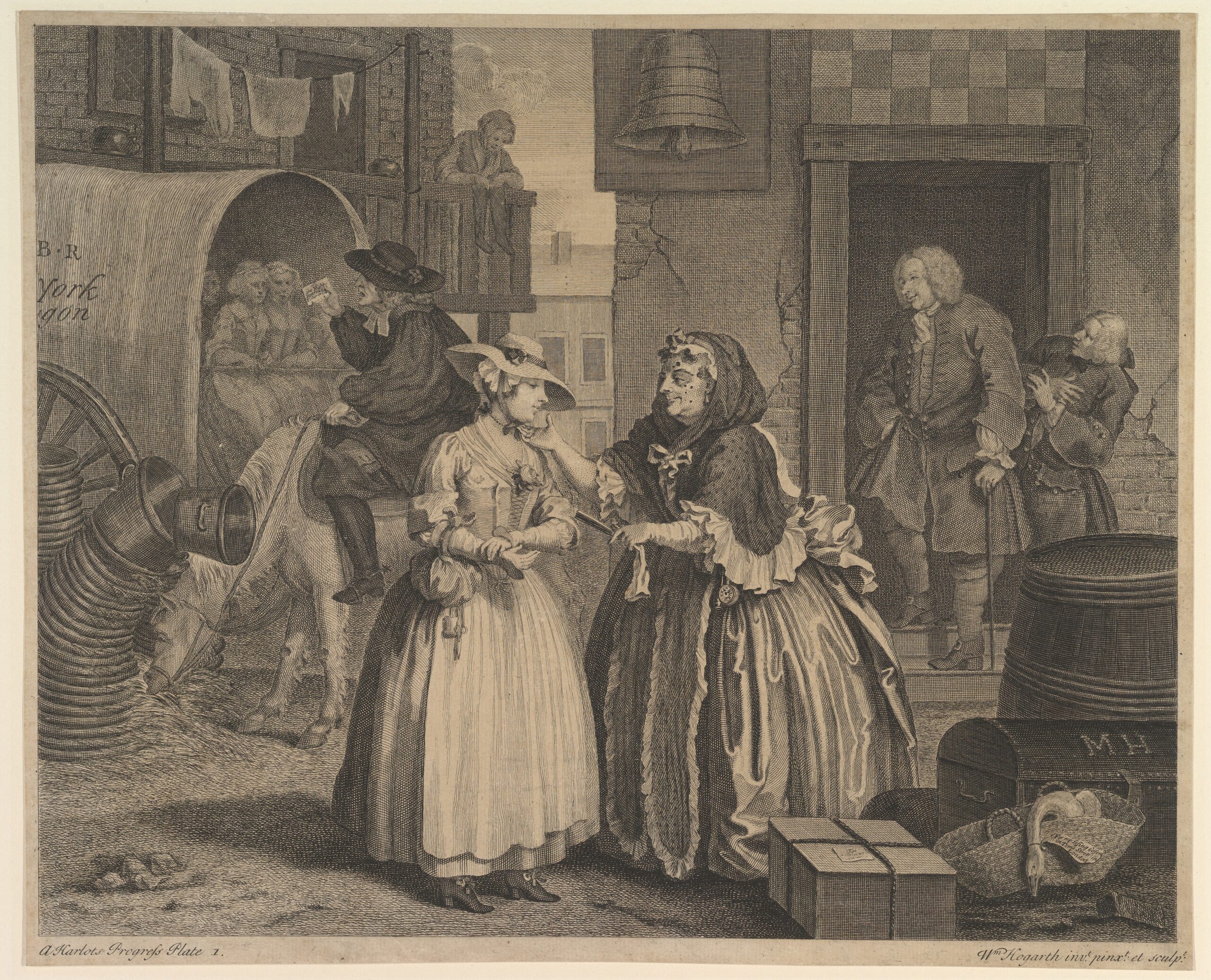
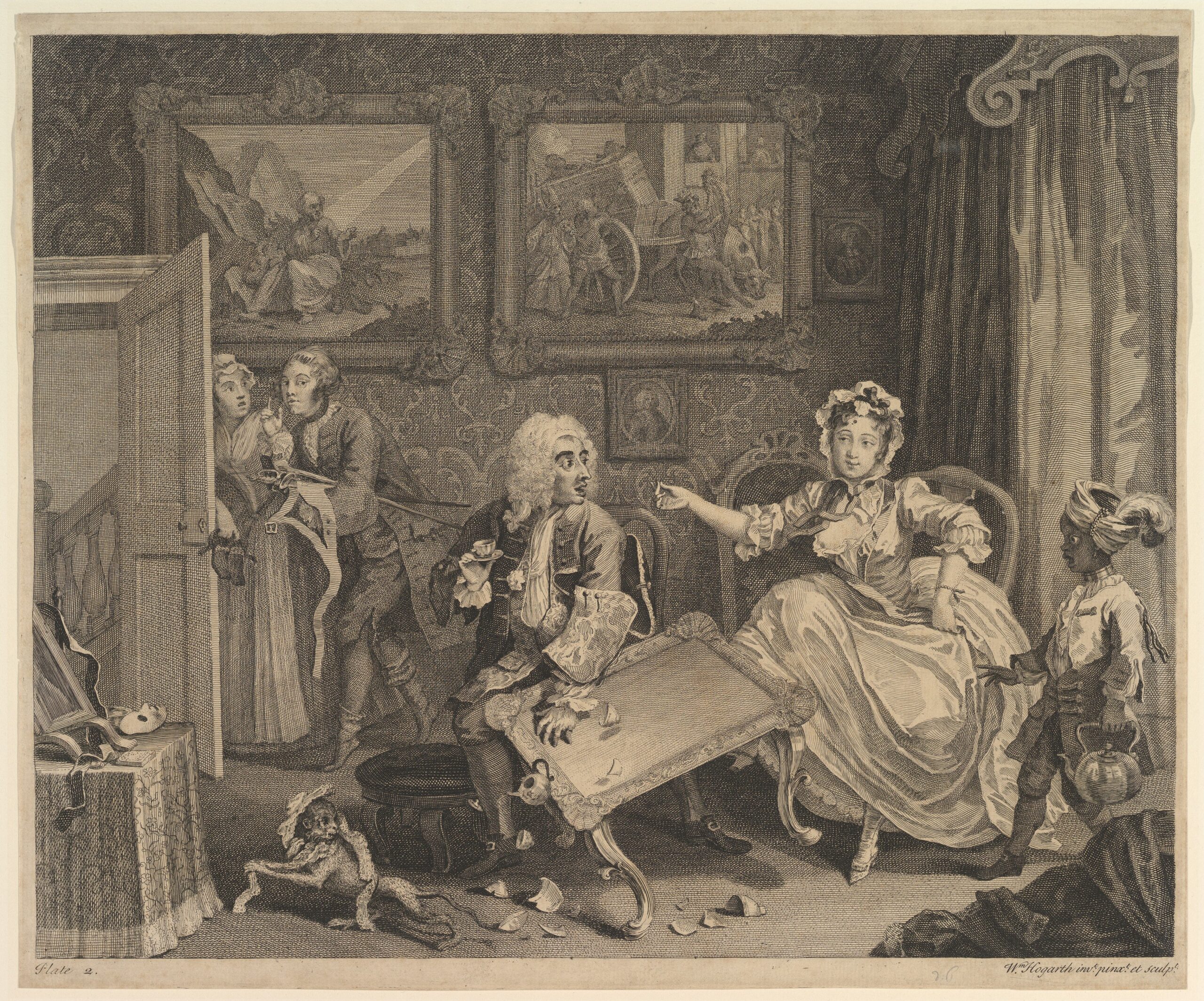
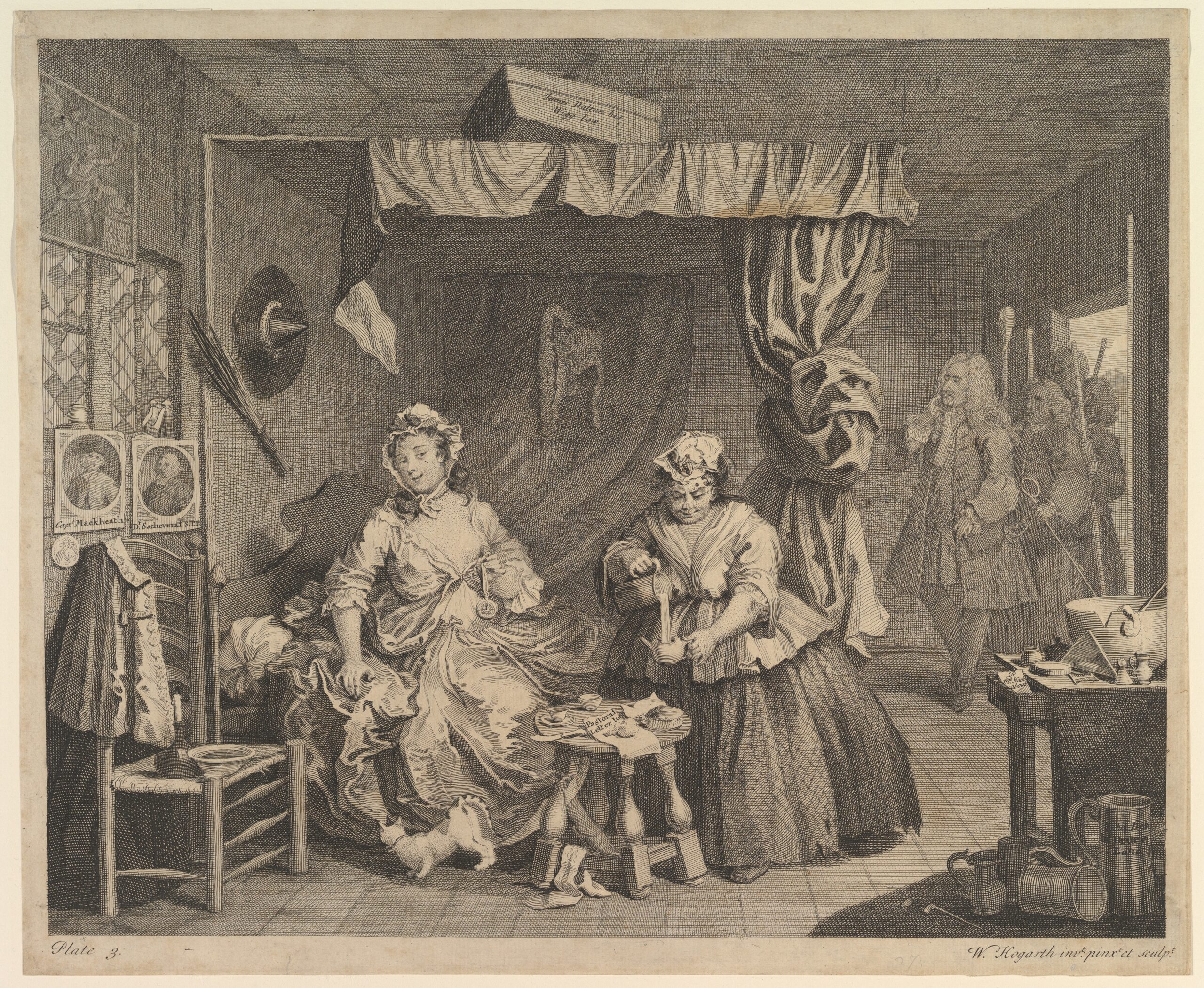
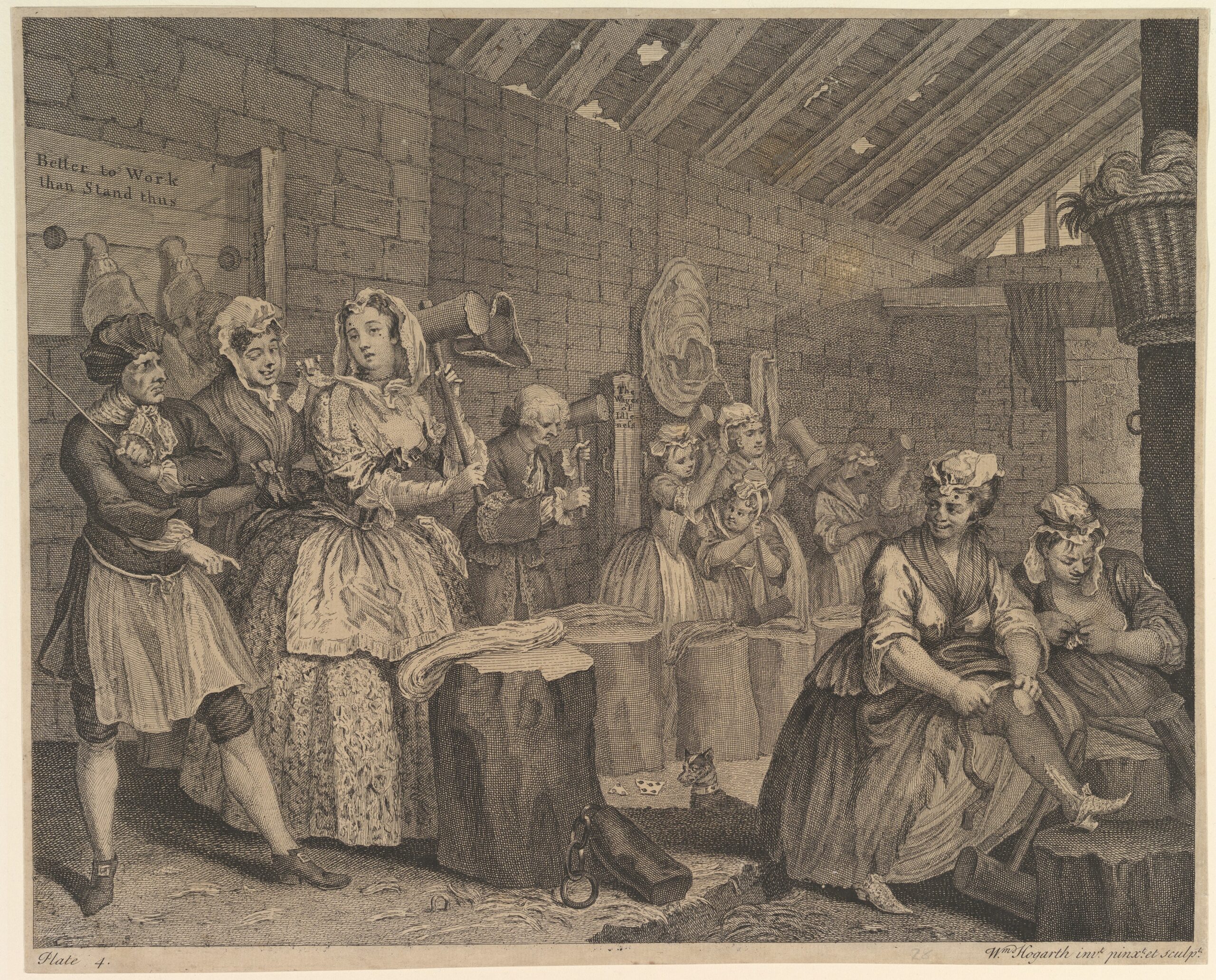
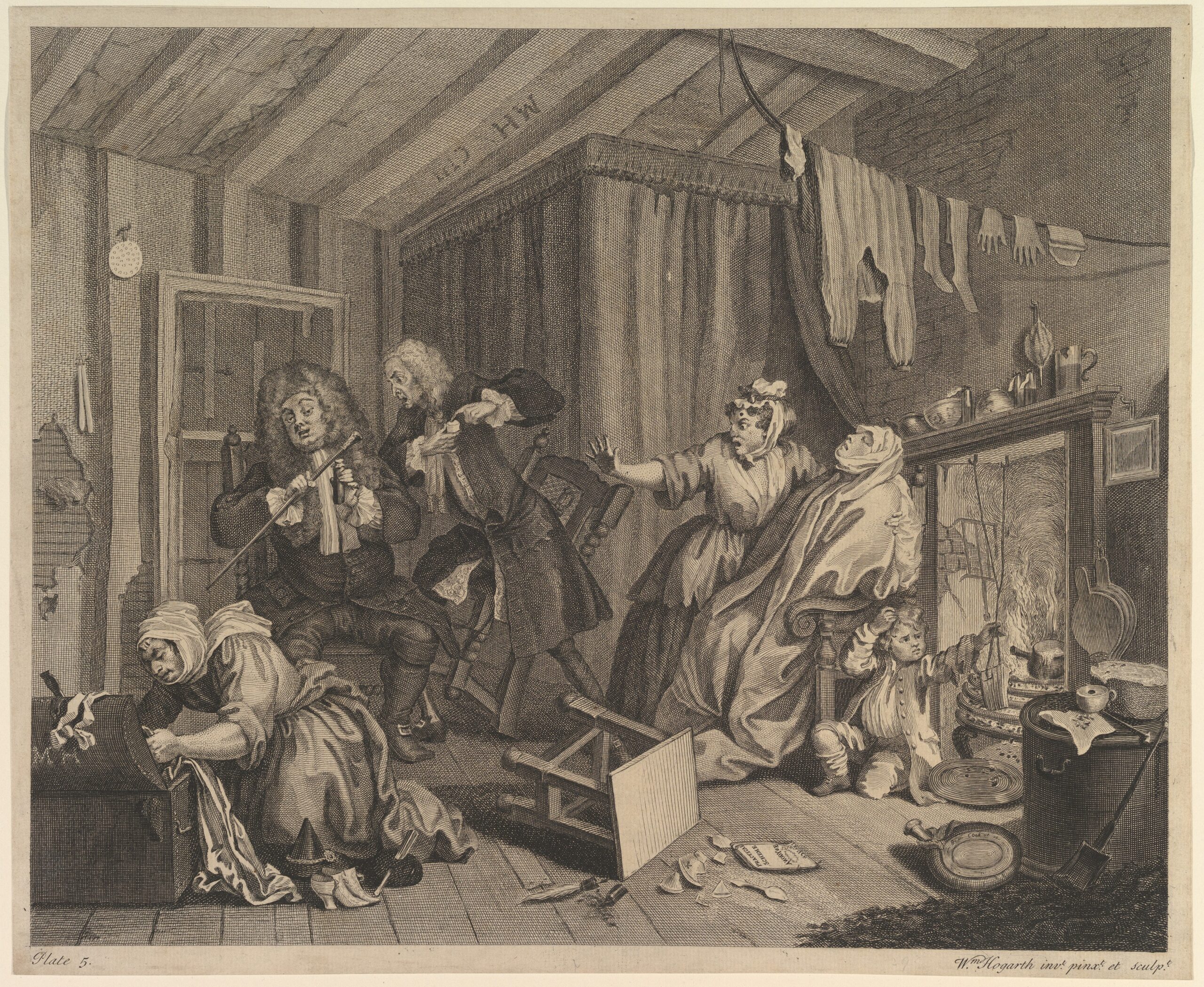
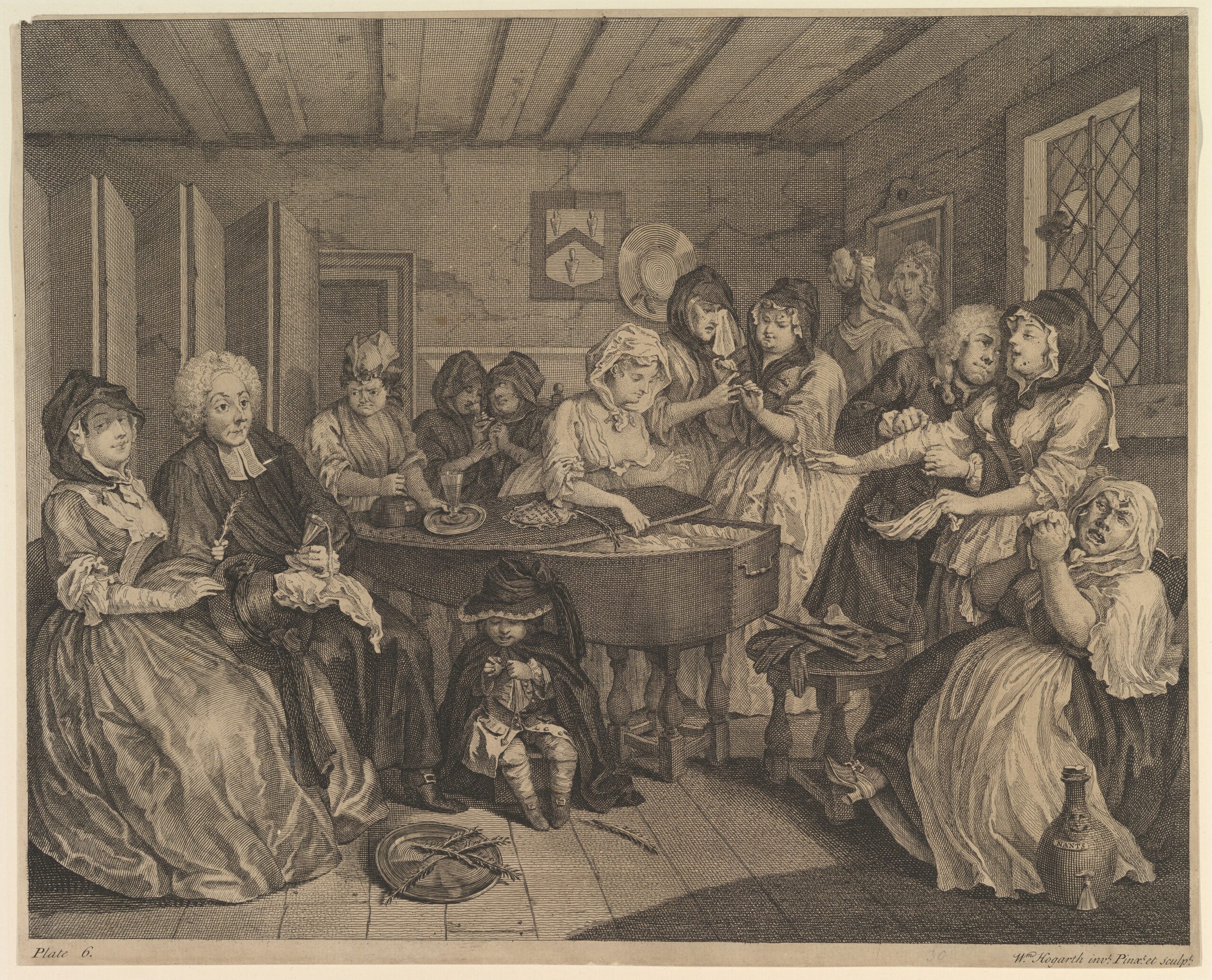
A Harlot’s Progress

A series of engravings produced in 1731 by William Hogarth, telling the story of a young woman who arrives in London as a seamstress, but who winds up working as a prostitute and dying of syphilis. The linked images are all high quality, thanks to the generosity of the Metropolitan Museum of Art in New York. If you want a fuller account of what’s gong on in these images, feel free to consult wikipedia—but see what you can work out for yourself first!

Note that the titles given below are not official—I created them to outline the plot for you.

Essay Prompts

Essay Prompt: in a 1200-1500 word essay, use a text we read for this class to better understand an object you encountered on your tour of the MFA Boston (or vice-versa).

What I'm Looking For
This essay assignment invites you to connect a work of art at Boston’s MFA with one of the texts we read in the first half of the semester. This combination of sources will require you to use two different modes of close analysis, visual and literary.

Two Sources? So this is a compare and contrast essay?

No. I’m looking for a “deepening digression” essay. A compare and contrast essay is interested in both sources equally. But in this essay I want the two sources to play different roles: Source A is the main event, while Source B serves merely as a tool—as a lens used to bring Source A into focus.

Which source should play which role?

It depends. Think about which source strikes you as strange, as needing to be explained and brought into better focus. Use that as Source A, and relegate the other to serve as analytical tool. But only if that second source really does give you at least a glimmer of a better grasp of the first one. If there’s no special “spark” when you bring the two sources together, maybe you need a different pair of sources.

So choosing the right pair of sources can be challenging?

Yes! Don’t choose your sources casually. Doing some preliminary thinking at the outset is vital to writing any paper—not just this one!

Essay Structure
  • Title: Use the title to signal both the topic and your unique take on it. One way to do this is with a “Title: Subtitle” structure, where the subtitle defines the topic, whereas the title signals your particular take on that topic.
  • Introduction: Use the the introduction to accomplish three vital tasks:
    • Orient the reader to your “main event” source. Is it famous, a work most people have heard of, so you only need to remind us about it? Or is it something abstruse, so you need to start by engaging our interest?
    • Voice a preliminary understanding of the “main event” source. What’s obvious? What’s puzzling about it?
    • Voice your essay’s mission: roughly speaking, you plan to draw on source B (name or describe it) to better understand source A. Ideally, end the intro ¶ with the deeper understanding that you plan to argue. A genuine thesis claim is always better than a mere promise of insights to come. If necessary, leave us with a promise for now, but come back and rewrite your thesis claim once you’ve finished the essay and you know what you actually conclude.
  • Early Body ¶s: Use the first one or even two body ¶s to flesh out the preliminary understanding, thus making sure your reader is “up to speed” on the basics of Source A. Do the obvious stuff first, and try to end this section with a focus on what’s odd or puzzling about Source A. (That puzzlement is vital: it will serve to motivate the digression into Source B at the start of the next section.)
  • Digression ¶s: Use one or two ¶s to briefly give an account of Source B. Focus on details and qualities that “rhyme” with the qualities you were discussing in Source A. Remember, this isn’t really an essay about Source B: focus your account on what matters in your quest to better understand Source A. At the same time, don’t anticipate what you plan to say in the final section: limit your discussion to facts and details from Source B, with nary a mention of source A. Aim to end this section with a focus on the KEY from source B that (in the next section) will unlock the puzzle of Source A.
  • Final Body ¶s: Return to source A with a bang, announcing how some detail or insight from Source B solves the puzzle of Source A. Flesh out the implications of this analysis, and you’re all done—except for the conclusion.
  • Conclusion: What have you accomplished? Beyond merely restating your thesis claim, what are the larger implications of your analysis? How does seeing Source A in the larger context of Source B deepen our grasp of the culture(s) that produced them?
Sources
Sources allowed and not allowed: The purpose of this essay is to measure your skills as a reader and NOT as a researcher. Don’t turn to Google, Wikipedia or Chat-GPT for insight. Feel free to draw on class notes, HW posts, and scholars I assigned as reading. In the end, though, this is the sort of essay in which the real answers turn out to be hidden in the details of the primary source: read it, quote it, ponder it—and turn it into evidence.

Source citation: Use MLA style for source citation. This means parenthetical citations to signal the use of ideas or information and NOT just for citing quotations. Keep the parenthetic citation short: just a last name and page or line reference (in cases where the author is unknown, like Gilgamesh, give the title rather than the author, followed by a page or line ref). Then, in a list of Works Cited at the essay’s end, provide a list of the sources your cited, alphabetized by author last name—or title in the case of Gilgamesh.

Include a photo
Include at least one image you took of the object. Strong preference for photographs you took yourself. Either way, be sure to credit the photographer, whether yourself or someone else.

Course Description

This course examines key figures and works in literary and artistic traditions from the Ancient and Classical periods through the Middle Ages and Renaissance, concluding with the Enlightenment and Romanticism. Throughout the semester we will explore how art expresses cultural ideals and social hierarchies, as well as how evolving aesthetic standards have shaped conventions in literature and the arts. Coursework and assignments include learning trips to various sites of historical and cultural significance in and around the Boston area to emphasize the Humanities’ relevance beyond the classroom. This course fulfills a single unit in each of the following BU Hub areas: Aesthetic Exploration, Historical Consciousness, Critical Thinking.

Course Rules

Plagiarism is a very serious offense in this course, at CGS, and in the wider BU community. If you’re short on time, better that you ask for an extension than fail the assignment or (worse) get suspended.

Generative AI is not permitted. Honing your creative, analytical, and critical thinking skills is one of the learning outcomes of HU103, and developing strong competencies in these areas will prepare you for a competitive workplace. Students may not use ChatGPT, Grammarly Pro, translation software, or any other AI language generating programs for any part of class work—unless explicitly directed by a Professor for research purposes. Students may not use these programs to write and/or edit assignments, or to summarize readings. Therefore, students must be the sole authors of assignments they turn in for this class and must take responsibility for the information and ideas contained in their work. In practice, authorship means understanding the implications of your words and being able to explain your reasoning. It also means having read sources you cite and being able to talk intelligently about them. Students should be prepared to discuss their submitted work and their sources in detail.

Respect me and your fellow students during class. Keep your laptop closed and your eyes on whoever’s talking—or on the text we’re talking about. Focus on people are saying and join in the discussion with insights or questions of your own.

Attendance will be taken at every lecture and discussion section. If you know that you’re going to miss a class meeting, please let me know—I always appreciate a heads-up! Accruing more than three absences during the semester will affect your final grade for the course. A student with five or more absences risks failing the course, even if all other course requirements have been satisfied.