
Due Apr 27
Finding the Self in Nature
In 1798, two young and little-known poets, William Wordsworth and Samuel Taylor Coleridge, co-published a book that became the manifesto of the English Romanticism, Lyrical Ballads. In the volume’s “Preface”, Wordsworth criticized the “the gaudiness and inane phraseology of many modern writers,” arguing that the poet is (or should be) “a man speaking to men.” This was, as Benjamin Voigt comments, “a revolutionary idea in English poetry: that the voice or speech of poetry should sound the way non-aristocrats actually spoke.” Wordsworth paired this plain language with characters and scenes drawn from the countryside, arguing that “Humble and rustic life … [provide] the essential passions of the heart … a better soil in which they can attain their maturity.” He thus found in nature a setting for self-discovery.
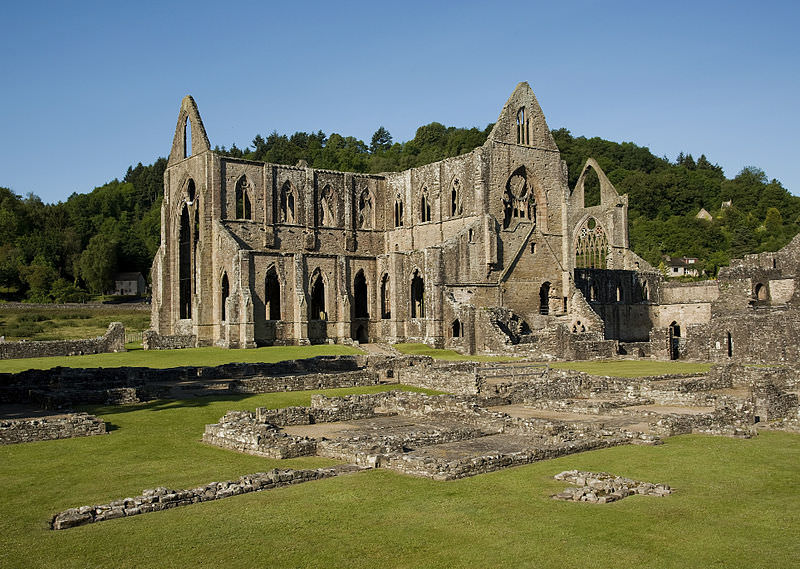
Tintern Abbey, Wales
Yet Wordsworth envisioned the poet as not just any man, but one “endowed with more lively sensibility, more enthusiasm and tenderness, who has a greater knowledge of human nature, and a more comprehensive soul, than are supposed to be common among mankind.” Rather than a clever versifier (think ChatGPT), Wordsworth asks that the poet speak from lived experience: “poetry is the spontaneous overflow of powerful feelings: it takes its origin from emotion recollected in tranquillity.” Thus, artistic process becomes the artist’s principal topic: “emotion is contemplated till, by a species of reaction, the tranquillity gradually disappears, and an emotion, kindred to that which was before the subject of contemplation, is gradually produced, and does itself actually exist in the mind. In this mood successful composition generally begins.”
Reading: four poems from Lyrical Ballads. (I’ve saved the hardest one for last.)
- Wordsworth, “The Tables Turned,” link.
- Wordsworth, “She Dwelt among the Untrodden Ways,” link.
- Coleridge, “This Lime-tree Bower my Prison,” link.
- Wordsworth, “A Few Lines Composed Above Tintern Abbey,” link. Note: this is a challenging poem; to give you some sense of the landscape that inspired Wordsworth, here’s a short video with drone footage of Tintern Abbey in Wales.
Writing: Respond to ONE of the following prompts. Keep your response short, posting as a reply under the appropriate heading in the comments section:
- Both Coleridge and Wordsworth are known for their evocative power of description. Quote and comment on a passage that paints a picture of the poet’s lived experience: what he sees, hears, thinks, or feels.
- Romantic poets claim to have prioritized self-expression. But does Wordsworth present himself consistently in the three poems we read, or do these poems strike you as voiced by different “speakers”?
Evocative Poetic Description
⤹Click the reply button just below.
Wordsworth’s Poetic Persona(s)
⤹Click the reply button just below.