G2 Class 6.1

Due Feb 20

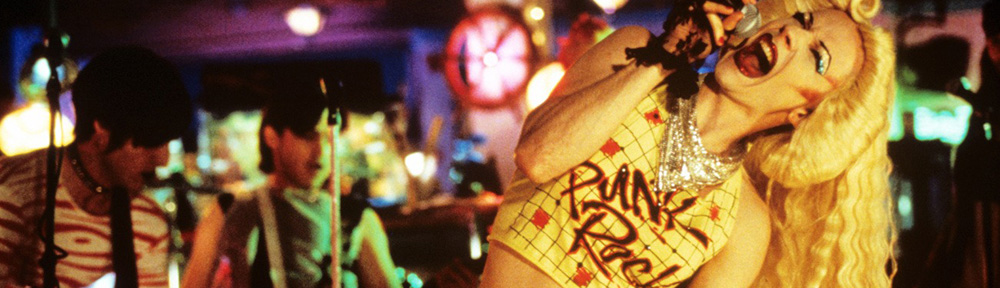
Hedwig and the Angry Inch: Rage and Redemption

Hedwig originated as an off-Broadway musical not many years after gay rights organizations like Act Up had shown the value of confrontational, in-your-face protests in bringing public attention to the AIDS crisis: “We’re here. We’re queer. Get used to it,” Queer Nation activists chanted at protests throughout the Nineties. Their righteous anger reverberates in Hedwig’s opening line, “Ladies and gentlemen, whether you like it or not . . . Hedwig!” As conceived by creators John Cameron Mitchell and Stephen Trask, Hedwig’s a heat-seeking missile targeted on the squeamish sensibilities of Middle America, anatomically neither male nor female, born a boy but very much a woman.

This may seem like an odd choice of movie to pair with our unit on Ancient Athenian culture and society. But Hedwig has a lot in common with Euripides’ Medea: not merely her rage but her marginalized status and her witchy power to work wonders. And what’s more the transformative capacity of love in Hedwig’s story neatly anticipates the ideas in Plato’s Symposium.

Viewing: John Cameron Mitchell’s 2001 movie, Hedwig and the Angry Inch available via the BU Library: link.

Writing: Respond to ONE of the following prompts. Keep your response short, posting as a reply under the appropriate heading in the comments section:

  1. Point out a moment where the movie calls attention to marginalization. In doing so, take note of what we see/hear, and how those details influence the audience’s emotional response.
  2. The movie’s soundtrack offers a wide range of styles, from glam-rock to punk. Focusing on one song in particular, give a brief account of the song(s) it draws from—and what the movie is saying by means of that cultural reference.
  3. Is Hedwig a love story? Answer with a tight focus on a particular scene or song.

9 responses to “G2 Class 6.1

    • I think the first song does a great job of calling out marginalization while setting a theme for the rest of the movie. The whole first song depicts Zeus splitting people apart into man into woman, while singing about how they are not aloud to be who they want to be. That image of Zeus seems like a representation of society and how the masses will strike down anything it sees as odd or different. this song sets up that desire for love, not just to find a partner but also longing for love in yourself because society continues to marginalize you.

      • I agree with your point and I think it speaks to something broader. It does represent society striking down anything it sees as different but how does something get labeled as different? I think it also represents people in power and how they are the ones who usually label things as strange or different as a way of keeping the masses under their influence. As the song plays, we see animations, almost resembling a cave painting, of Zeus splitting this three gendered being apart being contrasted with Hedwig performing the song on a small stage to an indifferent audience. The essentially ancient and elemental style of the animation suggests that marginalization by way of those in power is an issue as old as humanity and not a modern development. Additionally, the audience barely taking notice in Hedwig’s performance speaks to the power dynamic created by marginalizing a group of people. Those in power don’t have to actively suppress her, by simply labeling her as different, the indifference from others is enough.

    • In “Angry Inch”, Hedwig turns her botched surgery into a very extreme and loud performance, cutting the cameras after seeing audience uncomfortable and laughing nervously. The film makes me feel the sting of marginalization and the isolation of being publicly misunderstood. This overall recess her pain and reinforces the marginalization.

    • I would say that Hedwig is a love story, but beyond loving others, it is a story about loving herself. While the film initially wants to lead the story on the topic of finding a ‘missing half’ in another, the ending of “Midnight Radio” turned this over. By stripping away her wig and makeup, Hedwig stops to reflect herself from being Tommy Gnosis. She moves from the stage of being abandoned to the redemption of self-acceptance.

      • I agree with your idea that this is a movie about self-love and self-discovery. Hedwig’s transition is a result of coercion and, after the surgery goes awry, she is left mutilated. When her and Tommy kiss for the first time, “I Will Always Love You” by Dolly Parton plays in the background and fades out when Tommy discovers Hedwig’s scar. I interpreted this as meaning Hedwig won’t be able to find true, lasting love until she learns to love herself, despite anyone else’s opinion, as she is.

    • I would argue that Hedwig is a lovestory, but it isn’t in a traditional sense, as it focuses more on romantic acceptance then completion. A scene that points to this idea is the final scene playing “midnight radio”. When hedwig stepped into the dark alley, even if she was explicitly alone, she didn’t feel it as she stopped looking for Tommy to “complete” that other half she w3as missing

Add a Response

Your email address will not be published. Required fields are marked *

Separate ¶s with TWO returns.