Due Jan 26
Sacred Performance Among Hunter-Gatherers
Reading: Native American myths: the Tsimshian tale of the Theft of light and the Oglala Sun Dance (Blackboard: Gill.pdf)
Reading: Nyau masks: mythic reenactment and cultural adjustment (Blackboard: Curran.pdf).
Writing: Read HW guidelines linked here. Then respond to ONE of the following prompts. Keep your response short: no more than three sentences. Post your comment as a reply under the appropriate heading in the comments section:
- In the Tsimshian story of the theft of light, we learn how Giant/Raven brought daylight to the lower world. Do you get the sense that bringing daylight down from the heavens was Giant’s goal? Or was it an unintended consequence? Point to a key plot detail as justification for your answer.
- On p33 of his book, Sam Gill introduces Thomas Tyon’s account of the Oglala Sun Dance by claiming that rituals shape time and space. Point to one moment in this Oglala rite that strikes you as contributing to the transformation of everyday time and space into a special, indeed sacred time and space.
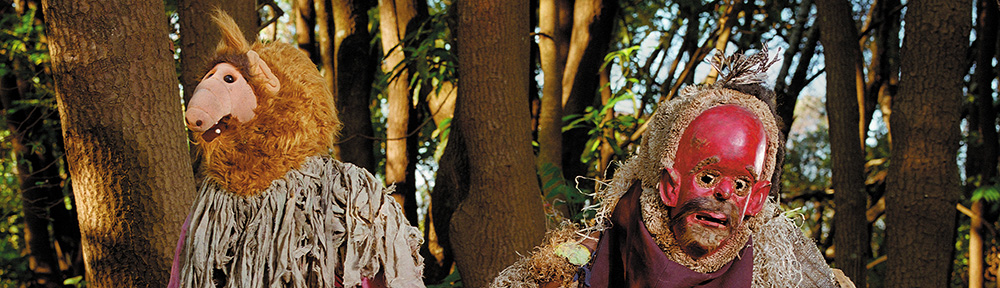
- What do Nyau masks and ritual transform, according to Douglas Curran’s article? Name one thing in particular and explain briefly if necessary.
Responses to the Theft of Light
⤹Click the reply button just below.
Yes, i think bringing the daylight down from heaven was an intentional act of the Giant. Even though we can see that towards the end of the story, the Giant forcefully acts against everyone else on earth as “Giant had repeated his request four times, but those on the water refused what he had asked for” which therefore he broke the container which brings lights. However, the at beginning the Giant already showed his “goal” as to “let every river and creek have all kinds of fish!” as well as “Let every mountain… be full of fruits!”, therefore he needs to bring the lights down from heaven. Moreover, he intentionally turn himself in to the “trickster” as he infiltrates into the Chief’s household and gets access to the container that holds the moon, star and sun by “transformed himself into the leaf of a cedar and floated on the water”, then turned into a small being that live close to the lights and steal it to bring it down from heaven.
Upon first reading I was confused. There isn’t a doubt in my mind though that his true original goal was to give light to the people as stated ‘He made up his mind to bring down the light to our world’. However the part that confused me was when he said ‘Throw ashore the things you are catching or I will break the ma!’. It’s weird because he is using the breaking of the ma as a threat when in the end the breaking of the ma actually brought light to the people. So upon reading it again I think when he broke the Ma his intention was no longer to give light to the world but actually take it away forever otherwise he wouldn’t have used it as a threat 4 times but then by accident the light actually spread and he still gave it to the world accomplishing his original goal.
To me, it seems that bringing daylight down was an unintended consequence of Giant’s actions. The story is called the “Theft of Light,” not the “Hero of Light,” which suggests Giant is not meant to be seen as a true hero. It begins with the tired giant realizing he couldn’t find food because the world was dark and animals couldn’t survive without light. Only then, driven by hunger, does he decide to steal light from the heavens. The story clearly and purposefully says, “then Giant thought that it would be hard for him to obtain his food if it were always dark.” His goal at the start is clearly selfish he wants to feed himself. In the process of trying to solve his own problem, he steals the light, and only then does the world gain daylight. So the benefit to others happens accidentally, not as Giant’s original intention.
Giant bringing down daylight from the heavens was an unintended consequence of his desire to obtain food, and we can see that in the beginning of the passage because he had the idea of capturing the ma to find food, since it was too dark to find any. If releasing the ma was his goal all along, why would he threaten the people with breaking it, and he clearly states this by the end, saying, “Throw ashore one of the things that you are catching, or I shall break the ma!” It was also an unintended consequence because that means often a negative result from a purposeful action, the negative result being the frogs freeze, and the purposeful action being him trying to obtain food.
I think Giant bringing daylight into the lower world was an unintended consequence. He “thought that it would be hard for him to obtain his food if it were always dark.” He wanted the light from heaven for his own selfish reason, which was gathering his own food. Concern for the people of the earth and their lack of light is never mentioned, only their own distress at the darkness. He also only threatens to break the ma, which is the act that creates daylight, in order to somehow punish the animal-people. It’s not clear in the story if Giant even knew that creating daylight would be a consequence of breaking the ma, or what he thought breaking it would do. Clearly he believes that breaking the ma will result in something negative for the animal-people, and indeed it does, since the frogs become stone, but it’s not exactly clear within the story if Giant knew that would be the specific consequence, since he also doesn’t seem to have known that it would make daylight.
Responses to the Oglala Sun Dance
⤹Click the reply button just below.
A specific piece of the Oglala Sun Dance that strikes me as contributing to the transformation of the everyday to a sacred time and space is the intentionality and ceremony behind every action. Many things are done in fours–the dance itself is four days, they howl exactly four times, they strike the tree and earth on the fourth strike, as stated when, “he pretends to strike the wakan tree three times and the fourth time he strikes it.” This practice creates that feeling of ritual and allows for this time to be distinctive and other. Additionally, “the men drink no water while they dance and they do not eat,” they also “look at the sun as it moves,” while they dance. This custom furthers their fixated awareness of the passage of time and the space they occupy, as they can feel in their bodies the physical exhaustion, dehydration and hunger, while they watch time slowly pass through the changes in the sun, similarly to one watching a clock tick. This takes one out of the everyday, forcing you to slow down in such a particular way that only ritual can, making it sacred.
Responses to the Nyau masks and ritual
⤹Click the reply button just below.
The Nyau masks and rituals transform the beliefs of the Chewa people into stories that are shared and continuously grown upon through the generations. They build off their core principles found in the Chewa Myth of Creation, using the intentionally designed masks and dances to tell these tales. This transforms their beliefs into something much more: a creative output, a sense of community, and a way to keep their traditions alive.
Yes, that’s a good point, but what about the masks portraying human behavior? I believe the Nyau masks and rituals represent something individually and collectively represent their culture and faith. The Nyau masks transform ideals into stories but can also transform spiritual identity into dances and songs.
The Nyau masks and rituals transform the performers themselves. This is because the Nyau is suppose to be a sort of secret society and the members use masks to hide their own real life identities as well as allow them to become the characters they are trying to portray. This is why after the author returned, he claimed “no one would talk to me of any dance”. It is also worth mentioning how this may have helped the tradition of Nyau to survive attempts to eradicate it by both missionaries who misinterputed it as a “exhibition of ‘obscenity, sensuality, and cruelty'” and in Zimbabwe where it is being practiced illegaly.
Yes, I completely agree with your points, but I also think that what has helped the tradition and performance of the Nyau survive is their ability to transform modern issues and behavior into dance and open discussion. They stay true to the core morals derived from the Chewa myths, but are not afraid to explore newer issues like AIDS, as mentioned in Curran’s Article.
The masks transform not only the wearer but the society where this tradition has been birthed through the clothing, music, and dancing that the Chewa people of Malawi are known for. This transformation is epitomized on page 70 where Douglas Curran details a distinct moment in his time with the group, where 2 men took him into a tent while he was photographing the tribe and showing him the visual language of their culture for the first time. He discusses how the dance became almost confusing to him, as the dancers evolved into something more than physical, representing ideas and leaving their body behind
Nyau masks and rituals transform not only the performers themselves, but also how topics are typically discussed and portrayed. The Nyau dancers transform from humans within the society into all aspects of life, such as lust, greed, vanity, and foolishness. This transformation allows the dancers to convey important storytelling of the group’s morals, history, and modern issues. The Nyau reconfigure how issues are brought up and discussed, especially from a normative Western view. Potentially explosive topics like politics are communicated without fear as identities are hidden.
Yes, this is such a great point, and through the introduction of new or controversial topics they are able to further transform the dance and whole practice itself by integrating these new ideas or feelings as a new character. Such a great way to remain current and explore sensitive topics in a graceful way, while allowing your practice to evolve naturally. Instead of transformation and change being looked down upon, as is sometimes common within other religions, it is encouraged and in fact essential.