Due Feb 18
Greek Sculpture | Medea, part 2
Reading: Greek Sculpture, Strickland 12-13.
Viewing: Greek Sculpture:
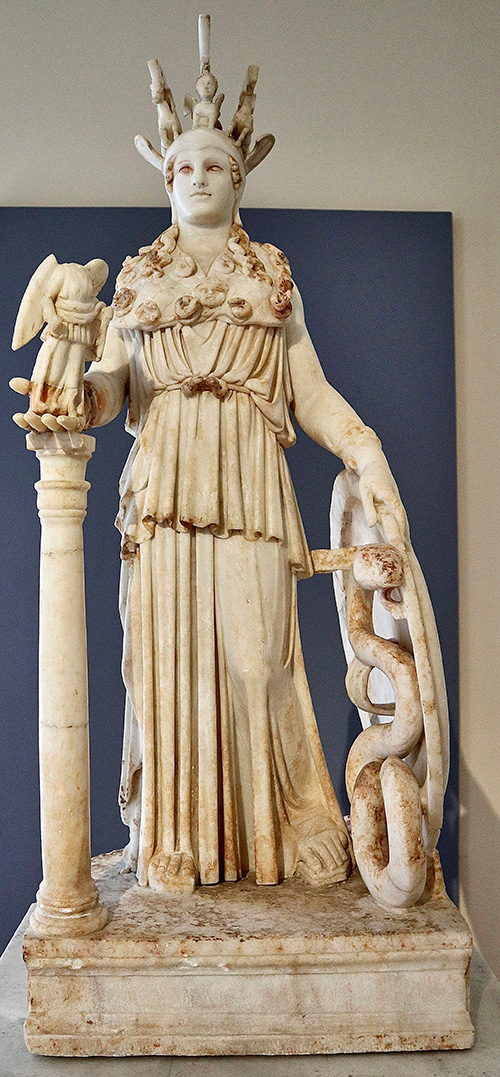
- Athena Parthenos, ~440BCE. Attributed to Phidias, a gigantic figure of the Goddess erected in the Athenian Parthenon to the city's tutelary deity. Now destroyed, the photo shows a 200CE copy made at roughly 1/12 scale.
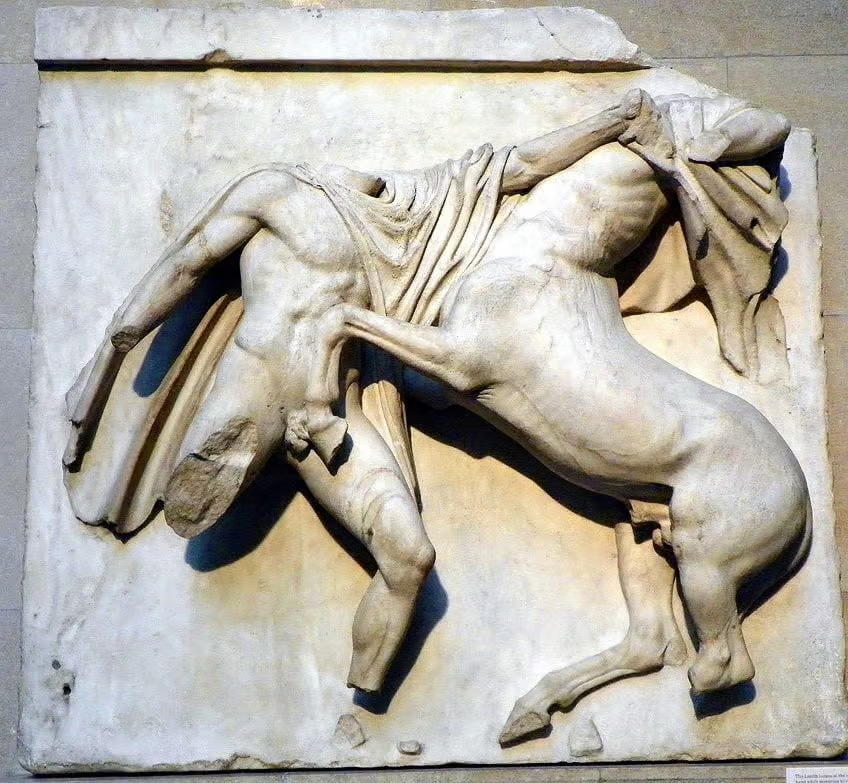
- Lapith fighting a Centaur, ~446BCE. A metope created in the workshop of Phidias for the Athenian Parthenon.
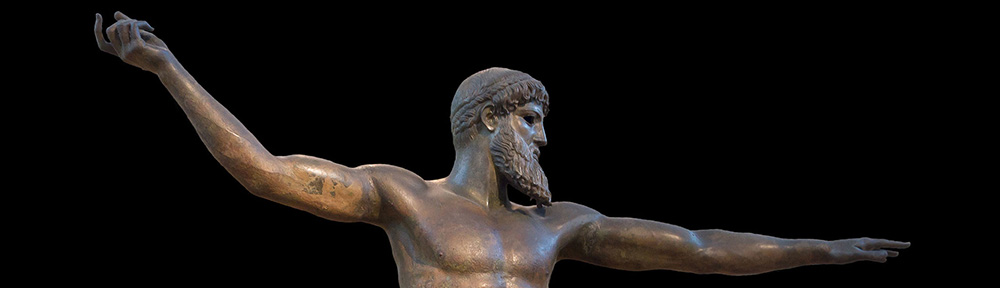
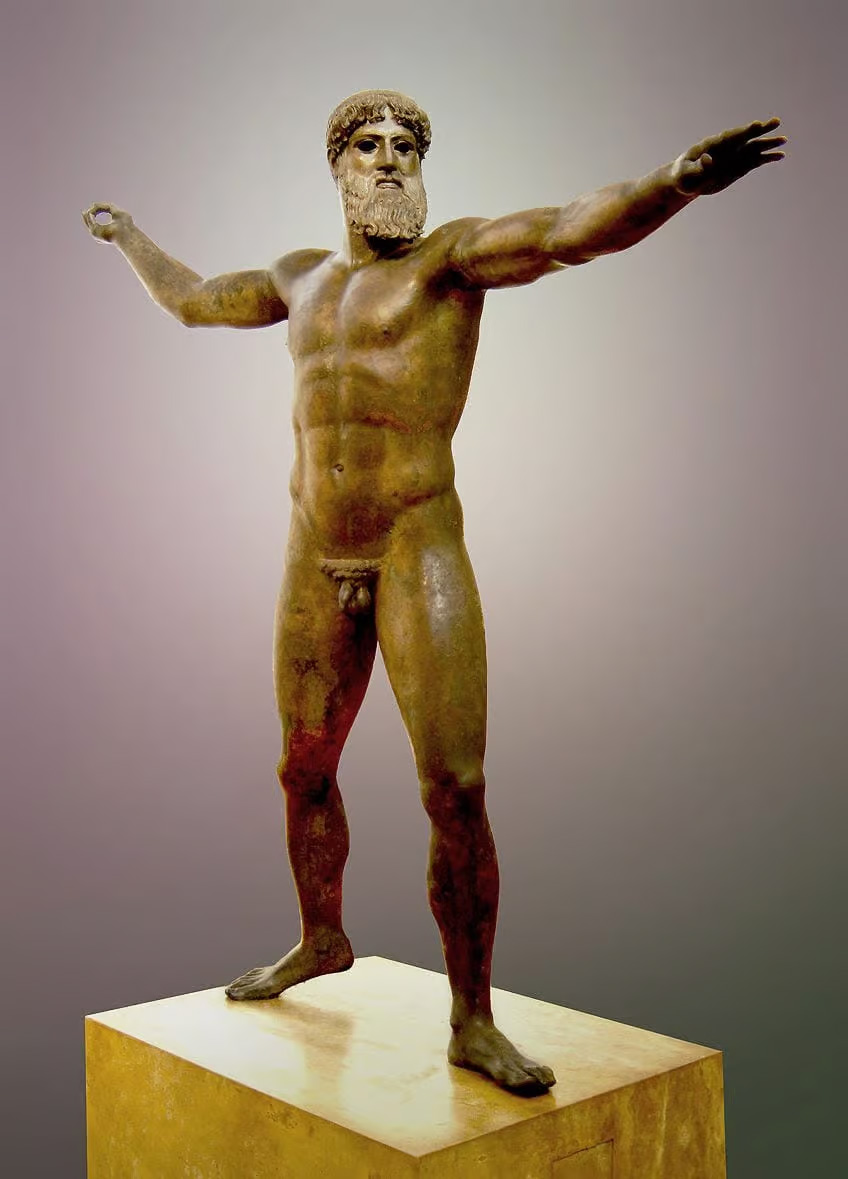
- The Artemision Bronze, 470-400 BCE. Likely a sculpture of Zeus or Poseidon, found in 1926 in a second-century BCE shipwreck.
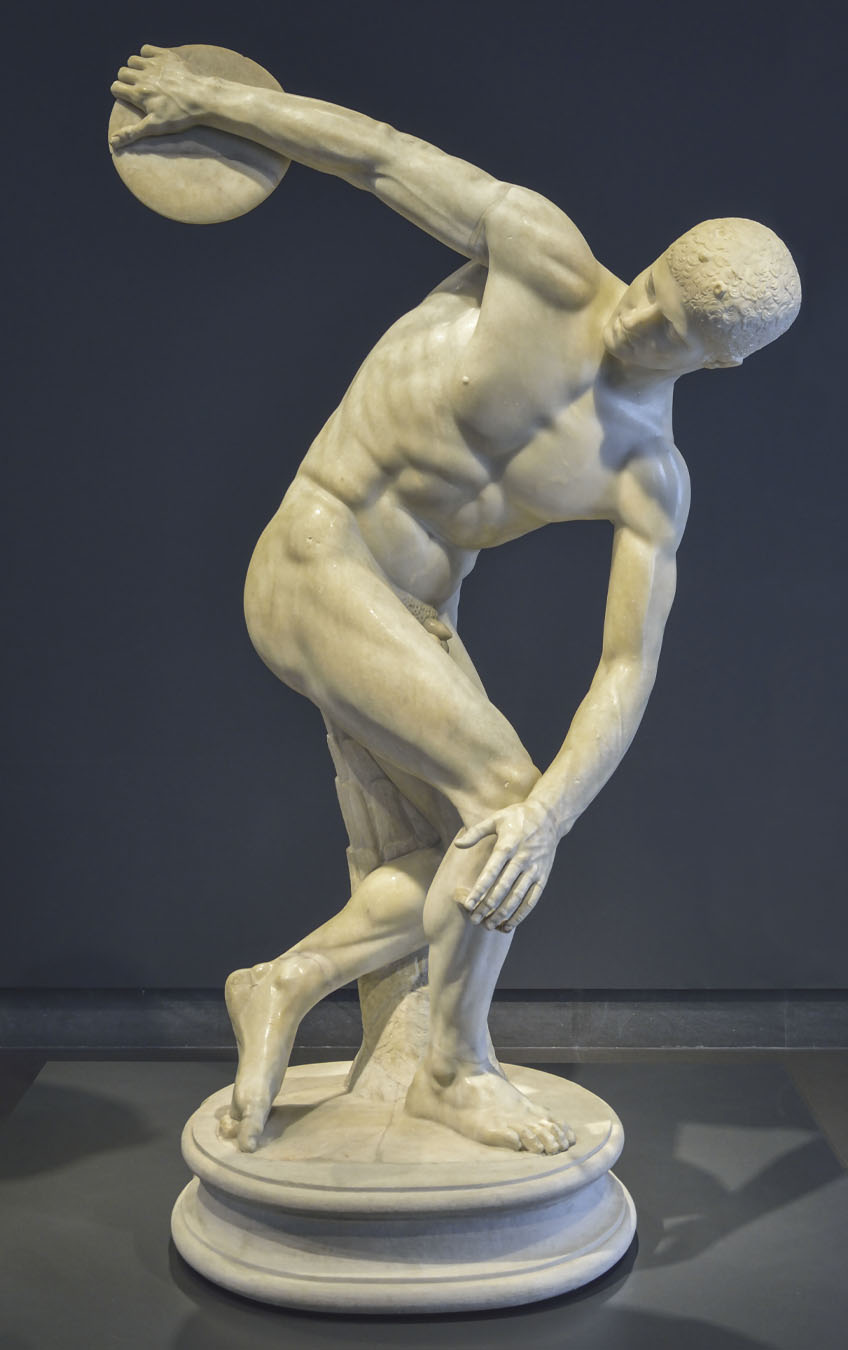
- Discobolos, ~450BCE. Attributed to Myron, a masterfully kinetic work in bronze. Now lost, this full-size marble copy dates to the Roman era (~200CE).
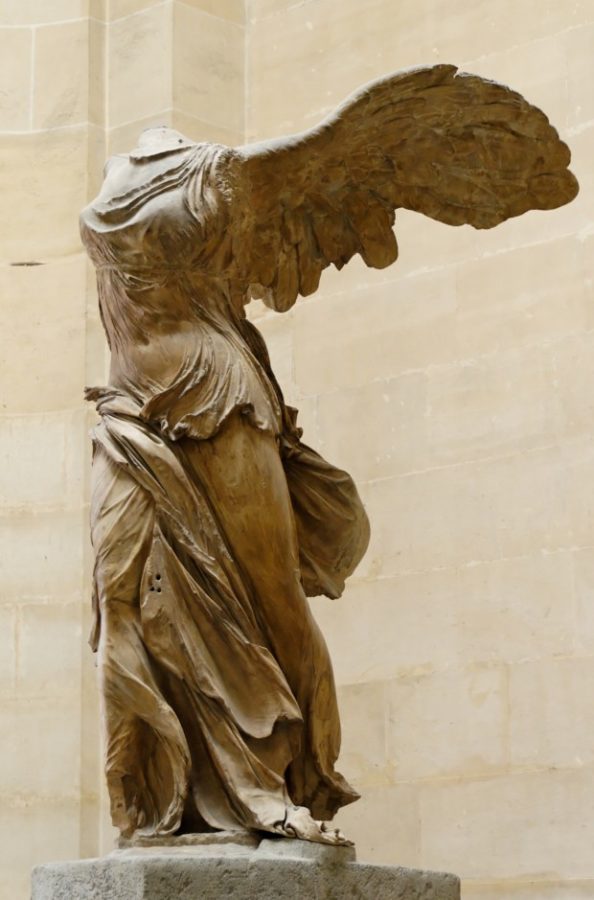
- Winged Victory of Samothrace, ~190 BCE. Also known as the Nike of Samothrace, an 18 foot votive offering (i.e. placed in the sanctuary as an act of devotion, presumably in celebration of a major victory in war).
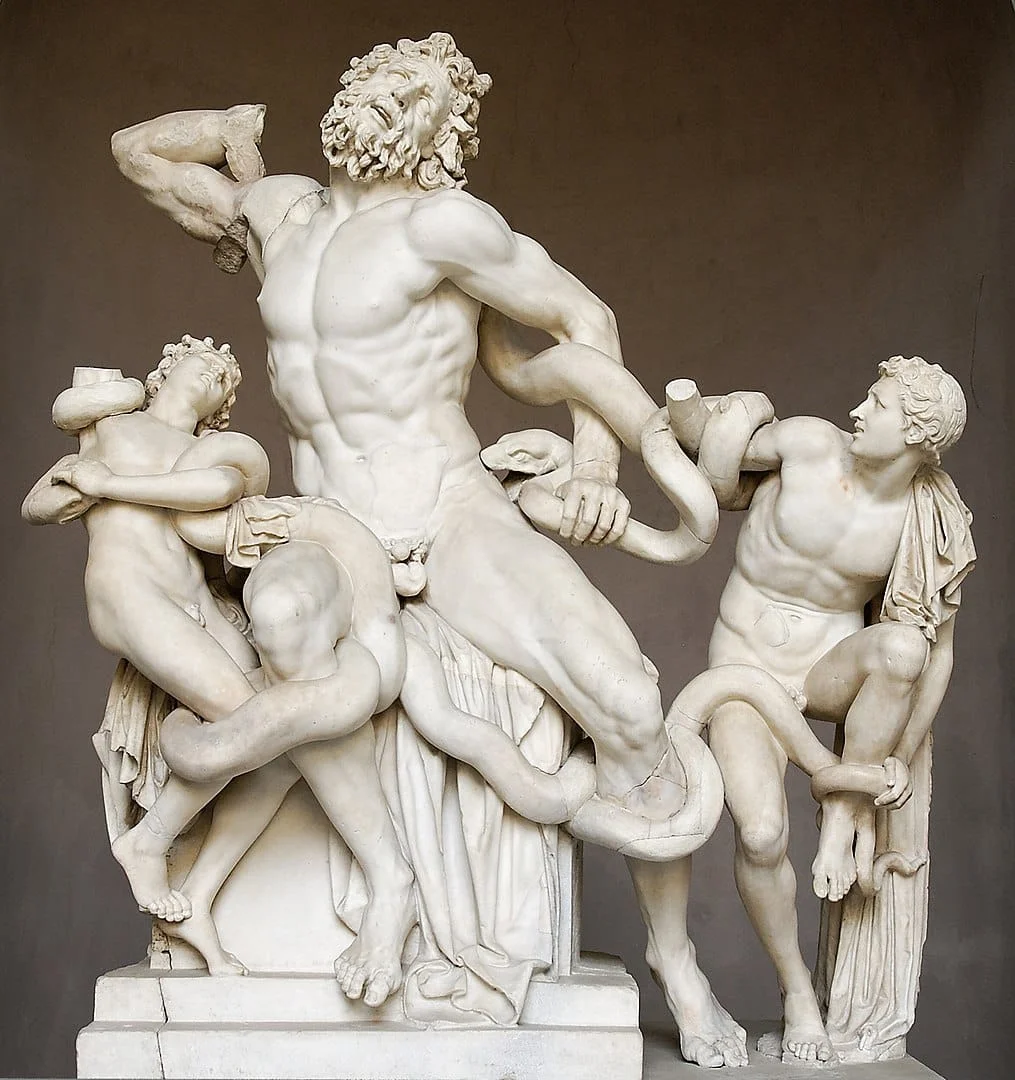
- Laocoon and his sons, 27BCE-68CE. Attributed by the ancient writer Pliny to three sculptors from the Greek island of Rhodes.
Reading: Euripides, Medea, pp 44-77.
Writing: Respond to ONE of the following prompts. Keep your response short, posting as a reply under the appropriate heading in the comments section:
- Choose two of the sculptures and point out something they share in common—or a crucial contrast. Be sure to cite visual details.
- Euripedes' play climaxes in the heroine's almost unthinkable act of vengeance. Why does she do it? Or is her unthinkable act also inexplicable? In answering, be sure to quote a key line.
- What do you think of the Chorus in this play? In explaining your emotional reaction, point to a key line or moment.
Comparative Analysis of Two Sculptures
⤹Click the reply button just below.
The Discobolos and the Winged Nike are both incredible studies of movement. Both statues capture the momentum and movement of a body in motion, with the Discobolos poised to throw and release a disc and the Winged Nike appearing to have just landed after being in flight. Neither feel like static figures; rather, they both feel as though they could step off their plinths at any moment and resume the arc of motion that their bodies are fixed in. There is incredible attention to detail in the exact positions of their bodies in order to convey that motion, and in the case of Winged Nike, her clothing and drapery also convey motion and even wind with exquisite preciseness.
I definetly agree that the Discobolos and Winged Victory are sculpted in such a way where motion is the centerpiece and dramaztization is the main appeal. The attention to detail is definetly impressive but I found the Winged Victory to be much more precise with its carving mainly due to the cloth covering but also because of the Hellenistic nature of the piece. This draws attention directly to the overall posture and detail of the sclupting than the actual nude body itself which I found interesting considering how prominently nudity was featured as an artistic device during this time.
The Discobolos captures an athlete frozen at the moment of peak motion, this is right before he release the discus. Whilst Laocoon shows a different emotional state as the priest and his sons are entangled. Both of these sculptures depict bodies with movement and complex twisting poses. However, we can see that Discobolos shows a more controlled movement which seems to be idealized showing restrained and balanced emotions. The Laocoon otherwise shows chaotic and intense emotions and physical and psychological suffering shown vividly indicating Hellenistic drama and realism.
The sculptures I’m comparing are the Athena Parthenos and the Winged Victory of Samothrace. Both statues are representative of a victory of some sort, so both appear proud and strong in their stances. Furthermore, both statues have a depiction of the Goddess Nike, the goddess of victory, to some extent. With the first statue, the goddess has Nike in her hand, conveying the idea that victory was taken easily in battle. While the second statue is actually of the Goddess Nike, embodying those ideas of victory. The two sculptures could also be seen as differing slightly in that the first statue holds herself with a confidence as if she has just come from battle, and she is holding a shield and wearing a crown of some kind. While the second statue is also confident, but she more so depicts a heavenly elegance or beauty, she appears almost ethereal, rather than strong.
Explaining Medea’s Bloody Act
⤹Click the reply button just below.
Medea killing her sons serves as her ultimate act of vengeance to Jason. In ancient Greece, creating lasting lineage is seen as honorable and away to cement your legacy. She says that killing her children will destroy Jasons lineage and that after once she is done “the house of Jason lies in ruins, I’ll escape from Corinth”(45). Jason has to live knowing that his ambition to move up socially caused the death of his descendants. This seems to be a recurring theme in greek mythology similar to Icarus. I think that last part about leaving is also signifiant as her children are in a way tying her to Jason and Corinth and by killing them she is severing the connection.
I want to draw attention to the first few lines in the play where the nurse says, “If only it had never happened like this… If Pelias the king hadn’t sent those heroes off to do his bidding, to cross the sea and steal the Golden Fleece. It would all be different. Not as it is. My dear mistress Medea, would never have met their leader, Jason; never fallen for him, head over heels, never left a life behind to sail away with him….” This could imply that the whole story was simply a mistake. That none of it should’ve happened. Medea’s hubris got the better of her; she believed that she could take vengeance on Jason and kill everyone he knew and loved in order to feel some sort of satisfaction in the end. But surprisingly enough that wish became true; she did get what she wanted, which contrasts our typical expectations of a character who is filled with such arrogance and overconfidence which is to rise then fall, to reach tragedy and failure but yet in this case, the opposite happens, and Medea actually ascends so far to almost reach the level of a god by the end of the story.
Meditations on the Chorus in Medea
⤹Click the reply button just below.
In Medea, the Chorus functions as both moral witnesses and emotional gauges who sympathize with Medea’s suffering, yet recoil from the lengths she is willing to go to get her revenge. What makes them stand out to me is their oscillation between solidarity with Medea’s pain and horror at her actions. I find the Chorus deeply tragic because they are able to see the tragedy brewing, yet are powerless to stop it. The quote “You made us listen; made us party to your plan. We must remind you of humanity’s simple laws. You must not do this dreadful thing” (Euripides 46) illustrates a key point of tension when the Chorus realizes the extent of Medea’s growing rage. They understand the logic of her want for revenge, yet instinctively recoil from the idea of the violent familicide. Their fear mirrors the audience’s realization that Medea will cross a line that cannot be uncrossed. However, what I find most interesting is that the Chorus never fully abandons Medea. They condemn the act, but they do not move against her. This nuance makes the tragedy hold more impact as the Chorus reflects how torn the audience feels. We’re horrified by what Medea does, but we also can’t ignore the pain and betrayal that led her to make that choice.