Due Mar 2
Christianity: a brief introduction
Many of you have read the Christian Gospels before, and all of you have at least some familiarity with Christian beliefs and tradition. So we’re spending just a single day on this vital topic, and I aim to focus on lesser-known aspects of the origin of this vital world religion. Please email me with any follow-up questions—or raise your hand in class!
Reading: selections from the New Testament, as translated by Richmond Lattimore (Blackboard: Christian Scripture.pdf).
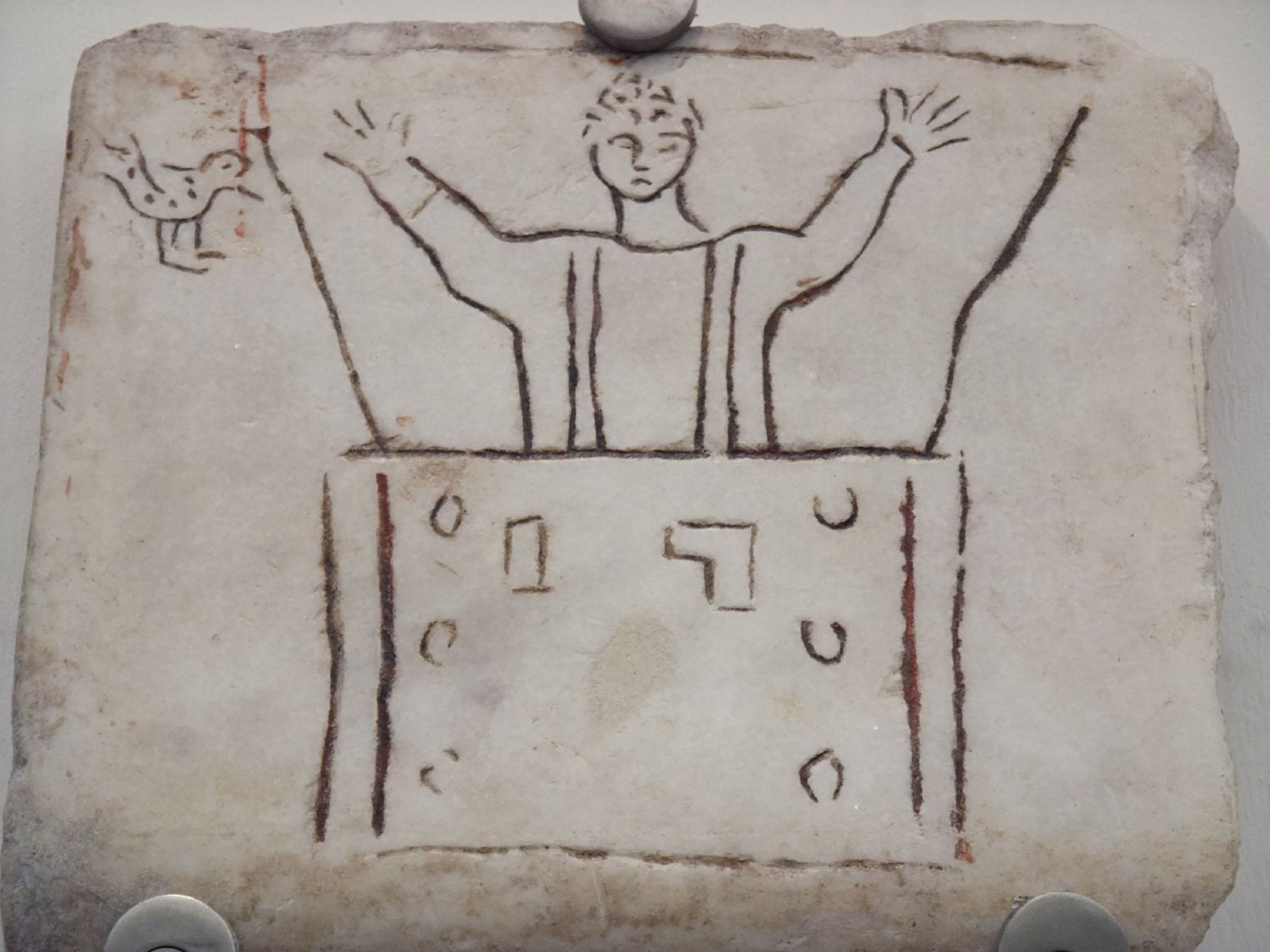
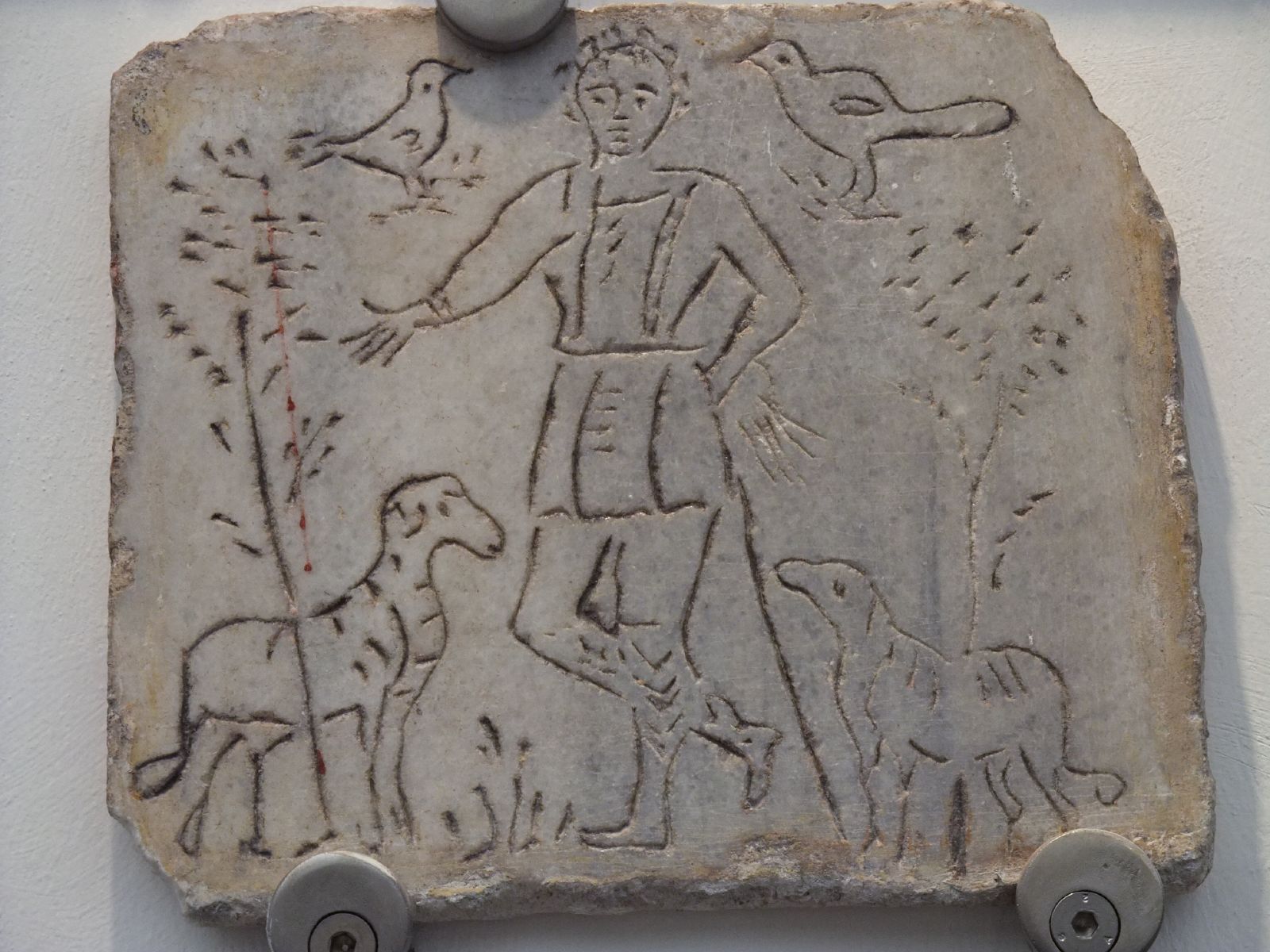
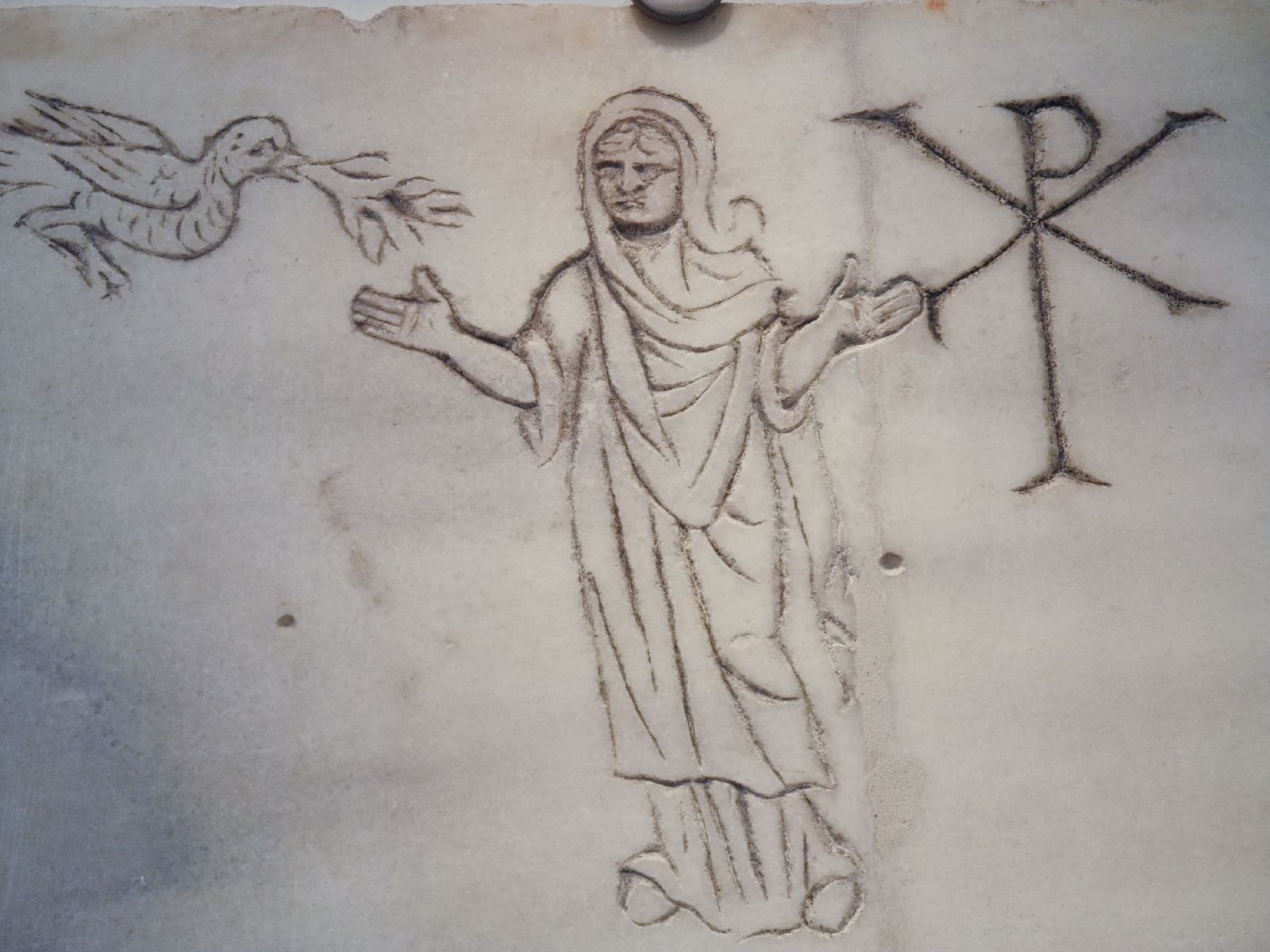
Viewing: Christian Funerary Art from the Roman Catacombs.
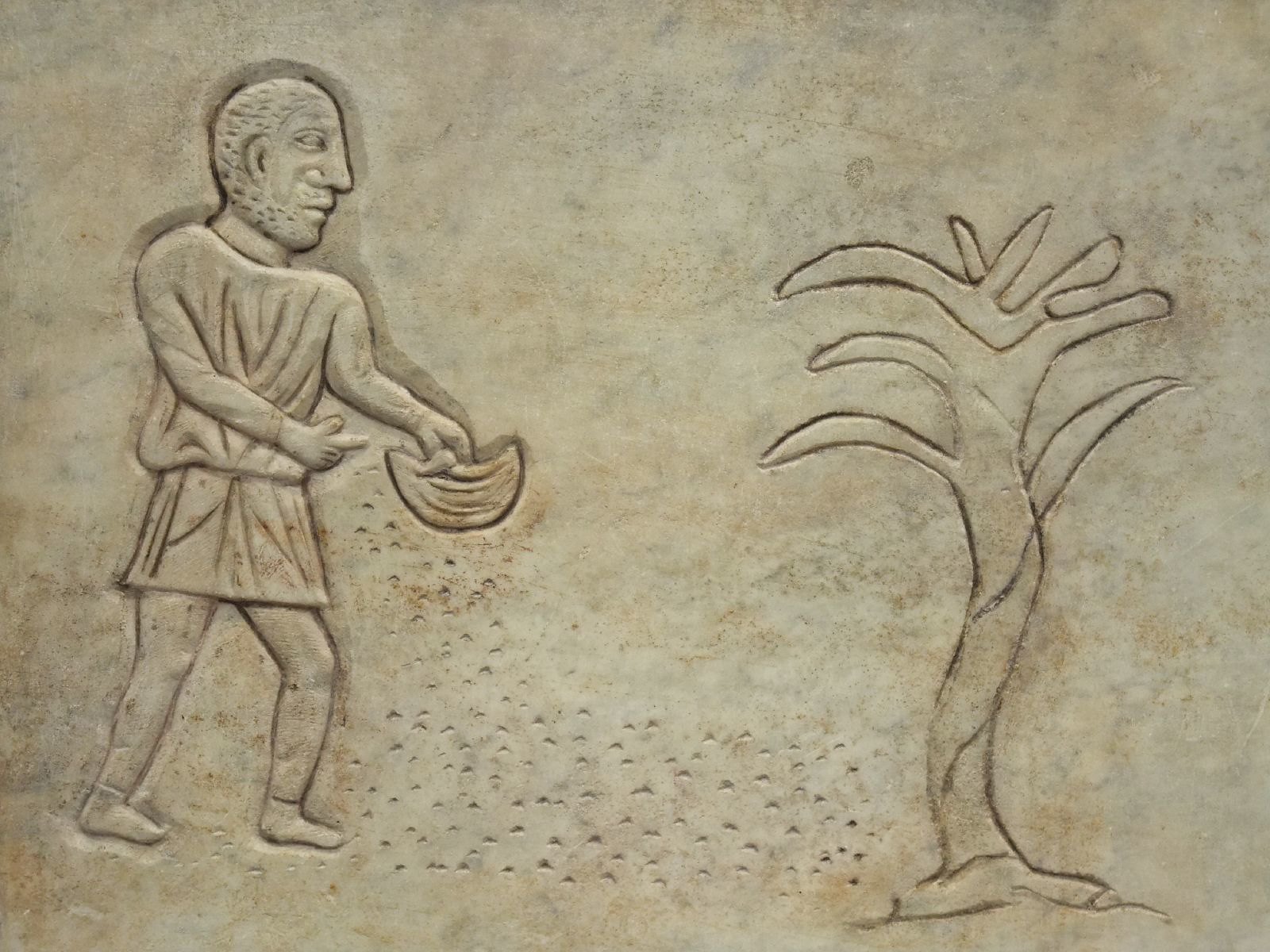
(Credit: Mary Harrsch at the Museo Nazionale Romano in the Baths of Diocletian, Rome: link)
Writing: Respond to ONE of the following prompts. Keep your response short, posting as a reply under the appropriate heading in the comments section:
- Identify and comment on a repeated motif from the reading: for example, healing or feeding. Don’t just name the pattern, but focus attention on the details: if healing, who is healed and how? if feeding, who is fed and how?
- Jesus often presents his teaching in the form of “parables.” Apply what you’ve learned in Rhetoric to explain (or perhaps question) the effectiveness of one of the parables the reading.
- Name one of your preconceptions about Christianity and explain how it was challenged by something in today’s reading.


Repeated Motifs
⤹Click the reply button just below.
A repeated motif I noticed from the reading was the fight against darkness or evil, and in contrast the presence of light. This can first be seen in the Gospel of Matthew when Jesus is teaching his disciples the ways of God, saying, “blessed are you when they shall revile you and persecute you and speak every evil thing of you, lying, because of me.” Jesus then encourages them to, “let [their] light shine.” He is actively teaching his followers to dispel darkness and evil by allowing their beliefs in God to hold strong in front of the people so that God’s teachings can be shared widely. This is seen again later when Jesus says to wear the lords armor, and embody his teachings so that individuals are able to stand, “against the world rulers of this darkness, against the spirits of evil in heaven.” Again, it is encouraged to stand strong with the Lord and his teachings to combat any dark forces that wish to discourage belief. The armor acts as the light in this instance, allowing followers to have protection against darkness.
One repeated pattern is healing as restoration. This is the pattern that Jesus’ healings are not just medical fixes but social and also spiritual restorations, often has a strange push toward secrecy. The people healed are usually people who are the sick, the “unclean”, the disabled. The method is usually personal and bodily such as touch, spoken command. The details are essential due to Jesus not only remove the symptoms but he help them come back to the community life, this normally happens through touch or direct conversation. He reaches out rather than stay distant. In this culture where touching a person could make you unclean if they are, so this reverses the expectations. Rather than impurity spreading, healing spreads. Later of many miracles, Jesus tell the person to keep a secret, this makes the moment with more tensions, further even suggests that healing is not meant to be spectacle. This feels less like a power performance but rather an act of returning someone not just their physical health but to their place in the community.
The Rhetoric of Parables
⤹Click the reply button just below.
In the Parable of the Good Samaritan, Jesus answers a legal expert who asks, “Who is my neighbor?” while trying to justify himself. Instead of giving a direct definition, Jesus tells a story about a priest and a Levite who ignore a wounded man, but a Samaritan stops, feels pity, treats his wounds with oil and wine, and pays for his care. This parable is effective as it makes the reader vividly visualize the scene and feel the contrast offered by the opposing characters. It is surprising that the Samaritan, someone typically looked down on, acts most compassionately, challenging the audience’s assumptions. At the end, Jesus asks which man was the true neighbor, and the legal expert has to answer, “The man who treated him with mercy.” By making the lawyer say the answer himself, Jesus shifts the meaning of “neighbor” from a category of people to an action, which makes the lesson more persuasive and memorable.
I agree that Jesus’ use of parables as a form of teaching is an effective and persuasive way to get a point across. Like you were talking about in the parable of the Good Samaritan, Jesus uses similar storytelling in the Gospel of Luke. A guest says, “Blessed is he who dines in the Kingdom of God,” in which he assumes that he will be included in the feast in God’s Kingdom. Jesus tells him a parable of how when a man threw a feast, the invited guests refused to come, while the poor did come. Through this story, Jesus is teaching that the people welcomed in God’s kingdom are those who respond to his invitation and aren’t presumptuous. Social status doesn’t matter; it is how you act. By making the guests see themselves in the invited guests in the parable, it tests their original assumption that they will be automatically invited to God’s kingdom. Like the lawyer answering Jesus’ question himself, the guests in the story are now able to understand the lesson on a personal level. The teaching is persuasive and memorable.
I agree that the good samaritan story is a prime example of a parable as Jesus uses a story of named characters. By telling us a story Jesus makes us sympathize more. This is like in rhetoric where we are taught to use specific stories instead of statistics to engage our readers sense of pathos and make them Carew about what we are saying. It also related to what we learned in social since during the destruction of the West Indies as that story is told without names to make it a story less about indiviuals and more about ideas and morals. If Jesus simply tells the man the answer too his question, it will not have the same effect as the idea of a man who “went down from Jerusalem to Jericho and fell in with robbers who stripped him and beat him and went away leaving him half dead” and the man who “pitied him, and went to him and bound up his wounds”. This is also resemblant of the old testament where each chapter used new characters to portray biblical values instead of explicitly stating the values.
Your Preconceptions—and How the Reading Challenged Them
⤹Click the reply button just below.
As a person who isn’t Christian and have never read the bible. I had a preconception of Jesus being this all loving all knowing divine person. So in the passage where he says “If someone comes to me and does not hate his father and mother and wife and children and brothers and sisters, and even his own life also, he cannot be my disciple.” This caught me by suprise as it didn’t feel like a “divine” or gentle being was saying this, it felt almost demanding as one must follow his exact orders and hate all others to be his disciple. While I am not certain of a alternate or deeper meaning, this was my initial reaction when I read that line.
I agree as this exact line was also the one I found the most surprising in the text. Though I have read the Bible before, I have only read the King James religious translation and not any scholarly translations. “Hate” struck me as such a strong and even extreme word to describe the complete abnegation of self that Jesus seems to demand from his followers. At the same time, it makes a kind of sense to me because it seems more aligned with the harsh demands of the God of the Hebrew Bible.