Due Apr 29
Romanticism and Revolution
In this mini-module, we explore Beethoven’s third symphony, Eroica, as a case study in Romantic ideas about the role of genius in artistic expression and social transformation.
As background for this assignment, it helps to have a sense of the cultural cachet of Napoleon for the Romantics. Romantic radicals in both England and Germany had high hopes for the French Revolution as marking a break with the sclerotic aristocratic order. And Napoleon’s seizure of power in 1799 renewed those hopes, not simply by ending the Terror, but because he embodied the Romantic ideal of the great man: someone who rose to prominence not thanks to high birth but merely on the strength of his genius and determination.
Beethoven’s worship of Napoleon is the more striking because, like many composers in this era, he was supported by the patronage of Austrian nobles—the very people most threatened by Napoleon’s rise to power. Indeed, the Eroica had its premiere at the Vienna palace of Prince Lobkowitz; a year later Napoleon briefly occupied Vienna during his successful invasion of Austria, securing significant concessions from the Hapsburgs.
Reading: Christopher Gibbs, “Notes on Beethoven’s Third Symphony.”
Listening: Frankfurt Radio Symphony, “Beethoven: 3. Sinfonie (»Eroica«).” Feel free to play the symphony in the background while you do other work. But keep alert for moments that feel particularly striking, perhaps where the mood shifts unexpectedly. Make note of the time, so you can reference this in the homework.
Neoclassical and Romantic History Painting

- Jacques-Louis David, The Death of Marat (1793): mourns the assassination of Jean-Paul Marat, a leading revolutionary, by a partisan from a rival group.
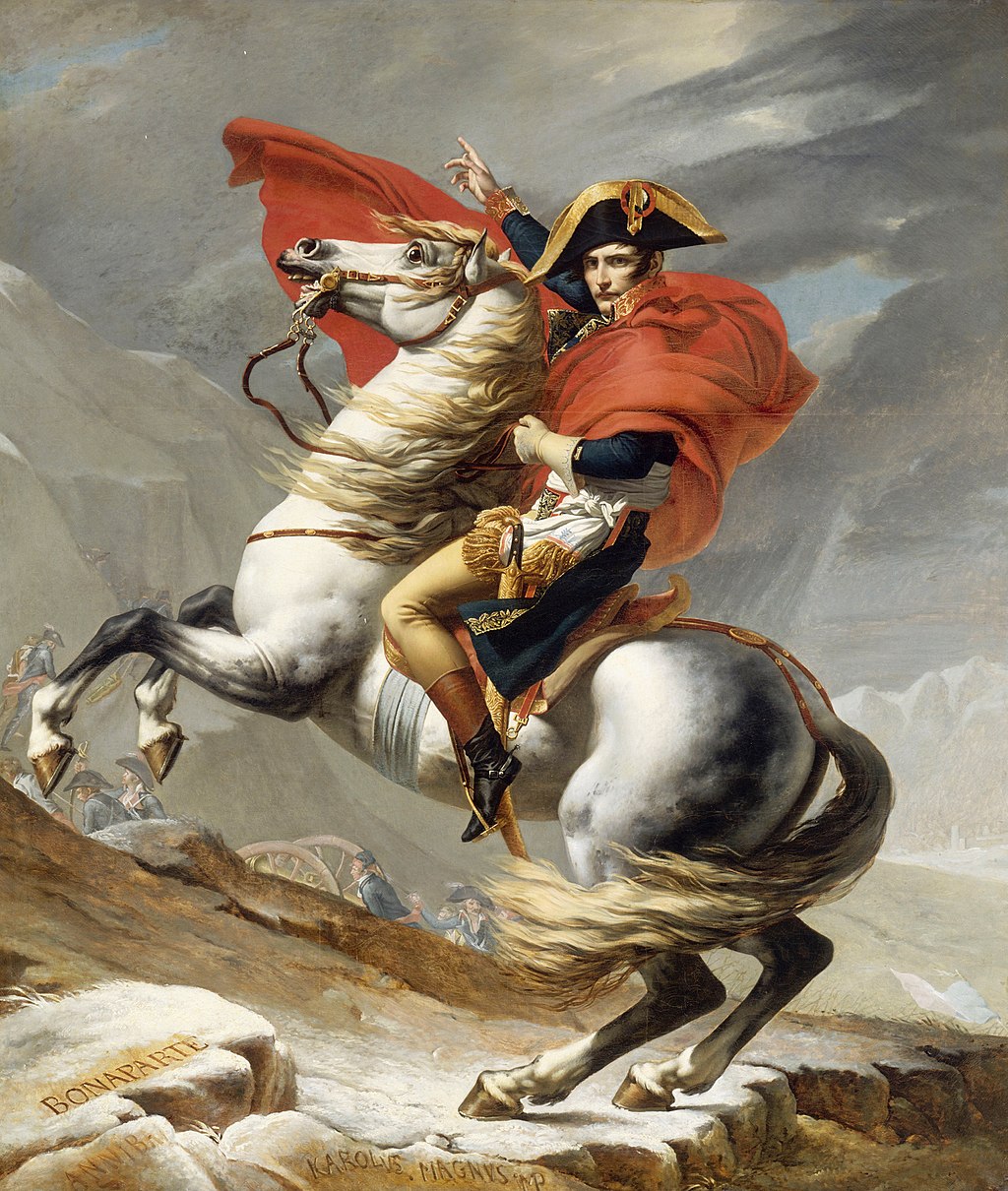
- Jacques-Louis David, Napoleon Crossing the Alps (1801-05): celebrates Napoleon’s return to the front lines in the battle with Austria over control of northern Italy, after seizing political power in the Coup of 18 Brumaire in December 1799.
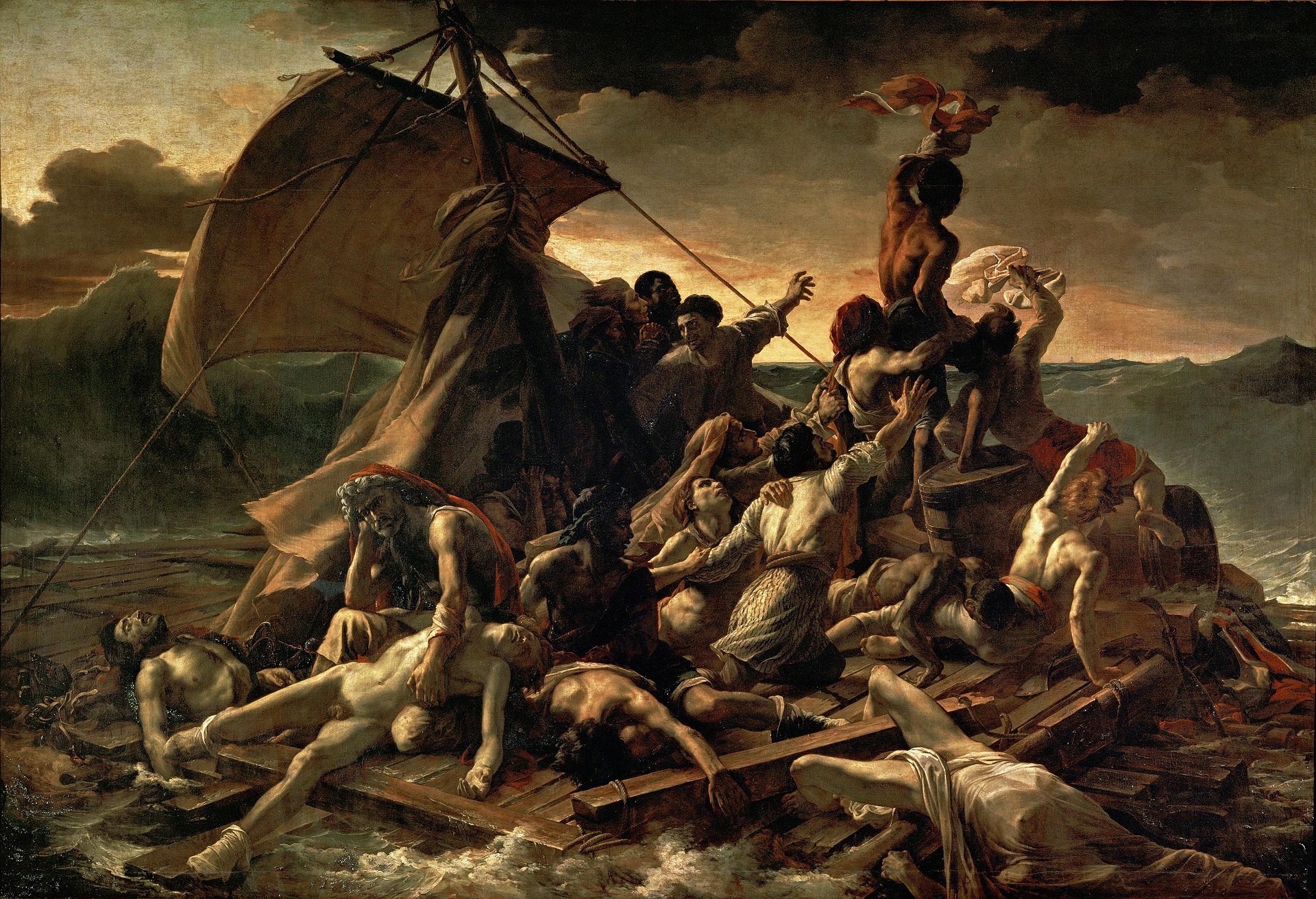
- Théodore Géricault, The Raft of the Medusa (1818): depicts the survivors of the naval frigate Medusa, which ran aground due to the incompetence of the Captain in 1816.
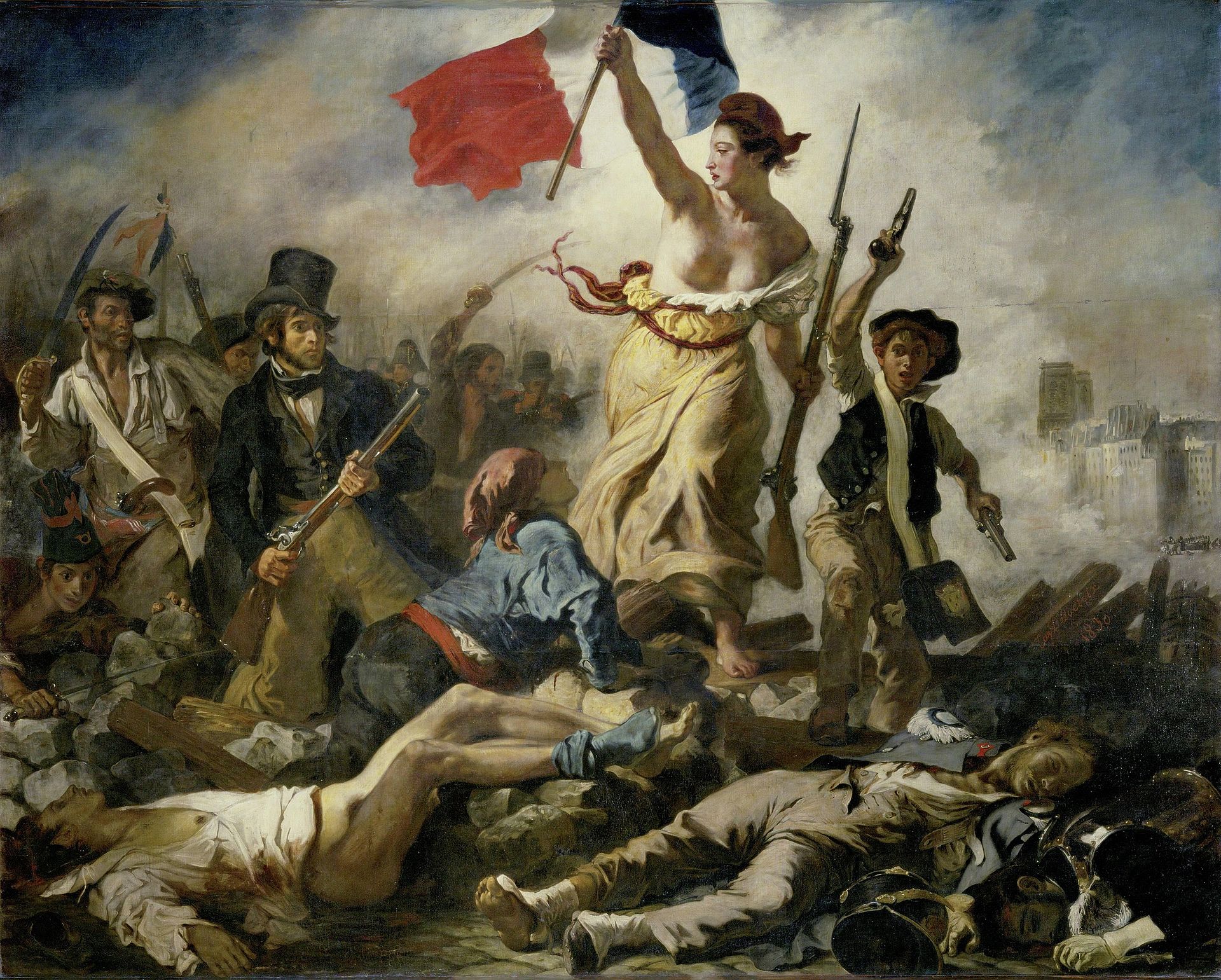
- Eugène Delacroix, Liberty Leading the People (1830): commemorates the July Revolution of 1830 that deposed King Charles X.
For more on these works, check out Strickland 68-69 and 76-78.
Writing: Respond to ONE of the following prompts. Keep your response short, posting as a reply under the appropriate heading in the comments section:
- Call our attention to a particularly striking moment from the Eroica symphony, giving a brief description of what you hear and the emotion(s) it arouses. If you’re musical, feel free to use technical terms in describing what you hear; if not, make up for your lack of vocabulary with vivid language: “short, high-pitched notes,” “deep, languid strings,” etc. Include a link to the moment from the symphony by clicking YouTube’s “clip” feature and pasting the resulting link into your comment (don’t paste the embed code; just the link!).
- Draw a connection between what you hear in the Eroica symphony and what you learned from Christopher Gibbs. In your comment, point to a particular section of the symphony, describing in general terms what you hear—a “relentless beat,” “energetic horns,” etc. Explain how what you hear relates to some particular element of Gibbs’ commentary. As above, use YouTube’s clip feature to creat a link to the moment in the symphony you’re talking about.
- Comment on a pattern—or a difference—in the way that these paintings create history. What literary genre do they call to mind? Alternatively, how would you describe their presentation of historical figures and events? Do they celebrate? Lament? Condemn? Given this, what role do these paintings imagine for the artist in relation to politics and history?
Striking Moments in the Eroica
⤹Click the reply button just below.
What You Hear vs. Gibbs’ Account
⤹Click the reply button just below.
Painting History
⤹Click the reply button just below.