Shelley and Smith, “Ozymandias”
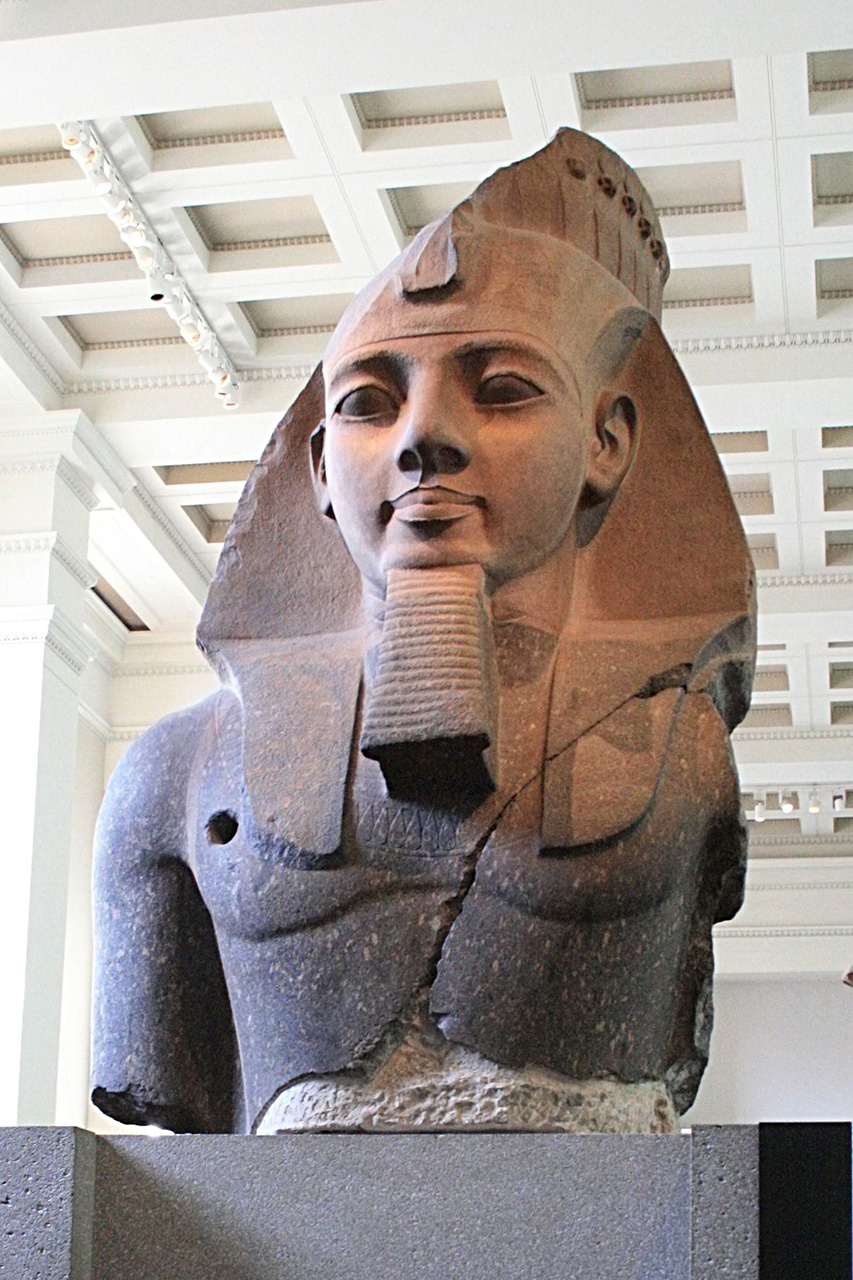 In December 1817, Horace Smith vacationed with Percy Bysshe Shelley and Mary Shelley (author of Frankenstein). During the holiday, news broke that a giant Egyptian bust of Ramesses II had been acquired for the British Museum by the Italian archaeologist Giovanni Belzoni. (Archaeology was then in its infancy: Belzoni, a former circus strong man, was less a scientist than a smash-and-grab antiques dealer; fifteen years earlier, Napoleon’s men had attempted to acquire the same sculpture for France, but it proved too bulky for extraction.) In a spirit of friendly rivalry Shelley and Smith agreed to write poems about Belzoni’s find, which at the time was just beginning the long voyage to London. Relying on written reports of the statue’s size, they drew also on the ancient Greek historian Diodorus Siculus, who described encountering a giant Egyptian statue with the inscription “King of Kings Ozymandias am I. If any want to know how great I am and where I lie, let him outdo me in my work.”
Ozymandias
I met a traveller from an antique land
Who said: Two vast and trunkless legs of stone
Stand in the desart. Near them, on the sand,
Half sunk, a shattered visage lies, whose frown,
And wrinkled lip, and sneer of cold command,
Tell that its sculptor well those passions read
Which yet survive, stamped on these lifeless things,
The hand that mocked them and the heart that fed:
And on the pedestal these words appear:
“My name is Ozymandias, king of kings;
Look on my works, ye Mighty, and despair!”
Nothing beside remains. Round the decay
Of that colossal wreck, boundless and bare
The lone and level sands stretch far away.
Horace Smith
Ozymandias
In Egypt’s sandy silence, all alone,
Stands a gigantic Leg, which far off throws
The only shadow that the Desert knows:—
“I am great OZYMANDIAS,” saith the stone,
“The King of Kings; this mighty City shows
The wonders of my hand.”— The City’s gone,—
Naught but the Leg remaining to disclose
The site of this forgotten Babylon.
We wonder,—and some Hunter may express
Wonder like ours, when thro’ the wilderness
Where London stood, holding the Wolf in chace,
He meets some fragment huge, and stops to guess
What powerful but unrecorded race
Once dwelt in that annihilated place.