Greek Sculpture | Medea, part 2
Reading: Greek Sculpture, Strickland 12-13.
Viewing: Greek Sculpture:
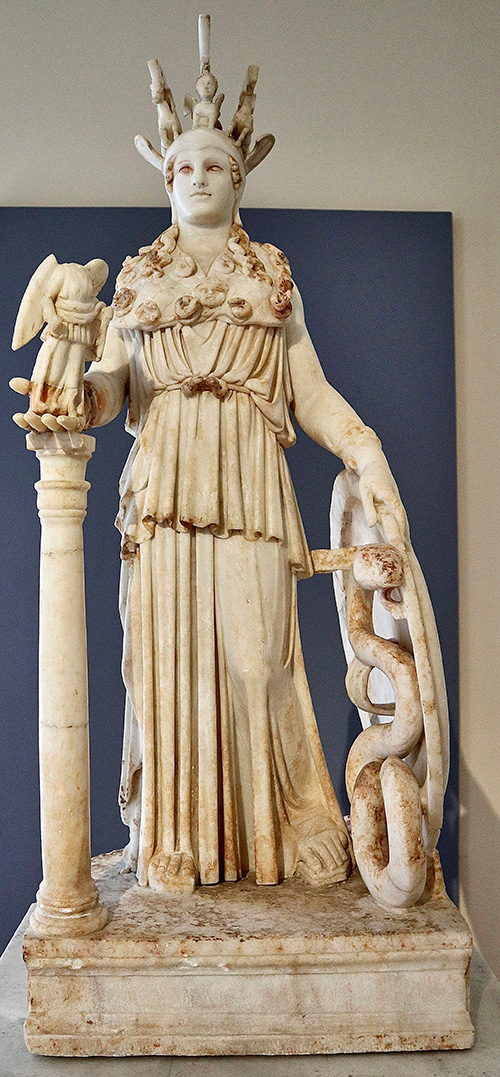
- Athena Parthenos, ~440BCE. Attributed to Phidias, a gigantic figure of the Goddess erected in the Athenian Parthenon to the city’s tutelary deity. Now destroyed, the photo shows a 200CE copy made at roughly 1/12 scale.
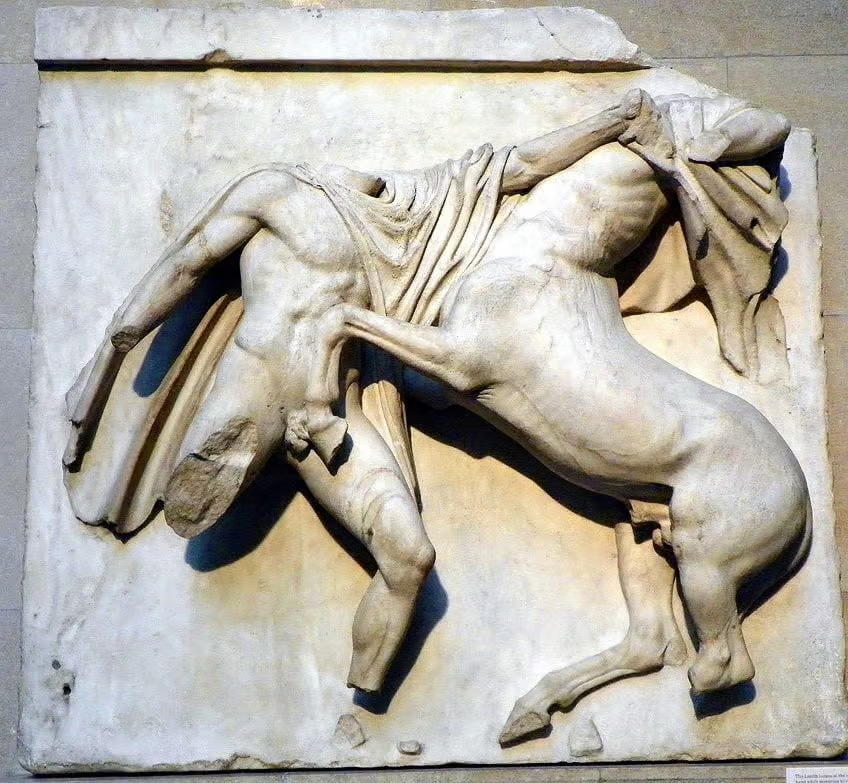
- Lapith fighting a Centaur, ~446BCE. A metope created in the workshop of Phidias for the Athenian Parthenon.
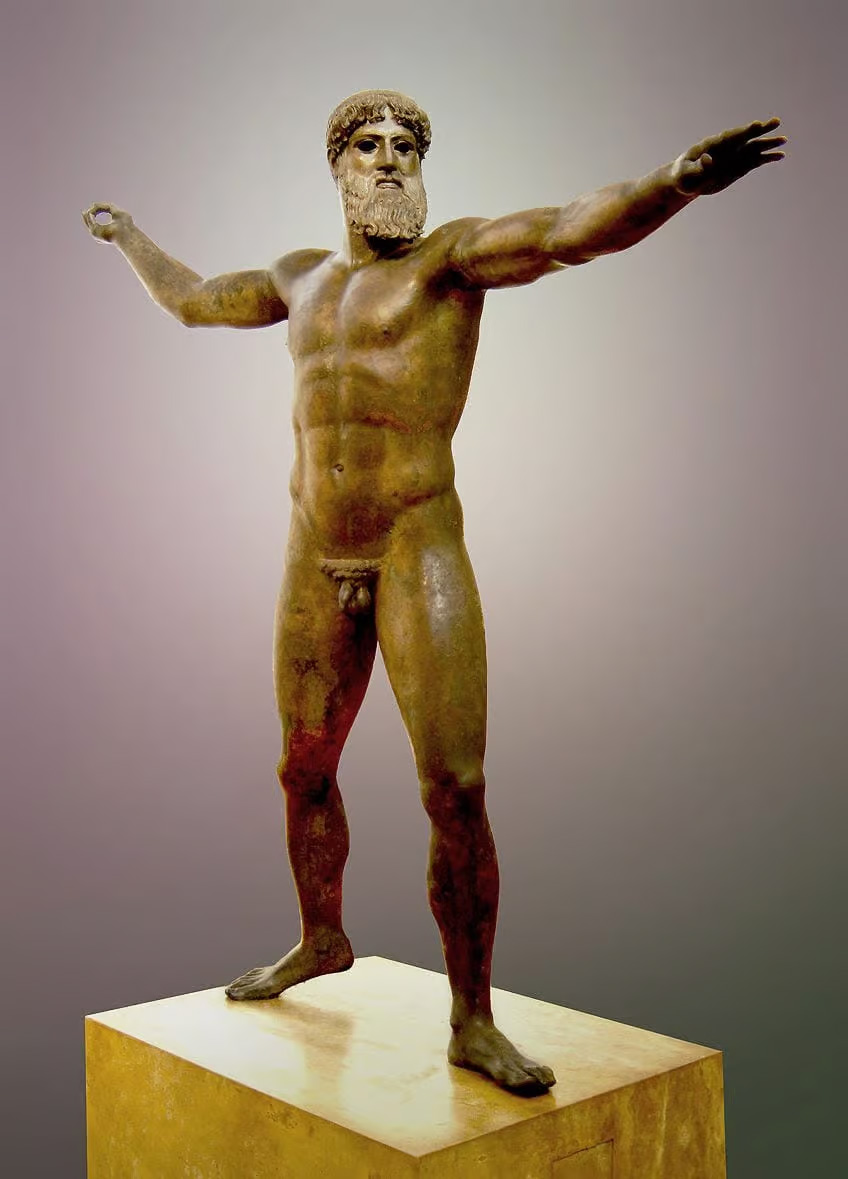
- The Artemision Bronze, 470-400 BCE. Likely a sculpture of Zeus or Poseidon, found in 1926 in a second-century BCE shipwreck.
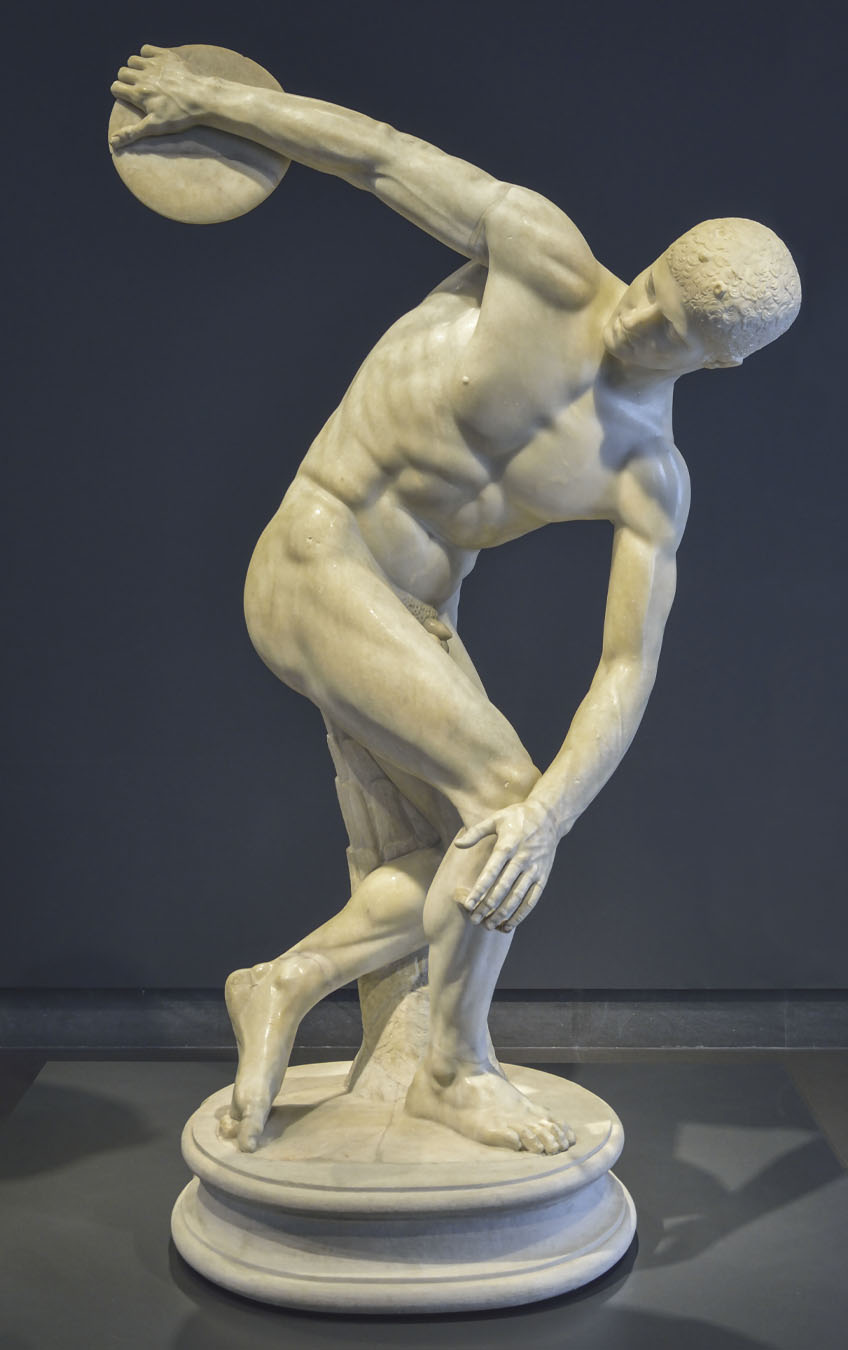
- Discobolos, ~450BCE. Attributed to Myron, a masterfully kinetic work in bronze. Now lost, this full-size marble copy dates to the Roman era (~200CE).
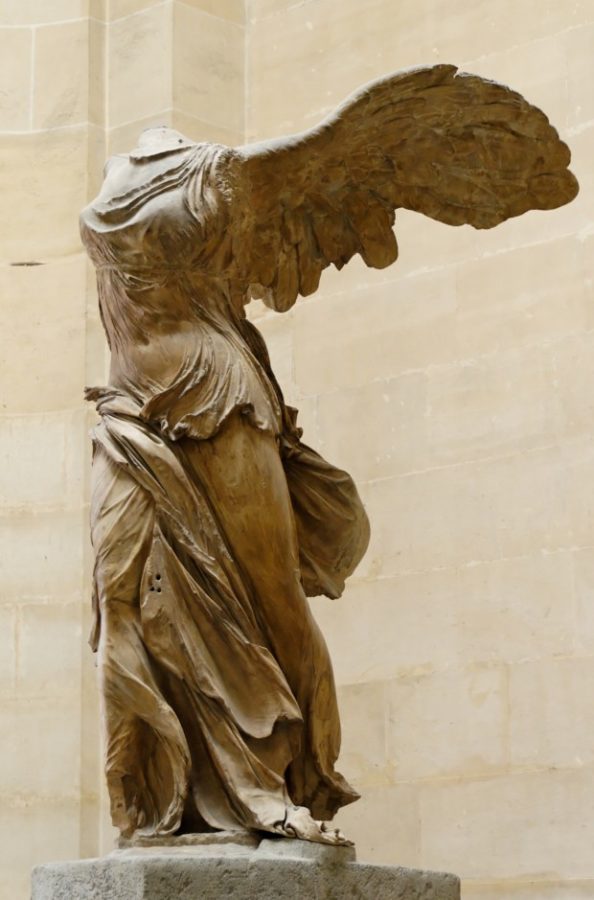
- Winged Victory of Samothrace, ~190 BCE. Also known as the Nike of Samothrace, an 18 foot votive offering (i.e. placed in the sanctuary as an act of devotion, presumably in celebration of a major victory in war).
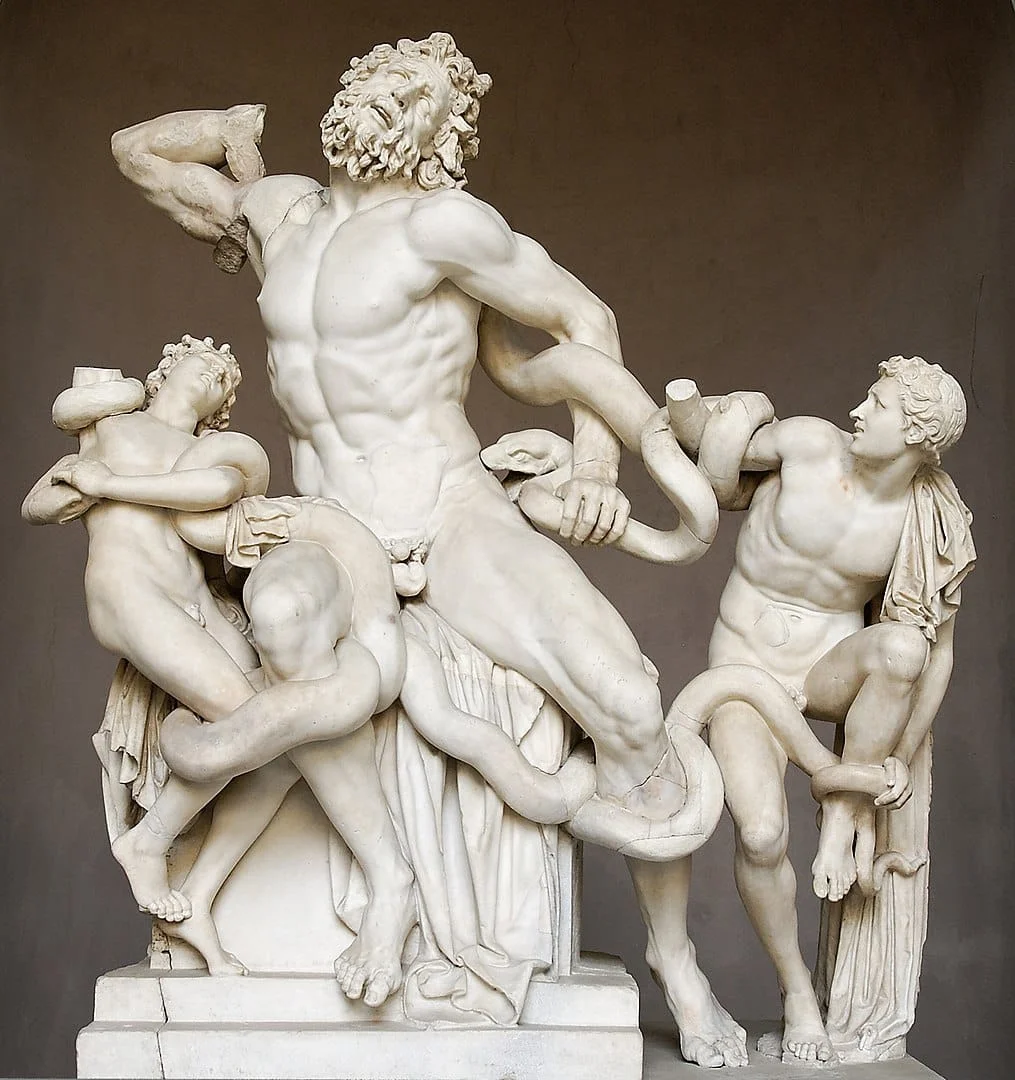
- Laocoon and his sons, 27BCE-68CE. Attributed by the ancient writer Pliny to three sculptors from the Greek island of Rhodes.
Reading: Euripides, Medea, pp 44-77.
Writing: Respond to ONE of the following prompts. Keep your response short, posting as a reply under the appropriate heading in the comments section:
- Choose two of the sculptures and point out something they share in common—or a crucial contrast. Be sure to cite visual details.
- Euripedes’ play climaxes in the heroine’s almost unthinkable act of vengeance. Why does she do it? Or is her unthinkable act also inexplicable? In answering, be sure to quote a key line.
- What do you think of the Chorus in this play? In explaining your emotional reaction, point to a key line or moment.