Essay Prompts

Essay Prompt: in a 1200-1500 word essay, use a text we read for this class to better understand an object you encountered on your tour of the MFA Boston (or vice-versa).

What I'm Looking For
This essay assignment invites you to connect a work of art at Boston’s MFA with one of the texts we read in the first half of the semester. This combination of sources will require you to use two different modes of close analysis, visual and literary.

Two Sources? So this is a compare and contrast essay?

No. I’m looking for a “deepening digression” essay. A compare and contrast essay is interested in both sources equally. But in this essay I want the two sources to play different roles: Source A is the main event, while Source B serves merely as a tool—as a lens used to bring Source A into focus.

Which source should play which role?

It depends. Think about which source strikes you as strange, as needing to be explained and brought into better focus. Use that as Source A, and relegate the other to serve as analytical tool. But only if that second source really does give you at least a glimmer of a better grasp of the first one. If there’s no special “spark” when you bring the two sources together, maybe you need a different pair of sources.

So choosing the right pair of sources can be challenging?

Yes! Don’t choose your sources casually. Doing some preliminary thinking at the outset is vital to writing any paper—not just this one!

Essay Structure
  • Title: Use the title to signal both the topic and your unique take on it. One way to do this is with a “Title: Subtitle” structure, where the subtitle defines the topic, whereas the title signals your particular take on that topic.
  • Introduction: Use the the introduction to accomplish three vital tasks:
    • Orient the reader to your “main event” source. Is it famous, a work most people have heard of, so you only need to remind us about it? Or is it something abstruse, so you need to start by engaging our interest?
    • Voice a preliminary understanding of the “main event” source. What’s obvious? What’s puzzling about it?
    • Voice your essay’s mission: roughly speaking, you plan to draw on source B (name or describe it) to better understand source A. Ideally, end the intro ¶ with the deeper understanding that you plan to argue. A genuine thesis claim is always better than a mere promise of insights to come. If necessary, leave us with a promise for now, but come back and rewrite your thesis claim once you’ve finished the essay and you know what you actually conclude.
  • Early Body ¶s: Use the first one or even two body ¶s to flesh out the preliminary understanding, thus making sure your reader is “up to speed” on the basics of Source A. Do the obvious stuff first, and try to end this section with a focus on what’s odd or puzzling about Source A. (That puzzlement is vital: it will serve to motivate the digression into Source B at the start of the next section.)
  • Digression ¶s: Use one or two ¶s to briefly give an account of Source B. Focus on details and qualities that “rhyme” with the qualities you were discussing in Source A. Remember, this isn’t really an essay about Source B: focus your account on what matters in your quest to better understand Source A. At the same time, don’t anticipate what you plan to say in the final section: limit your discussion to facts and details from Source B, with nary a mention of source A. Aim to end this section with a focus on the KEY from source B that (in the next section) will unlock the puzzle of Source A.
  • Final Body ¶s: Return to source A with a bang, announcing how some detail or insight from Source B solves the puzzle of Source A. Flesh out the implications of this analysis, and you’re all done—except for the conclusion.
  • Conclusion: What have you accomplished? Beyond merely restating your thesis claim, what are the larger implications of your analysis? How does seeing Source A in the larger context of Source B deepen our grasp of the culture(s) that produced them?
Sources
Sources allowed and not allowed: The purpose of this essay is to measure your skills as a reader and NOT as a researcher. Don’t turn to Google, Wikipedia or Chat-GPT for insight. Feel free to draw on class notes, HW posts, and scholars I assigned as reading. In the end, though, this is the sort of essay in which the real answers turn out to be hidden in the details of the primary source: read it, quote it, ponder it—and turn it into evidence.

Source citation: Use MLA style for source citation. This means parenthetical citations to signal the use of ideas or information and NOT just for citing quotations. Keep the parenthetic citation short: just a last name and page or line reference (in cases where the author is unknown, like Gilgamesh, give the title rather than the author, followed by a page or line ref). Then, in a list of Works Cited at the essay’s end, provide a list of the sources your cited, alphabetized by author last name—or title in the case of Gilgamesh.
Include a photo
Include at least one image you took of the object. Strong preference for photographs you took yourself. Either way, be sure to credit the photographer, whether yourself or someone else.

Class 14.1

Finding the Self in Nature

In 1798, two young and little-known poets, William Wordsworth and Samuel Taylor Coleridge, co-published a book that became the manifesto of the English Romanticism, Lyrical Ballads. In the volume’s “Preface”, Wordsworth criticized the “the gaudiness and inane phraseology of many modern writers,” arguing that the poet is (or should be) “a man speaking to men.” This was, as Benjamin Voigt comments, “a revolutionary idea in English poetry: that the voice or speech of poetry should sound the way non-aristocrats actually spoke.” Wordsworth paired this plain language with characters and scenes drawn from the countryside, arguing that “Humble and rustic life … [provide] the essential passions of the heart … a better soil in which they can attain their maturity.” He thus found in nature a setting for self-discovery.

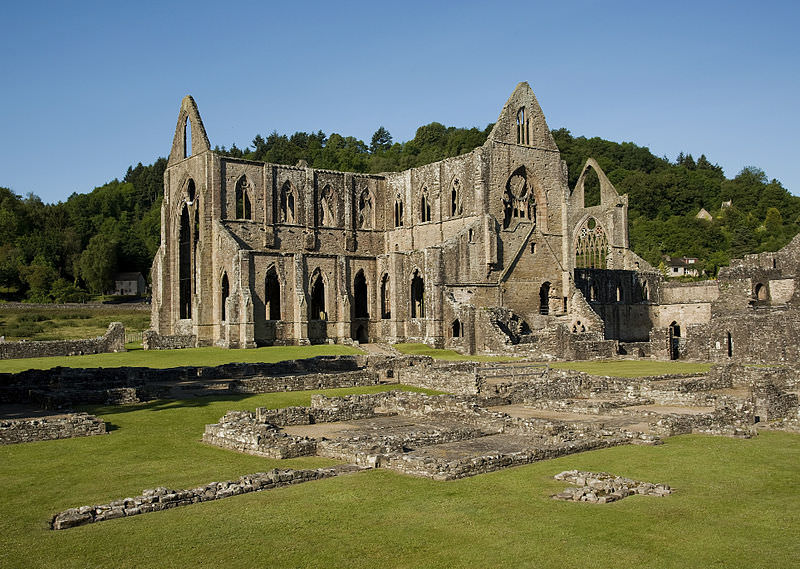
Tintern Abbey, Wales

Yet Wordsworth envisioned the poet as not just any man, but one “endowed with more lively sensibility, more enthusiasm and tenderness, who has a greater knowledge of human nature, and a more comprehensive soul, than are supposed to be common among mankind.” Rather than a clever versifier (think ChatGPT), Wordsworth asks that the poet speak from lived experience: “poetry is the spontaneous overflow of powerful feelings: it takes its origin from emotion recollected in tranquillity.” Thus, artistic process becomes the artist’s principal topic: “emotion is contemplated till, by a species of reaction, the tranquillity gradually disappears, and an emotion, kindred to that which was before the subject of contemplation, is gradually produced, and does itself actually exist in the mind. In this mood successful composition generally begins.”

Reading: four poems from Lyrical Ballads. (I’ve saved the hardest one for last.)

  • Wordsworth, “The Tables Turned,” link.
  • Wordsworth, “She Dwelt among the Untrodden Ways,” link.
  • Coleridge, “This Lime-tree Bower my Prison,” link.
  • Wordsworth, “A Few Lines Composed Above Tintern Abbey,” link. Note: this is a challenging poem; to give you some sense of the landscape that inspired Wordsworth, here’s a short video with drone footage of Tintern Abbey in Wales.

Writing: Respond to ONE of the following prompts. Keep your response short, posting as a reply under the appropriate heading in the comments section:

  1. Both Coleridge and Wordsworth are known for their evocative power of description. Quote and comment on a passage that paints a picture of the poet’s lived experience: what he sees, hears, thinks, or feels.
  2. Romantic poets claim to have prioritized self-expression. But does Wordsworth present himself consistently in the three poems we read, or do these poems strike you as voiced by different “speakers”?

Lecture 14

Romanticism and Revolution

In this mini-module, we explore Beethoven’s third symphony, Eroica, as a case study in Romantic ideas about the role of genius in artistic expression and social transformation.

As background for this assignment, it helps to have a sense of the cultural cachet of Napoleon for the Romantics. Romantic radicals in both England and Germany had high hopes for the French Revolution as marking a break with the sclerotic aristocratic order. And Napoleon’s seizure of power in 1799 renewed those hopes, not simply by ending the Terror, but because he embodied the Romantic ideal of the great man: someone who rose to prominence not thanks to high birth but merely on the strength of his genius and determination.

Beethoven’s worship of Napoleon is the more striking because, like many composers in this era, he was supported by the patronage of Austrian nobles—the very people most threatened by Napoleon’s rise to power. Indeed, the Eroica had its premiere at the Vienna palace of Prince Lobkowitz; a year later Napoleon briefly occupied Vienna during his successful invasion of Austria, securing significant concessions from the Hapsburgs.

Reading: Christopher Gibbs, “Notes on Beethoven’s Third Symphony.”

Listening: Frankfurt Radio Symphony, “Beethoven: 3. Sinfonie (»Eroica«).” Feel free to play the symphony in the background while you do other work. But keep alert for moments that feel particularly striking, perhaps where the mood shifts unexpectedly. Make note of the time, so you can reference this in the homework.

Neoclassical and Romantic History Painting

  • Jacques-Louis David, The Death of Marat (1793): mourns the assassination of Jean-Paul Marat, a leading revolutionary, by a partisan from a rival group.
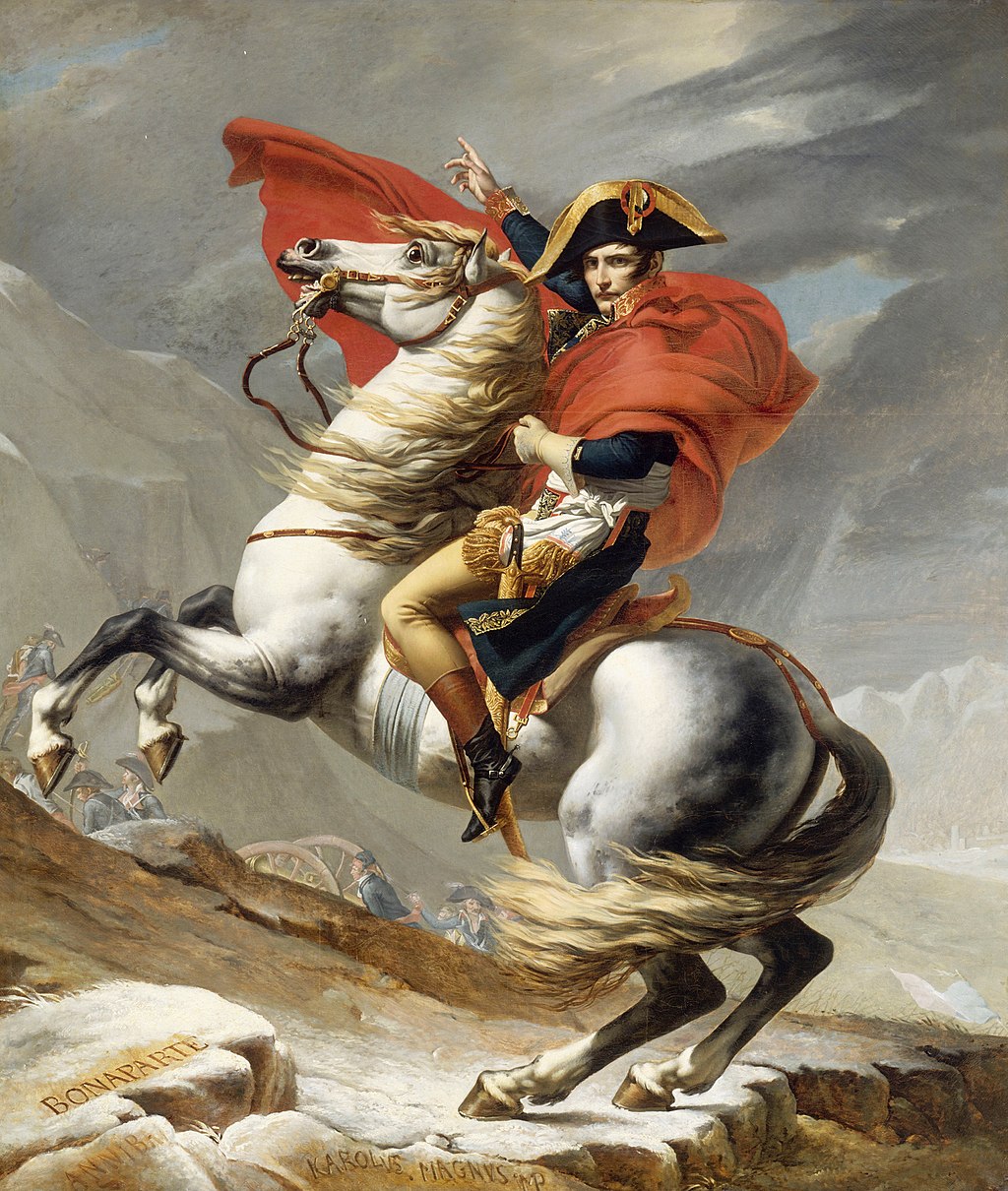
  • Jacques-Louis David, Napoleon Crossing the Alps (1801-05): celebrates Napoleon’s return to the front lines in the battle with Austria over control of northern Italy, after seizing political power in the Coup of 18 Brumaire in December 1799.
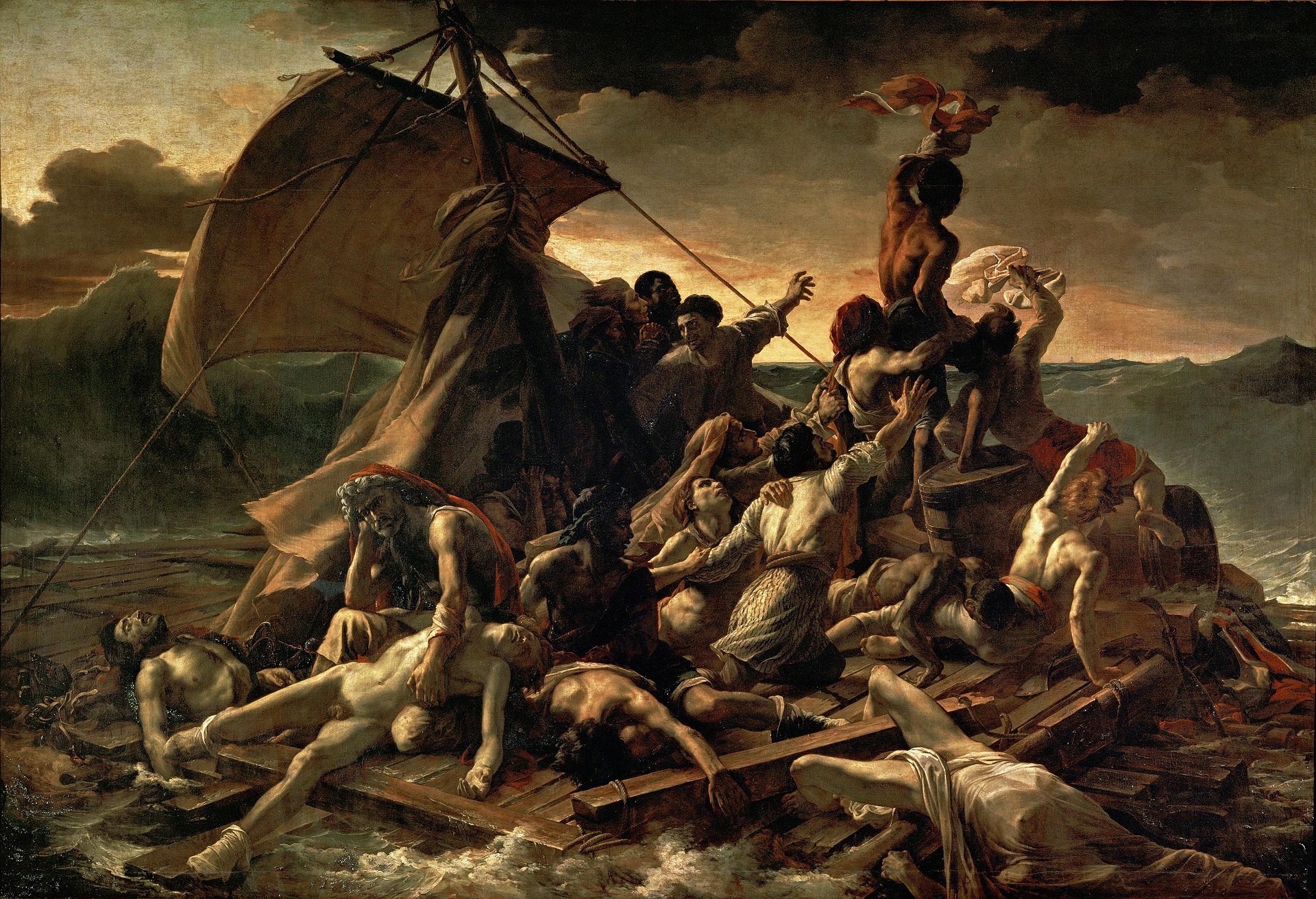
  • Théodore Géricault, The Raft of the Medusa (1818): depicts the survivors of the naval frigate Medusa, which ran aground due to the incompetence of the Captain in 1816.
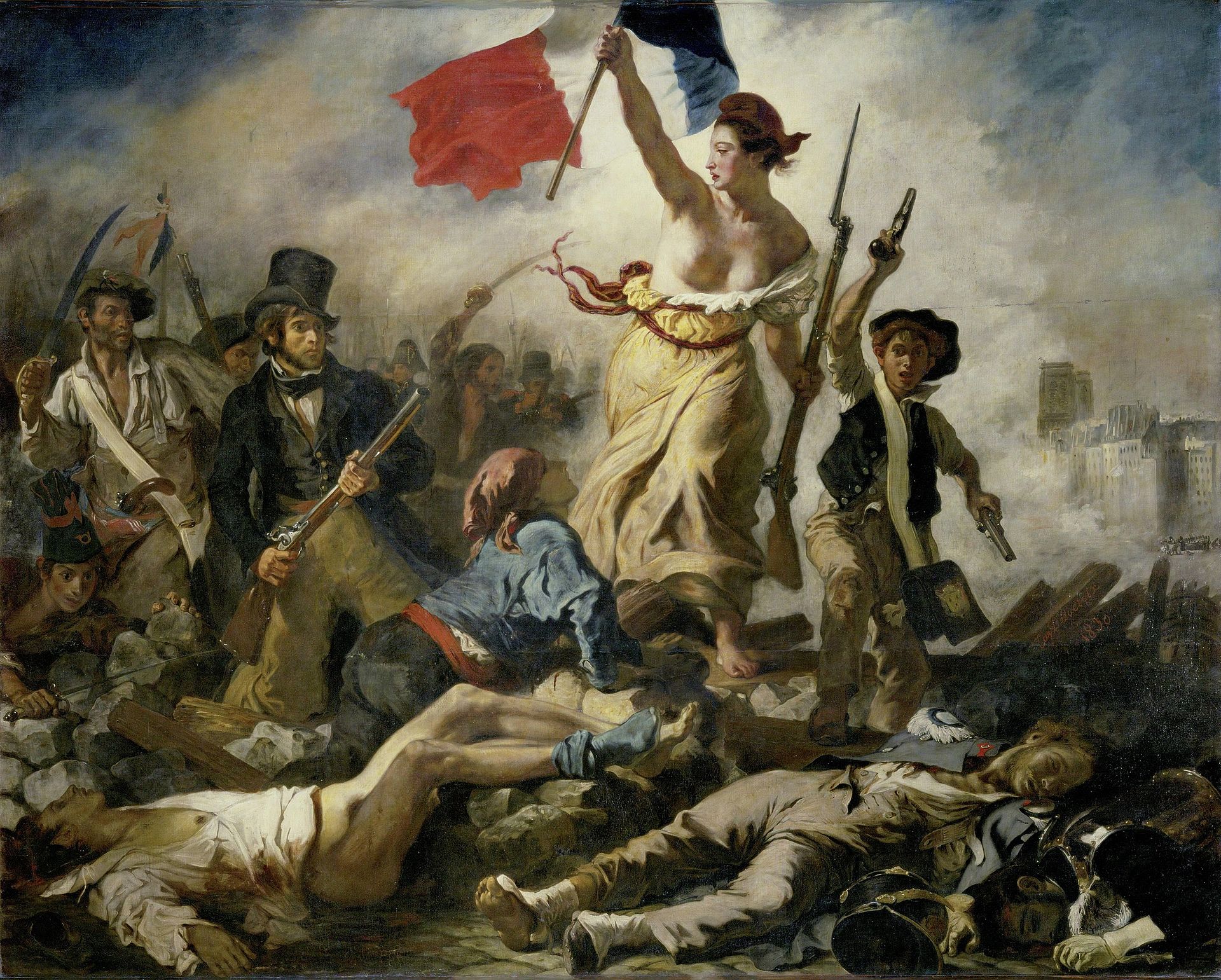
  • Eugène Delacroix, Liberty Leading the People (1830): commemorates the July Revolution of 1830 that deposed King Charles X.

For more on these works, check out Strickland 68-69 and 76-78.

Writing: Respond to ONE of the following prompts. Keep your response short, posting as a reply under the appropriate heading in the comments section:

  1. Call our attention to a particularly striking moment from the Eroica symphony, giving a brief description of what you hear and the emotion(s) it arouses. If you’re musical, feel free to use technical terms in describing what you hear; if not, make up for your lack of vocabulary with vivid language: “short, high-pitched notes,” “deep, languid strings,” etc. Include a link to the moment from the symphony by clicking YouTube’s “clip” feature and pasting the resulting link into your comment (don’t paste the embed code; just the link!).
  2. Draw a connection between what you hear in the Eroica symphony and what you learned from Christopher Gibbs. In your comment, point to a particular section of the symphony, describing in general terms what you hear—a “relentless beat,” “energetic horns,” etc. Explain how what you hear relates to some particular element of Gibbs’ commentary. As above, use YouTube’s clip feature to creat a link to the moment in the symphony you’re talking about.
  3. Comment on a pattern—or a difference—in the way that these paintings create history. What literary genre do they call to mind? Alternatively, how would you describe their presentation of historical figures and events? Do they celebrate? Lament? Condemn? Given this, what role do these paintings imagine for the artist in relation to politics and history?

Class 13.2

The Dialectic of Innocence and Experience

William Blake published his Songs of Experience in 1794, five years after The Songs of Innocence—and five years into the French Revolution. Like many young intellectuals in England and Germany, Blake had sympathized with the revolutionary cause in France, but by 1794 the Reign of Terror was in full swing. It’s hard not to see a connection between the disappointment of political idealism in France and Blake’s poetic dialectic in layering experience atop innocence—but is it just a historical coincidence? We’ll explore this possible correlation in class.

Reading/Viewing: William Blake, Songs of Innocence and of Experience, selections (Blake.pdf, on Blackboard). You can also view the images from Blake’s book here on the course website.

Writing: Respond to ONE of the following prompts. Keep your response short, posting as a reply under the appropriate heading in the comments section:

  1. The Poetry of Sentiment: Blake often prioritizes emotion over reason, sensibility over sense. Highlight a moment that arouses an emotional response and comment on the specific emotion he evokes: joy? sorrow? pity? outrage?
  2. Appeals to Social Reform: highlight a moment where Blake advocates for social change and comment on his rhetorical appeal.
  3. Appeals to Heaven: highlight a moment where Blake looks to God to redress social ills. Does looking to God preclude social reform?
  4. Blake’s Dialectic: highlight a moment where poems from the second volume engage with the themes from the first one. What relationship do you see: natural maturation? disillusionment? bitter irony?

Class 13.1

Satire’s End

Reading: Voltaire, Candide, Chs 14-30 (pp 48-113).

Writing: Respond to ONE of the following prompts. Keep your response short, posting as a reply under the appropriate heading in the comments section:

  1. Finding patterns: highlight a recurrent pattern the plot in Voltaire’s satirical novel.
  2. Changing patterns: highlight a moment from later in the novel where a pattern fails to play out.
  3. Ending and resolution: what do you make of the novel’s end? Highlight an issue from earlier that’s resolved by this ending—alternatively, highlight an issue that fails to be resolved.

In Class: Introduction to Romanticism.

Class 12.1

Enlightenment: Classical Music

The orchestral sound we know as “Classical Music” coalesced in the 18th century. Of particular interest to us: the symphony and sonata form. Both are musical structures, not unlike the Petrarchan sonnet, with sonata form nested inside the symphony. Today we will focus on two early and prolific symphonic masters, Mozart and Haydn. Some of you are already students of classical music, but for those who are not trained musicians, the following exercises will likely prove somewhat challenging.

Sonata Form

Listen: the first movement of Mozart’s Symphony 40, (make sure to stop the video at 8:15, or you’ll end up listening to the whole symphony).

Watch and learn: Inside the Score, “How to Listen to Music: Sonata Form” (link)

Apply the lesson: here you get two options, depending on how confident you are in your skills. Note: because this assignment is unique, it is REQUIRED of everyone. It is separate from written HW, which as usual asks you to respond to one of my prompts and to one of your peers each week.

Symphonic Structure

Watch and learn: Enjoy Classical Music, “The Symphony—Explained in under 5 mins” (link)

Listen: Haydn Symphony 45, “Farewell.”

Writing: After listening to Haydn’s Symphony 45, “Farewell,” respond to ONE of the following prompts. To quote from the music, you can opt to specify the time signature or, better, paste in a YouTube URL that points to just before the moment you want us to hear. Either way, give a rich verbal paraphrase of what you want us to hear when we listen:

  1. Dynamics: point to a moment when Symphony 45 surprises the listener with a sudden shift from loud to soft or from soft to loud. What’s the emotional impact of this change?
  2. Instrumentation: point to a moment when Symphony 45 shifts instruments. What’s the emotional impact of this change?
  3. Key: point to a moment when Symphony 45 shifts musical key. What’s the emotional impact of this change? In your response, keep in mind that many of your peers don’t know much about Classical music, so help us understand why the musical key matters, and how it functions in this particular instance to produce an emotional response.

Lecture 12

Enlightenment Satire

Viewing: two moral satires by William Hogarth:

Reading: Voltaire, Candide, Chs 1-14 (pp 1-47)

Writing: Respond to ONE of the following prompts. Keep your response short, posting as a reply under the appropriate heading in the comments section:

  1. Finding the funny: Hogarth’s engravings can feel a bit preachy, but they’re filled with humorous details. Draw our attention to a key detail and comment. (Feel free to attach a closeup image of the detail you’re interested in.)
  2. Finding patterns: a lot happens in Voltaire’s satirical novel; help make sense of the chaos of events by noting a pattern, something that happens repeatedly.
  3. Progress: what sort of “progress” happens over the course of Hogarth’s image series—or Voltaire’s novel? Cite a particular detail from one of these three “texts” as example or illustration.

Class 11.2

Self-Reflection and the Orient

In 1714, the Safavid Shah of Persia sent the Mayor of Erivan, Mohammed Reza Beg, on an ambassadorial mission to the court of Louis XIV of France. The two countries had a common enemy in Ottoman Turkey, and while the visit did not result in a formal alliance, it did cause quite a stir in Paris. As documented in this series of blog entries, Beg’s visit was reported in the press as well as being commemorated by court painter. Of particular interest was Beg’s insistence on daily bathing, necessitating expensive renovations to the Hôtel where he stayed—a practice that the French elite soon imitated.

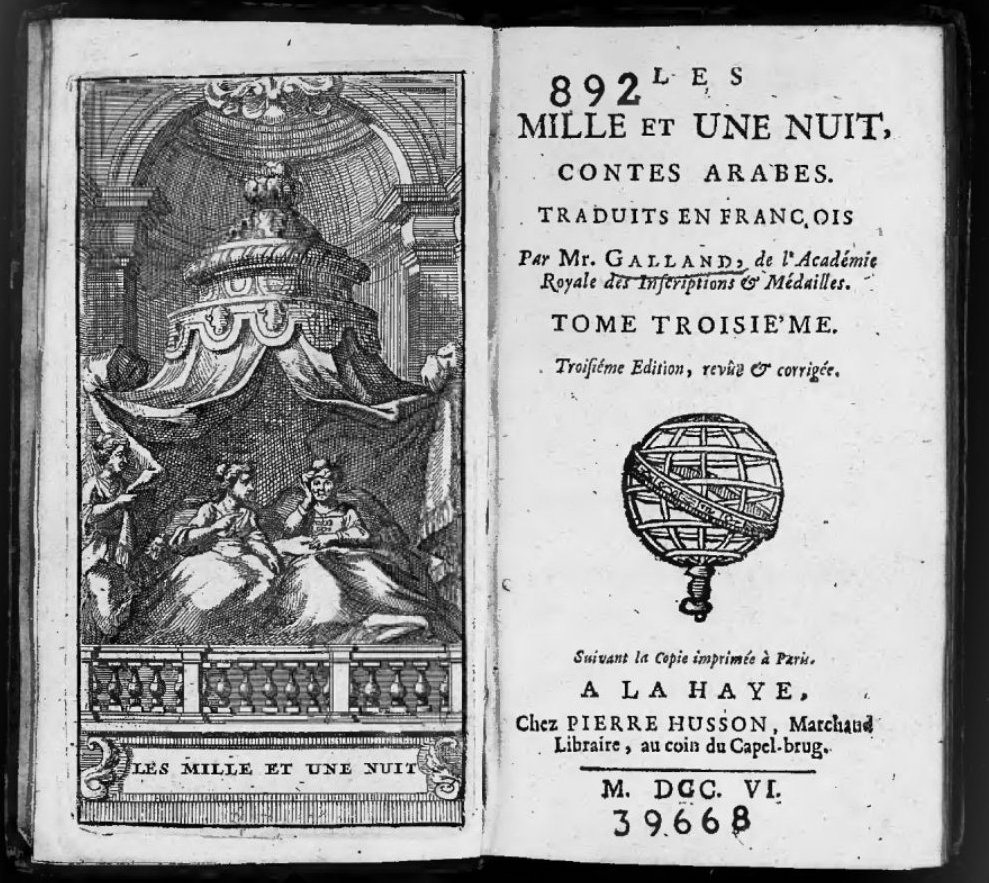
Just ten years earlier, Antoine Galland generated interest in the “Orient” (what we today call the Middle East) with the publication of the first volume of his 12-volume translation of The Thousand and One Nights, introducing Scheherazade, Aladdin, and Sinbad to an European audience.

This is the context in which we’re going to approach The Persian Letters, written by the political philosopher Charles Montesquieu. Published in 1721, six years after the real-life visit of the Persian ambassador, the volume purports to be a translation of documents left behind by a pair of Persian nobles after their extended stay in Paris. The letters detail the commentary of these fictional visitors regarding French customs, but also goings-on back in Persia. In the words of historian Susan Mokhberi, “With the publication of Montesquieu’s Persian Letters in 1721, Persians moved from objects of curiosity—as witnessed in the reception of Mohammad Reza Beg in 1715—to objects of critical reflection”: a mirror in which the French might examine their own social mores and prejudices.

Lady Mary Wortley Montagu presents a second instance of the same trend. The freethinking daughter of the 5th Earl of Kingston, Montagu eloped with a progressive member of Parliament to escape an arranged marriage. After her husband Edward was named ambassador to the Ottoman emperor of Turkey, she spent several years living abroad, during which time she recorded her experiences and observations in correspondence with friends which was later published as The Turkish Letters. Where Montaigne offers a critique of French mores from an imagined foreign perspective, Montagu’s critique is based in real-world observation.

Reading: Montesquieu, The Persian Letters, Preface as well as Letters # 1-4, 45, 55 & 56 (Montesquieu.pdf).

Reading: Montagu, The Turkish Embassy Letters, Letter 26 (Montagu.pdf).

Writing: Respond to ONE of the following prompts. Keep your response short, posting as a reply under the appropriate heading in the comments section:

  1. Several of Montesquieu’s letters focus on melodrama in Uzbek’s seraglio. Keying on a particular event or detail, comment on this exotic locale. Does Montesquieu strike you as interested, fundamentally, in gender relations or in power?
  2. Other letters focus on European life and customs from the perspective of these Persian visitors. Keying on a particular event or detail, comment as to one target of Montesquieu’s critique.
  3. How does Montagu’s cultural critique differ from Montesquieu’s? Rather than listing a bunch of differences, focus on one. Or, better, name an obvious difference, then go into depth with a vital difference.