Course Materials

Available at the BU Bookstore (link to purchase):

  • The Epic of Gilgamesh, tr. Gerald Davis. Pub: CreateSpace.
  • Euripedes, Medea, tr. Robertson. Pub: Free Press.
  • Plato, Symposium, tr. Nehamas. Pub: Hackett.
  • William Shakespeare, The Tempest, Signet Classics edition.
  • Voltaire, Candide, tr. Bair. Pub: Penguin Random House.
  • Carol Strickland, The Annotated Mona Lisa, Pub: Andrews McMeel, 3d Ed.

Additional readings will be posted on on the course Blackboard page.

Grading

Grade Weighting as follows, weights out of 100 total:

  • Midterm (combined short answer & essay format) 20
  • Final Exam (combined short answer & essay format) 20
  • Essay 1 (4-5 p) 15
  • Essay 2 (4-5 p) 15
  • Interdisciplinary Reflection 1 (1-2 p) 5
  • HW Responses (½ p, twice weekly) 15
  • Class Participation 10

Attendance penalties, as noted in the Course Rules, above.

Participation
Active participation includes speaking up in class (but not dominating the conversation), attending office hours, volunteering to read aloud, & taking an active role in group activities. Unauthorized use of electronics (cell phone, computer, etc.), tardiness, disruptive behavior, forgetting to bring assigned readings, or lack of alertness will adversely affect your class participation.

HUB Capacities

Humanities 103 is designed to achieve the following learning outcomes, per the BU HUB.

Aesthetic Exploration:

  1. By surveying more than two millennia of art and literature, this course introduces students to various modes of aesthetic exploration.  In their homework, essays and exams, students will demonstrate both knowledge and appreciation of notable works of art and literature, including the cultural contexts in which those works were created, and will ponder their ongoing relevance.
  2. Through tests, written assignments, and in-class discussions, students will demonstrate the reasoning skills and vocabulary necessary to interpret works of art and literature.
  3. In class discussion and in their written work, students will evaluate and analyze a wide range of genres, modes and styles: epic, tragic, lyric and satiric literature; religious, allegorical and mimetic representation; and visual media from sculpture to painting to film.

Historical Consciousness:

  1. Students will learn to understand and evaluate artworks in their respective historical and cultural contexts. They will learn to use historical evidence in evaluating interpretations of artworks.
  2. Through exams, writing assignments, and in-class discussions, students will demonstrate an ability to interpret primary source material (textual, visual, or aural) using a range of interpretive skills and situating the material in its historical and cultural context.
  3. In surveying specific periods in the history of literature and the arts, students will demonstrate knowledge of various philosophical and religious traditions, intellectual paradigms, forms of political organization, and socio-economic forces.  They will thereby learn how these have changed over time.

Critical Thinking:

  1. Students will be able to analyze various forms of argumentation and interpretation when learning to understand and evaluate artworks.  They will identify key elements of critical thinking, including habits of distinguishing deductive from inductive modes of inference and recognizing common logical fallacies and cognitive biases. Students will learn to distinguish empirical claims about matters of fact from normative or evaluative judgments.  Students will learn to apply theories and principles in interpreting and evaluating various artworks.
  2. Drawing on skills developed in class, students will be able to evaluate the validity of arguments and interpretations, including their own.  Students will learn key concepts that cultivate critical thinking and rational discourse.  They will also recognize the ways in which thinking about art may be shaped by values, moral character, and emotional responses.

Class 14.1

Finding the Self in Nature

In 1798, two young and little-known poets, William Wordsworth and Samuel Taylor Coleridge, co-published a book that became the manifesto of the English Romanticism, Lyrical Ballads. In the volume’s “Preface”, Wordsworth criticized the “the gaudiness and inane phraseology of many modern writers,” arguing that the poet is (or should be) “a man speaking to men.” This was, as Benjamin Voigt comments, “a revolutionary idea in English poetry: that the voice or speech of poetry should sound the way non-aristocrats actually spoke.” Wordsworth paired this plain language with characters and scenes drawn from the countryside, arguing that “Humble and rustic life … [provide] the essential passions of the heart … a better soil in which they can attain their maturity.” He thus found in nature a setting for self-discovery.

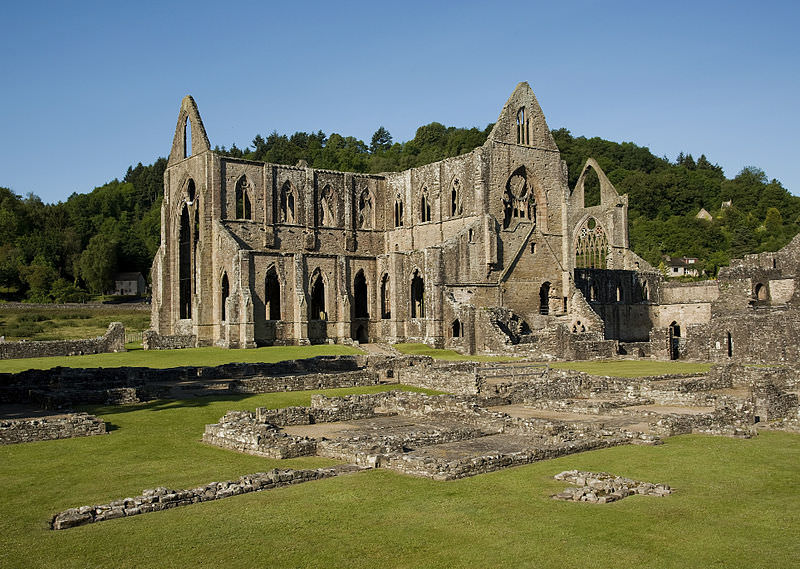
Tintern Abbey, Wales

Yet Wordsworth envisioned the poet as not just any man, but one “endowed with more lively sensibility, more enthusiasm and tenderness, who has a greater knowledge of human nature, and a more comprehensive soul, than are supposed to be common among mankind.” Rather than a clever versifier (think ChatGPT), Wordsworth asks that the poet speak from lived experience: “poetry is the spontaneous overflow of powerful feelings: it takes its origin from emotion recollected in tranquillity.” Thus, artistic process becomes the artist’s principal topic: “emotion is contemplated till, by a species of reaction, the tranquillity gradually disappears, and an emotion, kindred to that which was before the subject of contemplation, is gradually produced, and does itself actually exist in the mind. In this mood successful composition generally begins.”

Reading: four poems from Lyrical Ballads. (I’ve saved the hardest one for last.)

  • Wordsworth, “The Tables Turned,” link.
  • Wordsworth, “She Dwelt among the Untrodden Ways,” link.
  • Coleridge, “This Lime-tree Bower my Prison,” link.
  • Wordsworth, “A Few Lines Composed Above Tintern Abbey,” link. Note: this is a challenging poem; to give you some sense of the landscape that inspired Wordsworth, here’s a short video with drone footage of Tintern Abbey in Wales.

Writing: Respond to ONE of the following prompts. Keep your response short, posting as a reply under the appropriate heading in the comments section:

  1. Both Coleridge and Wordsworth are known for their evocative power of description. Quote and comment on a passage that paints a picture of the poet’s lived experience: what he sees, hears, thinks, or feels.
  2. Romantic poets claim to have prioritized self-expression. But does Wordsworth present himself consistently in the three poems we read, or do these poems strike you as voiced by different “speakers”?

Lecture 14

Romanticism and Revolution

In this mini-module, we explore Beethoven’s third symphony, Eroica, as a case study in Romantic ideas about the role of genius in artistic expression and social transformation.

As background for this assignment, it helps to have a sense of the cultural cachet of Napoleon for the Romantics. Romantic radicals in both England and Germany had high hopes for the French Revolution as marking a break with the sclerotic aristocratic order. And Napoleon’s seizure of power in 1799 renewed those hopes, not simply by ending the Terror, but because he embodied the Romantic ideal of the great man: someone who rose to prominence not thanks to high birth but merely on the strength of his genius and determination.

Beethoven’s worship of Napoleon is the more striking because, like many composers in this era, he was supported by the patronage of Austrian nobles—the very people most threatened by Napoleon’s rise to power. Indeed, the Eroica had its premiere at the Vienna palace of Prince Lobkowitz; a year later Napoleon briefly occupied Vienna during his successful invasion of Austria, securing significant concessions from the Hapsburgs.

Reading: Christopher Gibbs, “Notes on Beethoven’s Third Symphony.”

Listening: Frankfurt Radio Symphony, “Beethoven: 3. Sinfonie (»Eroica«).” Feel free to play the symphony in the background while you do other work. But keep alert for moments that feel particularly striking, perhaps where the mood shifts unexpectedly. Make note of the time, so you can reference this in the homework.

Neoclassical and Romantic History Painting

  • Jacques-Louis David, The Death of Marat (1793): mourns the assassination of Jean-Paul Marat, a leading revolutionary, by a partisan from a rival group.
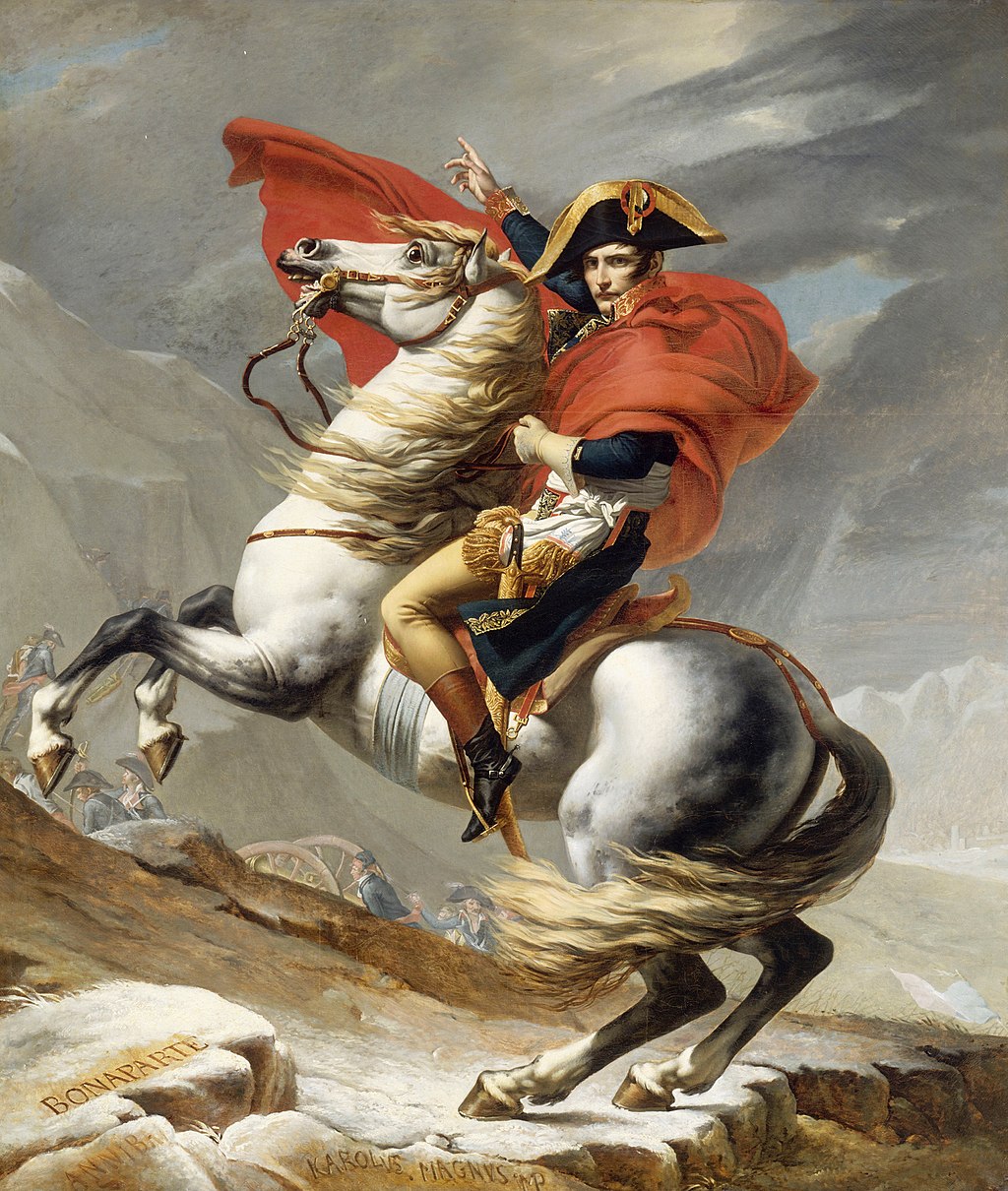
  • Jacques-Louis David, Napoleon Crossing the Alps (1801-05): celebrates Napoleon’s return to the front lines in the battle with Austria over control of northern Italy, after seizing political power in the Coup of 18 Brumaire in December 1799.
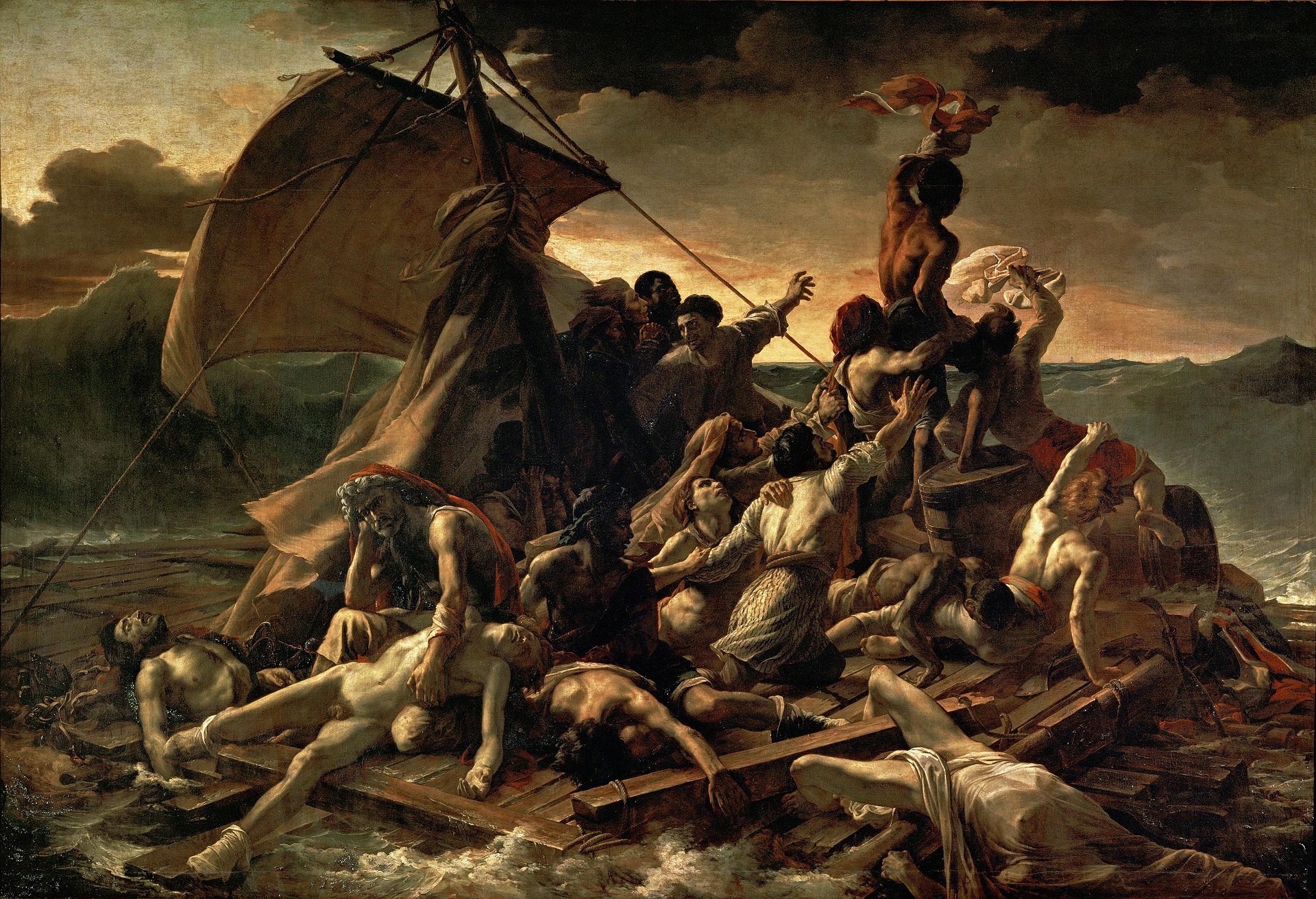
  • Théodore Géricault, The Raft of the Medusa (1818): depicts the survivors of the naval frigate Medusa, which ran aground due to the incompetence of the Captain in 1816.
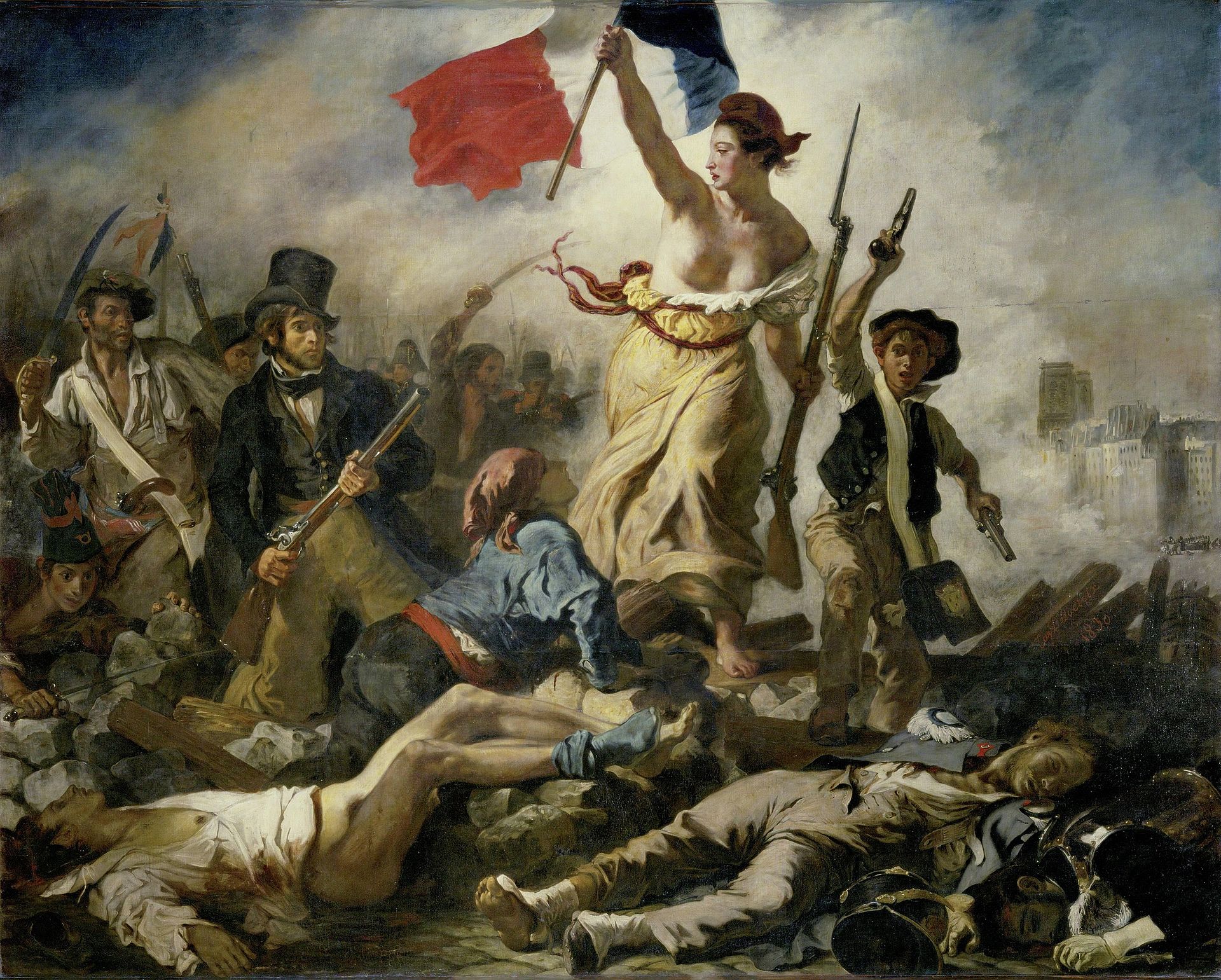
  • Eugène Delacroix, Liberty Leading the People (1830): commemorates the July Revolution of 1830 that deposed King Charles X.

For more on these works, check out Strickland 68-69 and 76-78.

Writing: Respond to ONE of the following prompts. Keep your response short, posting as a reply under the appropriate heading in the comments section:

  1. Call our attention to a particularly striking moment from the Eroica symphony, giving a brief description of what you hear and the emotion(s) it arouses. If you’re musical, feel free to use technical terms in describing what you hear; if not, make up for your lack of vocabulary with vivid language: “short, high-pitched notes,” “deep, languid strings,” etc. Include a link to the moment from the symphony by clicking YouTube’s “clip” feature and pasting the resulting link into your comment (don’t paste the embed code; just the link!).
  2. Draw a connection between what you hear in the Eroica symphony and what you learned from Christopher Gibbs. In your comment, point to a particular section of the symphony, describing in general terms what you hear—a “relentless beat,” “energetic horns,” etc. Explain how what you hear relates to some particular element of Gibbs’ commentary. As above, use YouTube’s clip feature to creat a link to the moment in the symphony you’re talking about.
  3. Comment on a pattern—or a difference—in the way that these paintings create history. What literary genre do they call to mind? Alternatively, how would you describe their presentation of historical figures and events? Do they celebrate? Lament? Condemn? Given this, what role do these paintings imagine for the artist in relation to politics and history?
Class 13.2

The Dialectic of Innocence and Experience

William Blake published his Songs of Experience in 1794, five years after The Songs of Innocence—and five years into the French Revolution. Like many young intellectuals in England and Germany, Blake had sympathized with the revolutionary cause in France, but by 1794 the Reign of Terror was in full swing. It’s hard not to see a connection between the disappointment of political idealism in France and Blake’s poetic dialectic in layering experience atop innocence—but is it just a historical coincidence? We’ll explore this possible correlation in class.

Reading/Viewing: William Blake, Songs of Innocence and of Experience, selections (Blake.pdf, on Blackboard). You can also view the images from Blake’s book here on the course website.

Writing: Respond to ONE of the following prompts. Keep your response short, posting as a reply under the appropriate heading in the comments section:

  1. The Poetry of Sentiment: Blake often prioritizes emotion over reason, sensibility over sense. Highlight a moment that arouses an emotional response and comment on the specific emotion he evokes: joy? sorrow? pity? outrage?
  2. Appeals to Social Reform: highlight a moment where Blake advocates for social change and comment on his rhetorical appeal.
  3. Appeals to Heaven: highlight a moment where Blake looks to God to redress social ills. Does looking to God preclude social reform?
  4. Blake’s Dialectic: highlight a moment where poems from the second volume engage with the themes from the first one. What relationship do you see: natural maturation? disillusionment? bitter irony?

Class 13.1

Satire’s End

Reading: Voltaire, Candide, Chs 14-30 (pp 48-113).

Writing: Respond to ONE of the following prompts. Keep your response short, posting as a reply under the appropriate heading in the comments section:

  1. Finding patterns: highlight a recurrent pattern the plot in Voltaire’s satirical novel.
  2. Changing patterns: highlight a moment from later in the novel where a pattern fails to play out.
  3. Ending and resolution: what do you make of the novel’s end? Highlight an issue from earlier that’s resolved by this ending—alternatively, highlight an issue that fails to be resolved.

In Class: Introduction to Romanticism.

Class 12.1

Enlightenment: Classical Music

The orchestral sound we know as “Classical Music” coalesced in the 18th century. Of particular interest to us: the symphony and sonata form. Both are musical structures, not unlike the Petrarchan sonnet, with sonata form nested inside the symphony. Today we will focus on two early and prolific symphonic masters, Mozart and Haydn. Some of you are already students of classical music, but for those who are not trained musicians, the following exercises will likely prove somewhat challenging.

Sonata Form

Listen: the first movement of Mozart’s Symphony 40, (make sure to stop the video at 8:15, or you’ll end up listening to the whole symphony).

Watch and learn: Inside the Score, “How to Listen to Music: Sonata Form” (link)

Apply the lesson: here you get two options, depending on how confident you are in your skills. Note: because this assignment is unique, it is REQUIRED of everyone. It is separate from written HW, which as usual asks you to respond to one of my prompts and to one of your peers each week.

Symphonic Structure

Watch and learn: Enjoy Classical Music, “The Symphony—Explained in under 5 mins” (link)

Listen: Haydn Symphony 45, “Farewell.”

Writing: After listening to Haydn’s Symphony 45, “Farewell,” respond to ONE of the following prompts. To quote from the music, you can opt to specify the time signature or, better, paste in a YouTube URL that points to just before the moment you want us to hear. Either way, give a rich verbal paraphrase of what you want us to hear when we listen:

  1. Dynamics: point to a moment when Symphony 45 surprises the listener with a sudden shift from loud to soft or from soft to loud. What’s the emotional impact of this change?
  2. Instrumentation: point to a moment when Symphony 45 shifts instruments. What’s the emotional impact of this change?
  3. Key: point to a moment when Symphony 45 shifts musical key. What’s the emotional impact of this change? In your response, keep in mind that many of your peers don’t know much about Classical music, so help us understand why the musical key matters, and how it functions in this particular instance to produce an emotional response.