Lecture 8

Late Medieval Love Lyric

Reading: Dante, Vita Nova (Dante.pdf) Ch 1,2,5,7 (pp 3-8, 11-15, 16-18) .

Writing: Respond to ONE of the following prompts. Keep your response short, posting as a reply under the appropriate heading in the comments section:

  1. Dante often speaks of love in high-flown terms. Cite a phrase where he references philosophy or astronomy or divinity and note whether this happens in a verse or prose passage.
  2. Conversely, Dante occasionally speaks of love in a low or jocular tone. Cite a phrase where he does this and note whether this happens in a verse or prose passage.
  3. Dante embeds his love poems in a kind of autobiography. Cite a biographical phrase and note its focus: deeds, mistakes, personal growth, or something else.
  4. There are a host of lovely phrases in this reading. Cite a short passage and comment on what makes it beautiful.

Class 7.2

Christian Warrior Culture

Preparatory: Several years ago, I made a short video introduction to get students in the right mind frame for this week’s reading and film: watch here. (In the last 30 seconds I make a remark about the movie’s final scene. If you hate spoilers, hit stop at 7:45.)

Reading: The Dream of the Rood, (.pdf on the course Blackboard site).

Viewing: Ingmar Bergman’s 1957 classic, The Seventh Seal: link. Make sure you turn on the English subtitles!

Writing: Respond to ONE of the following prompts. Keep your response short, posting as a reply under the appropriate heading in the comments section:

  1. Besides warfare, The Dream of the Rood makes frequent mention of precious metals and gemstones. Quote a line that does so and comment on what these materials seems to signify for our anonymous writer.
  2. Bergman’s film centers on the experience of the Black Death, which ravaged Europe in the Late Middle Ages. Focus our attention on a scene which features characters grappling with that ongoing tragedy, and comment on what the film seems to suggest about that “type” of person.
  3. Not every scene in the film focuses on the specter of death. Describe a scene that focuses elsewhere and comment on what it seems to be saying.
  4. Bergman’s movie is famous for its cinematography: “every frame a painting,” as the saying goes. Pause the movie at a vital moment and write a rich description of what you see. Then add a brief comment on what makes it visually striking or thematically powerful.

Class 7.1

Christianity: a brief introduction

Many of you have read the Christian Gospels before, and all of you have at least some familiarity with Christian beliefs and tradition. So we’re spending just a single day on this vital topic, and I aim to focus on lesser-known aspects of the origin of this vital world religion. Please email me with any follow-up questions—or raise your hand in class!

Reading: selections from the New Testament, as translated by Richmond Lattimore (Blackboard: Christian Scripture.pdf).

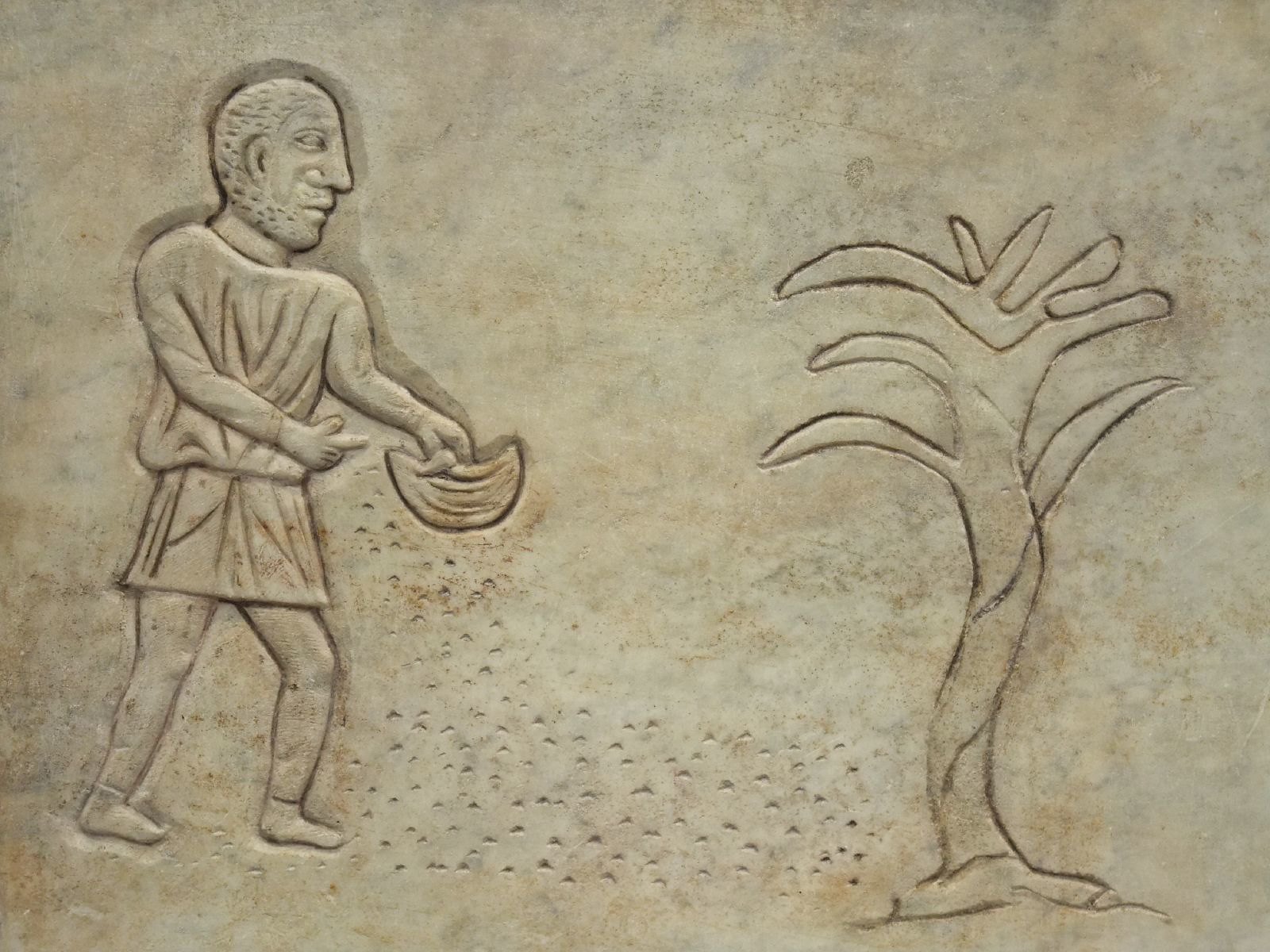
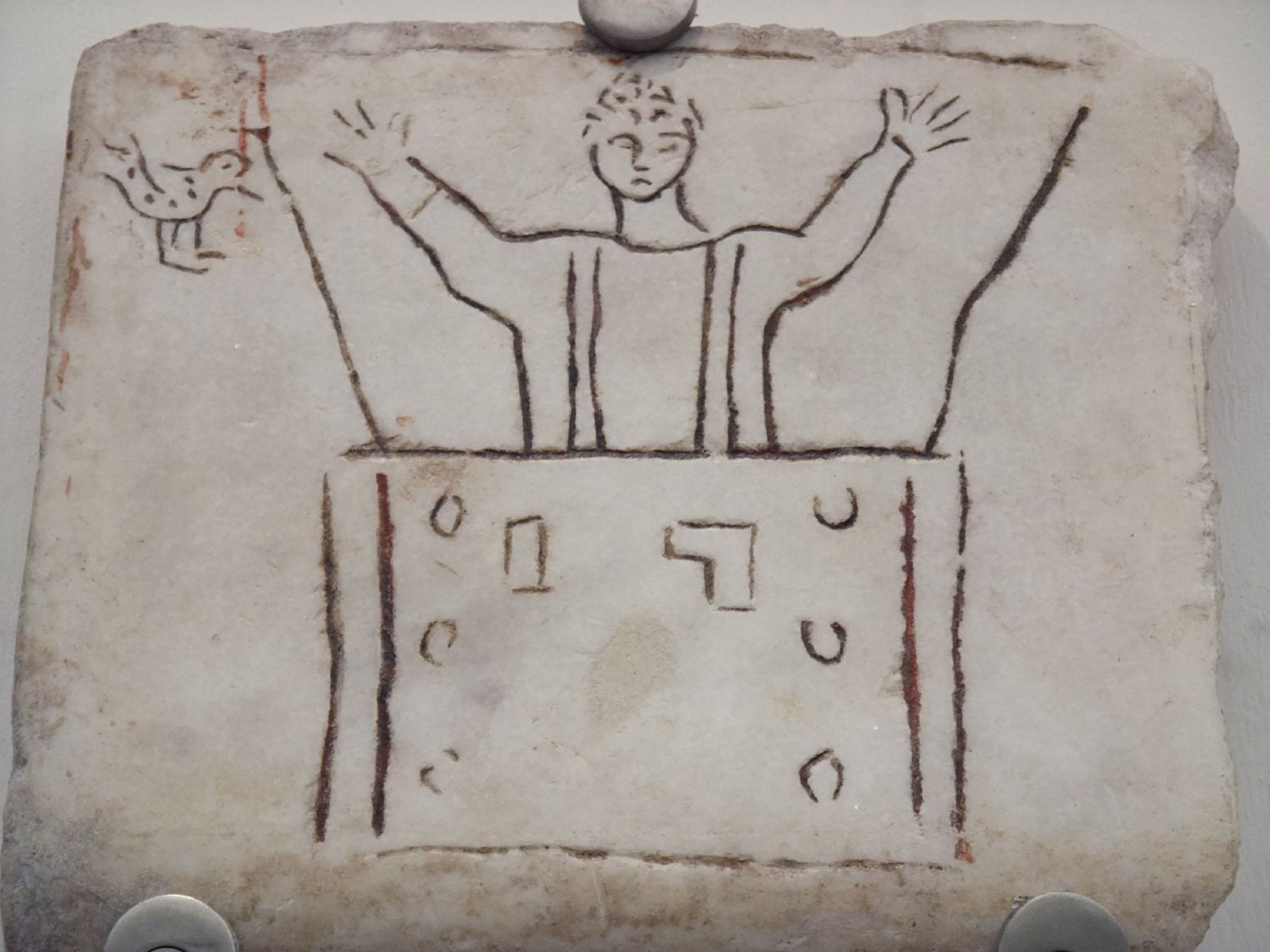
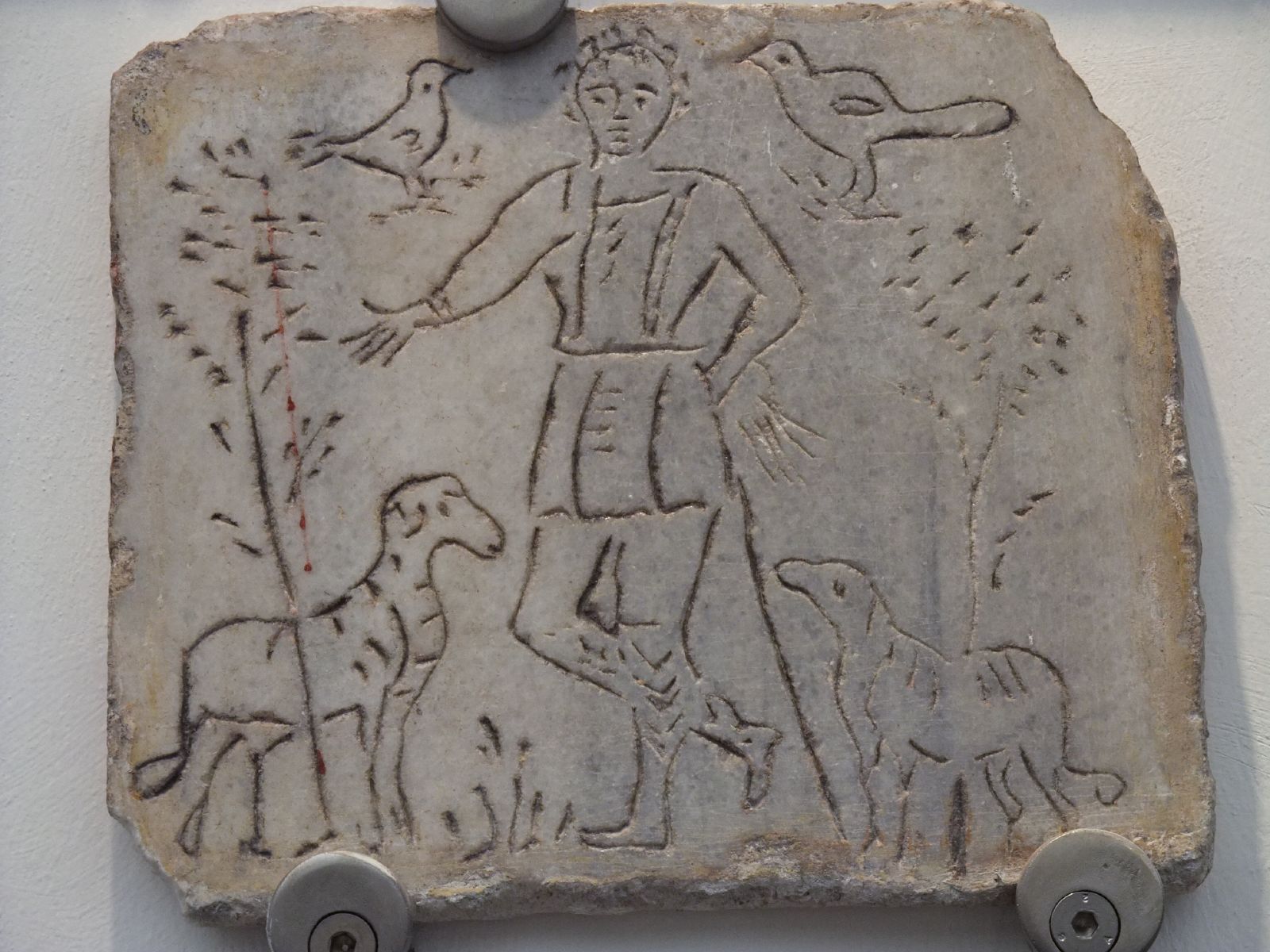
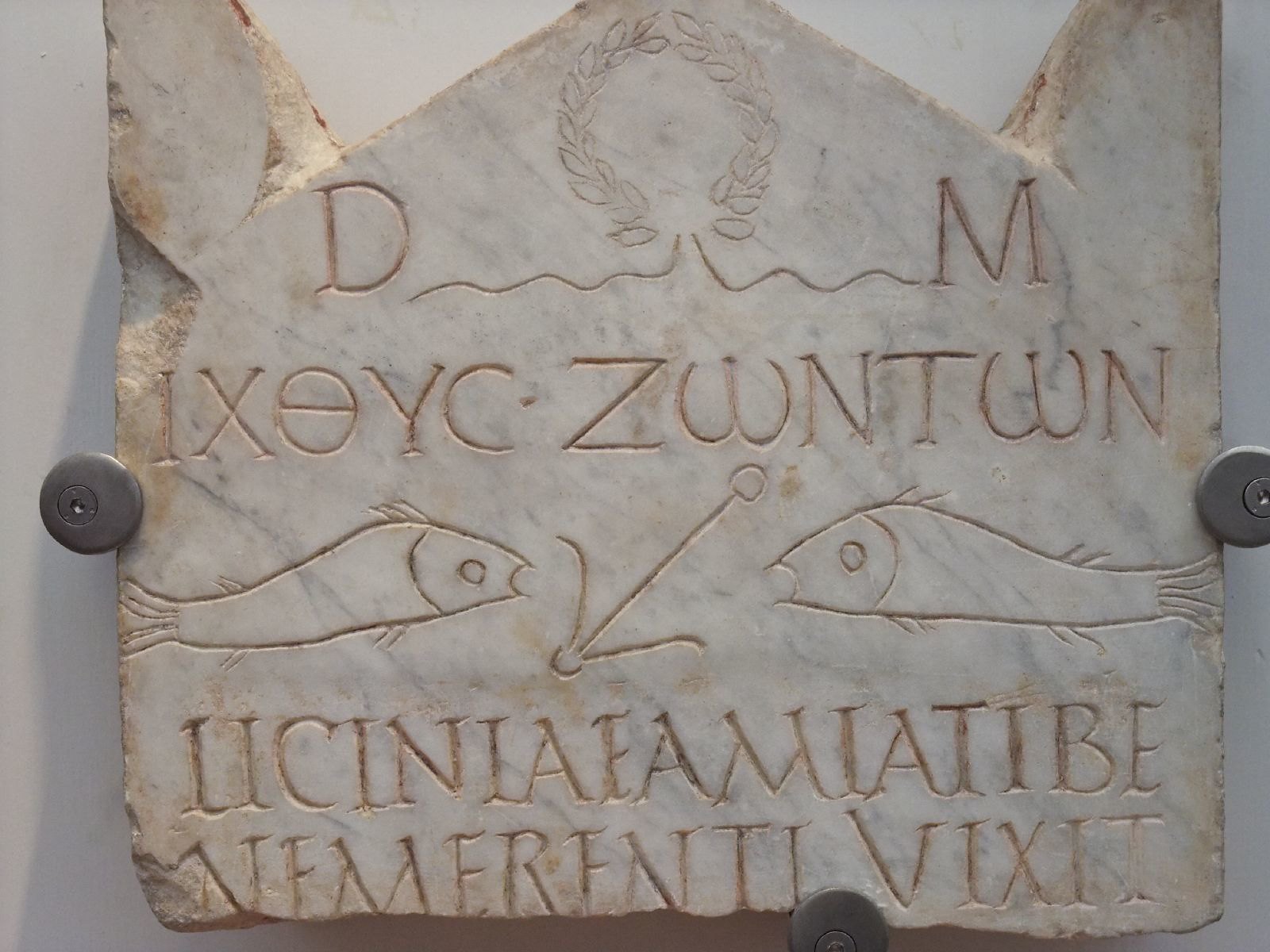
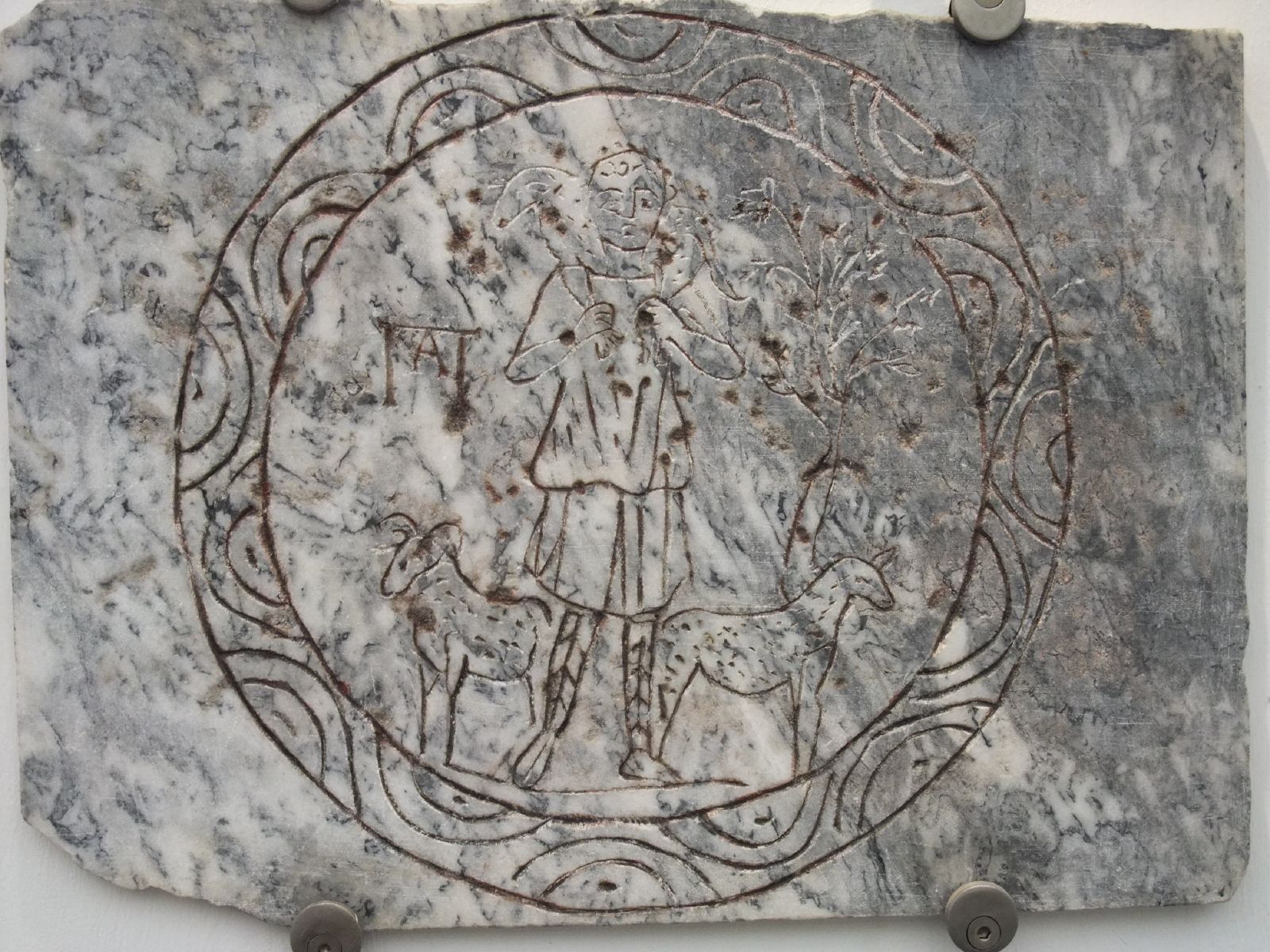
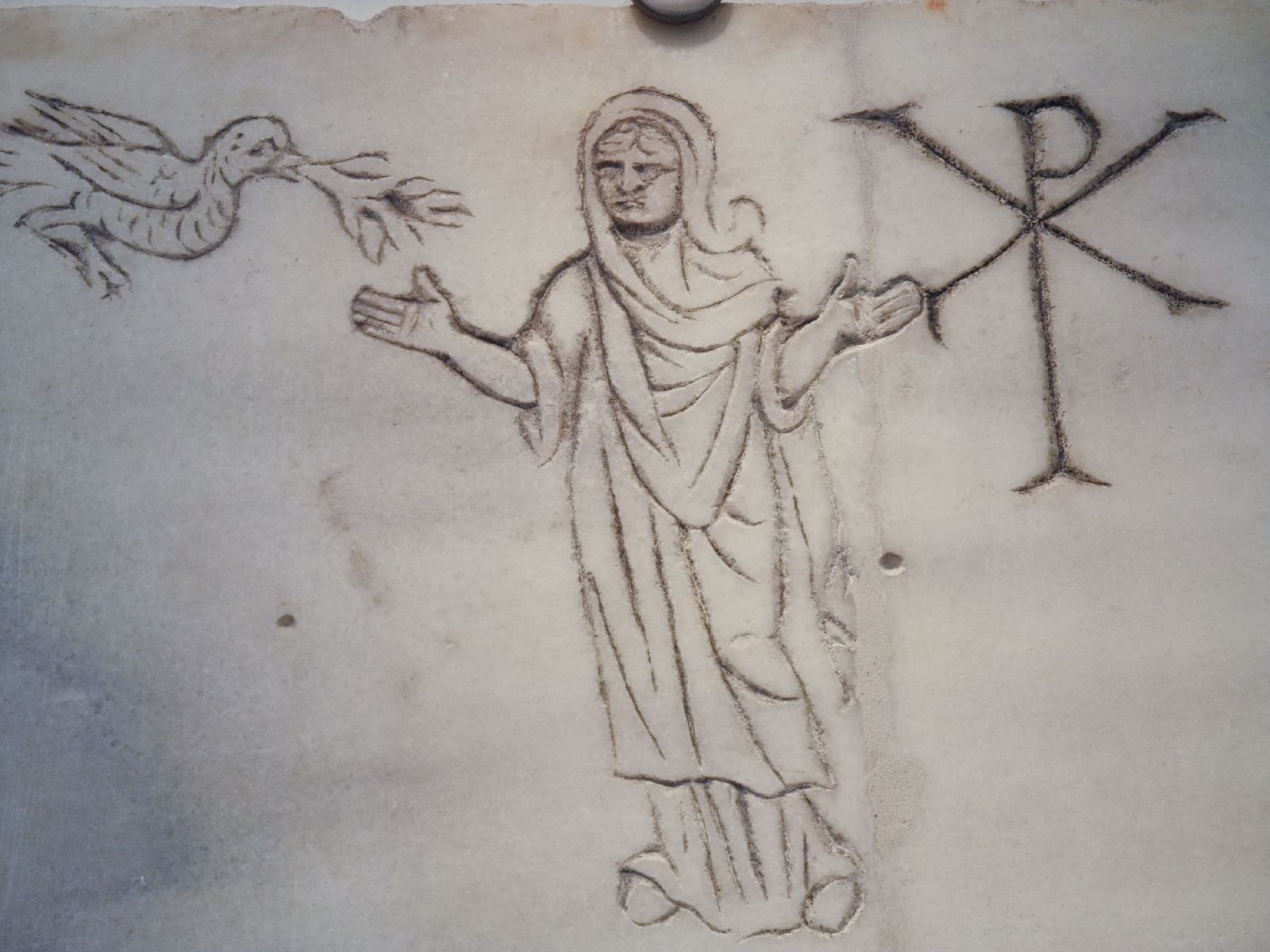
Viewing: Christian Funerary Art from the Roman Catacombs.

(Credit: Mary Harrsch at the Museo Nazionale Romano in the Baths of Diocletian, Rome: link)

Writing: Respond to ONE of the following prompts. Keep your response short, posting as a reply under the appropriate heading in the comments section:

  1. Identify and comment on a repeated motif from the reading: for example, healing or feeding. Don’t just name the pattern, but focus attention on the details: if healing, who is healed and how? if feeding, who is fed and how?
  2. Jesus often presents his teaching in the form of “parables.” Apply what you’ve learned in Rhetoric to explain (or perhaps question) the effectiveness of one of the parables the reading.
  3. Name one of your preconceptions about Christianity and explain how it was challenged by something in today’s reading.

Class 6.2

Socrates’ Higher Vision of Love

Reading: Plato, Symposium, 32-77.

Writing: Respond to ONE of the following prompts. Keep your response short, posting as a reply under the appropriate heading in the comments section:

  1. Agathon offers a glimpse of the rhetorical style practiced among by trained Sophists—those paid teachers of oratory against whom Socrates defined himself. Focus our attention on a particular phrase or turn of logic and say what you like about it—or perhaps what you find distasteful.
  2. Socrates refuses to “play the game” and give a proper speech. Instead, he interrogates Agathon. Pointing to particulars, what does this move allow the philosopher to do? Does he accomplish something special, or does he simply sidestep the challenge of giving a speech in praise of Love?
  3. Some of you likely noticed the odd absence of women in this dialogue. Yet the crowning speech is given by a wise woman, Diotima. Pointing to particulars, how does her style of speech or her thinking differ from those of the men who preceded Socrates?
  4. The dialogue ends with Alcibiades’ drunken entrance. He, too, gives a speech, but his is in praise of Socrates. Pointing to particulars, how does his speech stand in relation to the earlier ones? Does it clash with them? Or harmonize in some way?

Class 6.1

Hedwig and the Angry Inch: Rage and Redemption

Hedwig originated as an off-Broadway musical not many years after gay rights organizations like Act Up had shown the value of confrontational, in-your-face protests in bringing public attention to the AIDS crisis: “We’re here. We’re queer. Get used to it,” Queer Nation activists chanted at protests throughout the Nineties. Their righteous anger reverberates in Hedwig’s opening line, “Ladies and gentlemen, whether you like it or not . . . Hedwig!” As conceived by creators John Cameron Mitchell and Stephen Trask, Hedwig’s a heat-seeking missile targeted on the squeamish sensibilities of Middle America, anatomically neither male nor female, born a boy but very much a woman.

This may seem like an odd choice of movie to pair with our unit on Ancient Athenian culture and society. But Hedwig has a lot in common with Euripides’ Medea: not merely her rage but her marginalized status and her witchy power to work wonders. And what’s more the transformative capacity of love in Hedwig’s story neatly anticipates the ideas in Plato’s Symposium.

Viewing: John Cameron Mitchell’s 2001 movie, Hedwig and the Angry Inch available via the BU Library: link.

Writing: Respond to ONE of the following prompts. Keep your response short, posting as a reply under the appropriate heading in the comments section:

  1. Point out a moment where the movie calls attention to marginalization. In doing so, take note of what we see/hear, and how those details influence the audience’s emotional response.
  2. The movie’s soundtrack offers a wide range of styles, from glam-rock to punk. Focusing on one song in particular, give a brief account of the song(s) it draws from—and what the movie is saying by means of that cultural reference.
  3. Is Hedwig a love story? Answer with a tight focus on a particular scene or song.

Lecture 6

Socrates and Greek Philosophy

Reading: Plato, Symposium, pp 1-31.

Writing: Respond to ONE of the following prompts. Keep your response short, posting as a reply under the appropriate heading in the comments section:

  1. The dialogue opens a “frame narrative,” in which Apollodorus responds to a friend’s request that he recount a bunch of speeches in praise of love that were spoken years earlier by Socrates and a number of other famous Athenians. Pointing to a particular detail or phrase, what does this frame tell us about followers of Socrates?
  2. Phaedrus’ argument about love in the military focuses on the importance of what today we call “unit cohesion”: “the social bond that gives rise to that intangible feeling which causes a man to dive on a grenade to save his buddies, or to risk his life simply because his leader tells him to.” Yet, strangely, this leads him to precisely opposite conclusion as source from which I took that quotation. Whereas Phaedrus argues that an army of lovers could not be beaten, the Heritage Foundation back in 1993 worried that allowing homosexuals to serve in the army would weaken, not strengthen, unit cohesion. Attending to Phaedrus’ language, by contrast to the words chosen by the Heritage Foundation, explain how they reach such opposite conclusions from the same starting premise.
  3. Eryximachus, a prominent Athenian doctor, explains love as a natural phenomenon. Point to something in his speech that surprises or puzzles you.
  4. We encountered Aristophanes’ story about love a week ago, in Hedwig. Reading the original, what do you find surprising or otherwise of interest?

Class 5.2

Greek Sculpture | Medea, part 2

Reading: Greek Sculpture, Strickland 12-13.

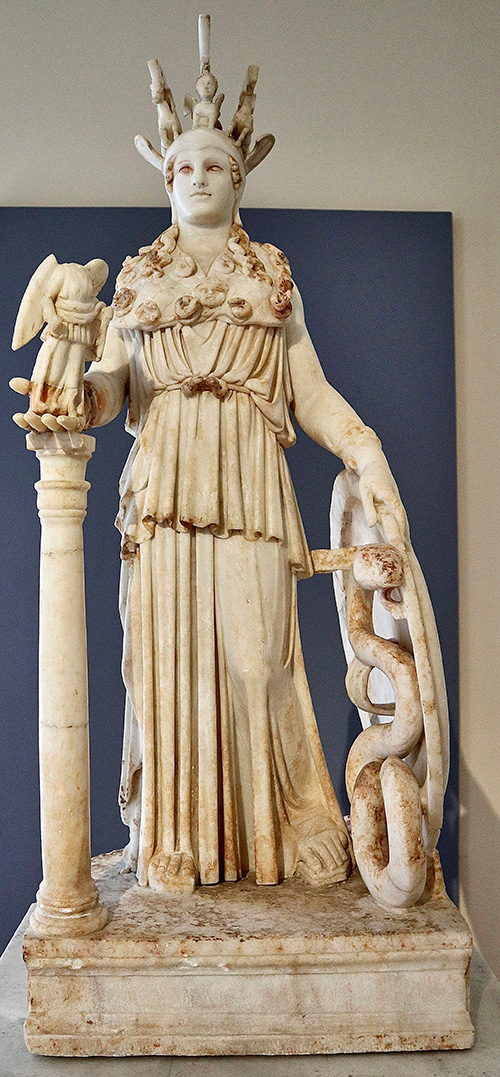
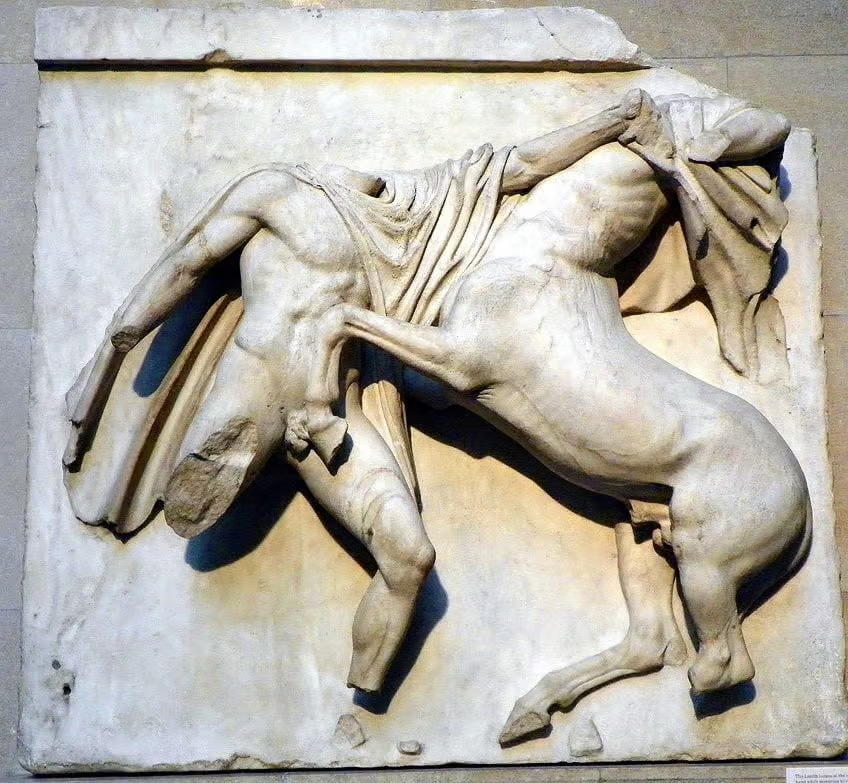
Viewing: Greek Sculpture:

  • Athena Parthenos, ~440BCE. Attributed to Phidias, a gigantic figure of the Goddess erected in the Athenian Parthenon to the city’s tutelary deity. Now destroyed, the photo shows a 200CE copy made at roughly 1/12 scale.
  • Lapith fighting a Centaur, ~446BCE. A metope created in the workshop of Phidias for the Athenian Parthenon.
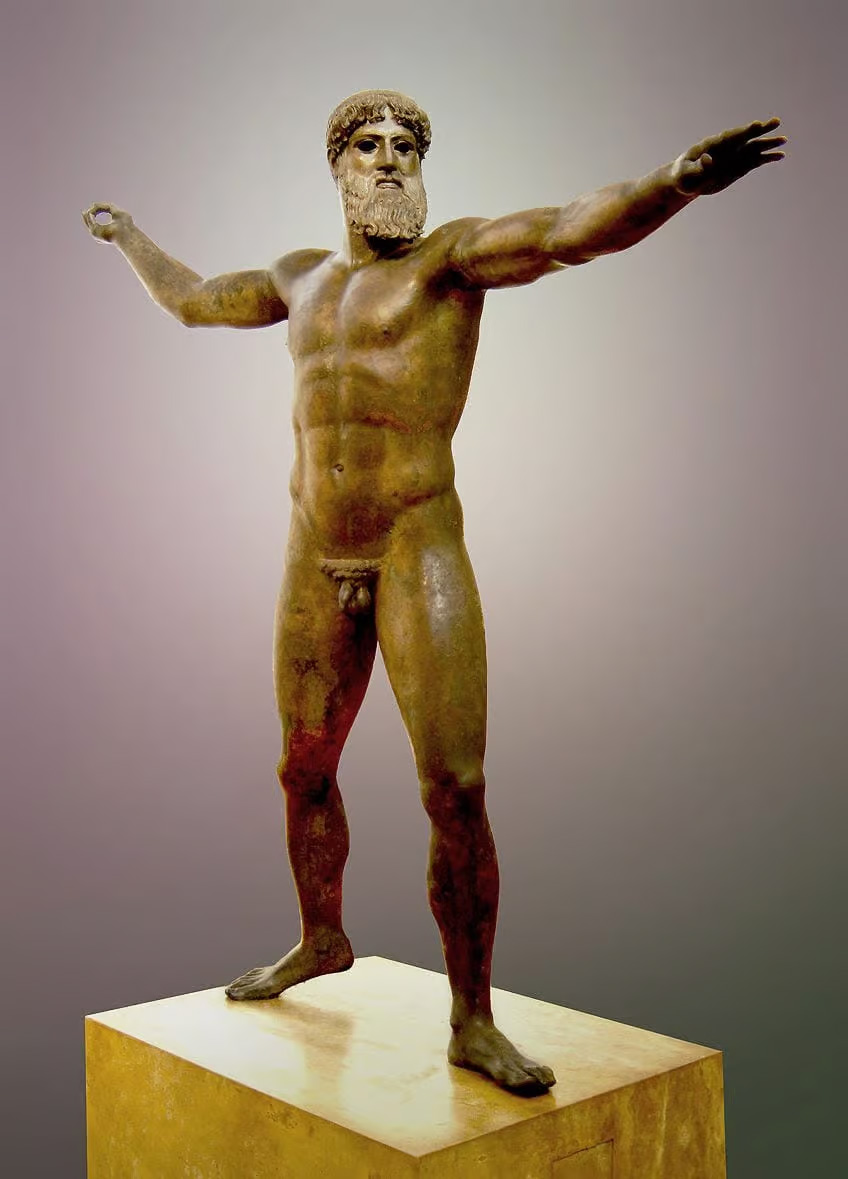
  • The Artemision Bronze, 470-400 BCE. Likely a sculpture of Zeus or Poseidon, found in 1926 in a second-century BCE shipwreck.
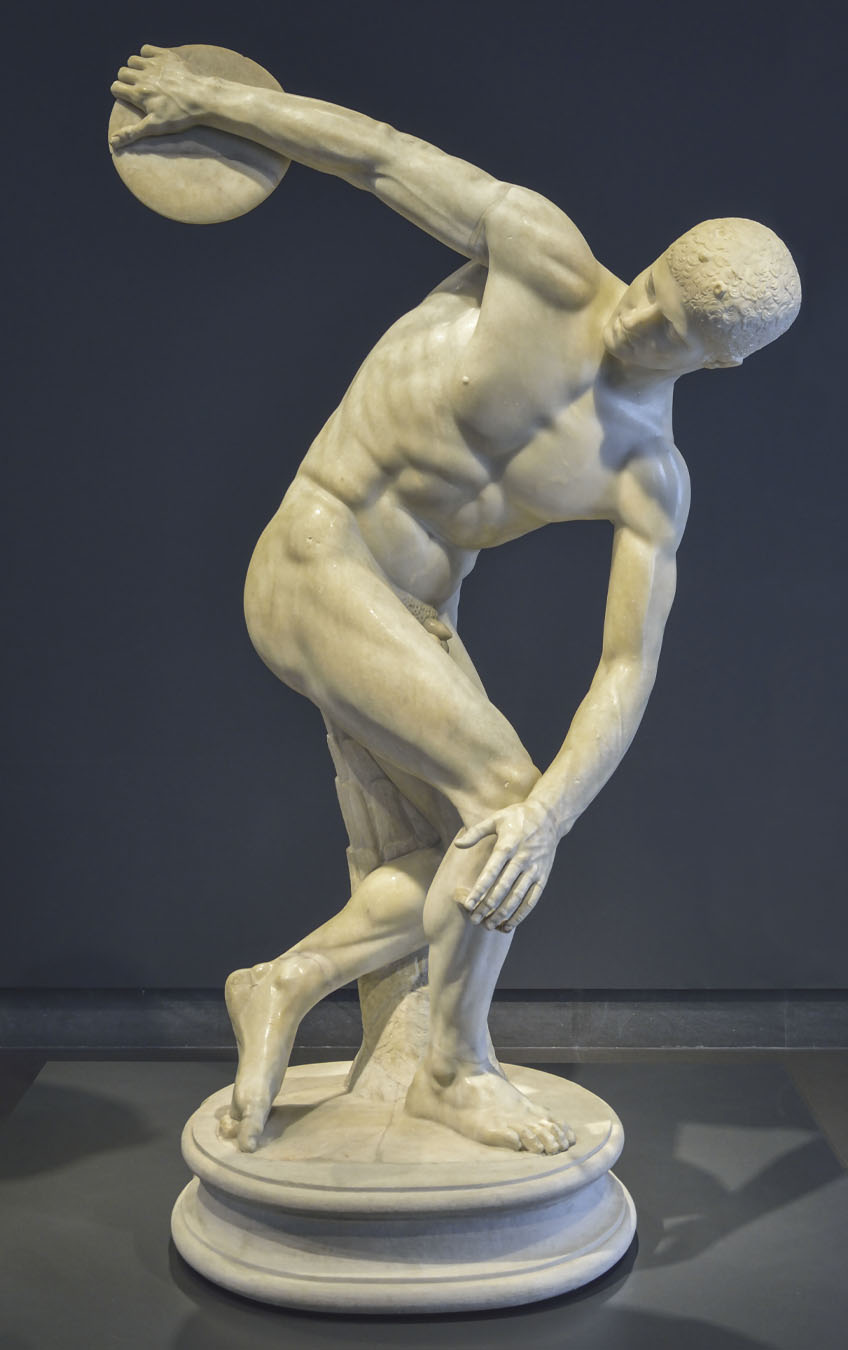
  • Discobolos, ~450BCE. Attributed to Myron, a masterfully kinetic work in bronze. Now lost, this full-size marble copy dates to the Roman era (~200CE).
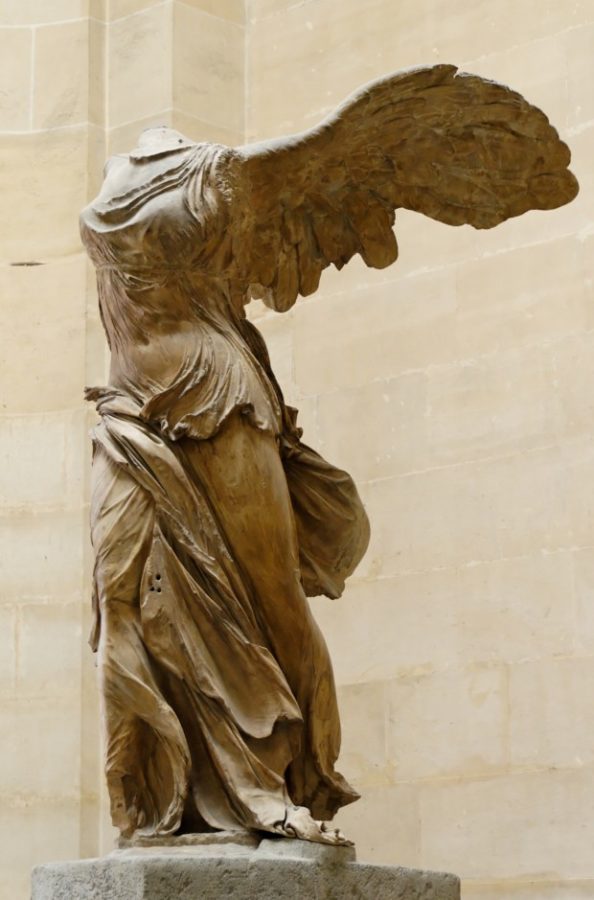
  • Winged Victory of Samothrace, ~190 BCE. Also known as the Nike of Samothrace, an 18 foot votive offering (i.e. placed in the sanctuary as an act of devotion, presumably in celebration of a major victory in war).
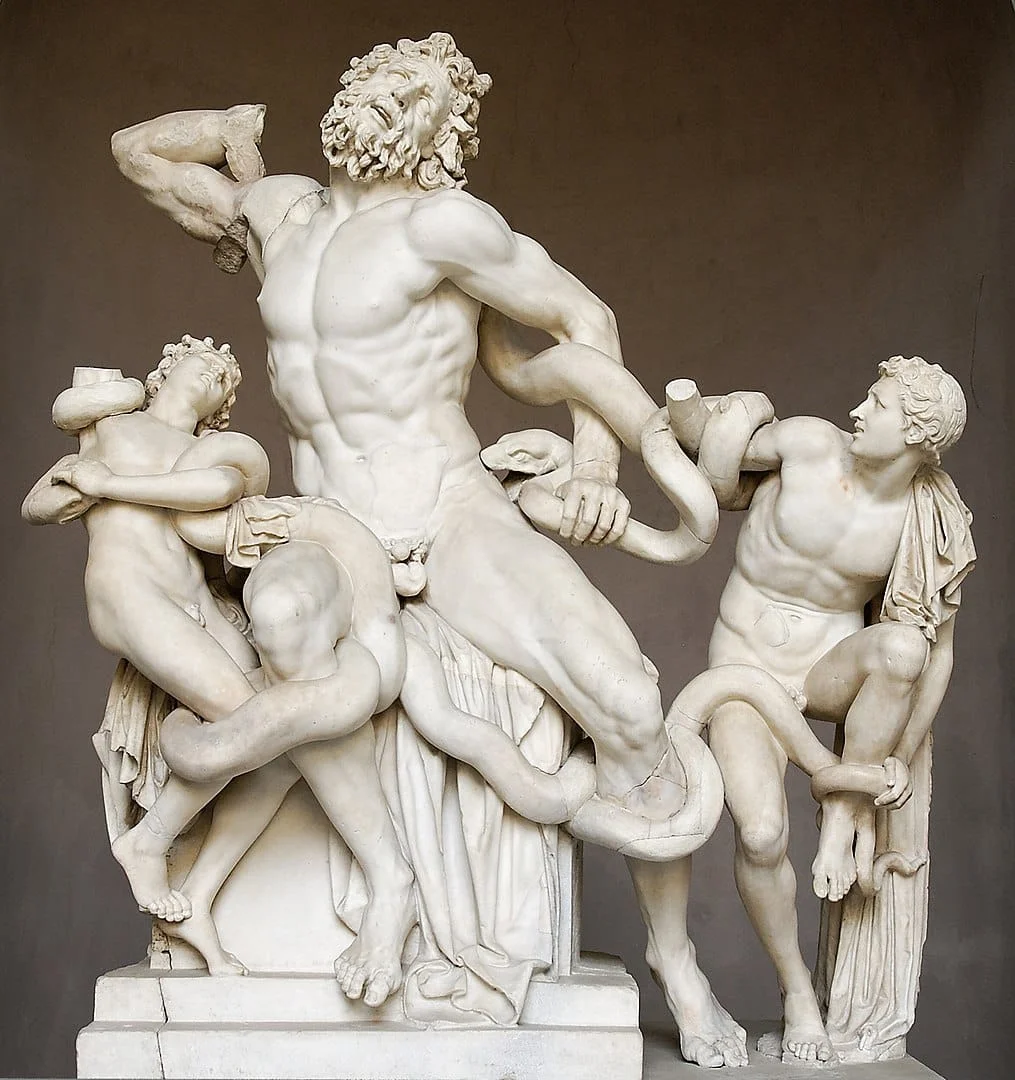
  • Laocoon and his sons, 27BCE-68CE. Attributed by the ancient writer Pliny to three sculptors from the Greek island of Rhodes.

Reading: Euripides, Medea, pp 44-77.

Writing: Respond to ONE of the following prompts. Keep your response short, posting as a reply under the appropriate heading in the comments section:

  1. Choose two of the sculptures and point out something they share in common—or a crucial contrast. Be sure to cite visual details.
  2. Euripedes’ play climaxes in the heroine’s almost unthinkable act of vengeance. Why does she do it? Or is her unthinkable act also inexplicable? In answering, be sure to quote a key line.
  3. What do you think of the Chorus in this play? In explaining your emotional reaction, point to a key line or moment.

Class 5.1

Classical Poets on Love

Today we read a series of ancient poets on the topic of love and desire. Trigger Warning: both Hesiod and Ovid tell stories of sexual coercion.

Reading: Hesiod’s lyric poetry (~700 BCE) served, alongside Homeric epic, as the foundation of Ancient Greek culture. His account of creation foregrounds Eros (desire) as one of the fundamental drives in nature. (Hesiod-Theogony.pdf)

Reading: Sappho (~600 BCE) was celebrated in antiquity as the “tenth muse” because of the beauty of her lyric poetry. While few of her poems survive in full, we have an abundance of fragments, due to the frequency with which later writers quoted her. What’s puzzling is the cultural context in which her lyrics were performed, given the social strictures on women in Ancient Greece. Most scholars today believe she held an officially sanctioned position of some kind, whether as priestess of Aphrodite, supervisor of girls’ ritual education, or leader of a chorus of women dedicated to the Muses. (Sappho.pdf)

Reading: Ovid was one of the great Roman poets, whereas Hesiod and Sappho were both Greek. Born 43 BCE, he was banished to the Roman Empire’s far East because his voluptuous verse ran afoul of the aging emperor’s moralism. His Metamorphoses, published from exile in 8 CE, reworks Greek myth to present the world’s history as a seemingly endless, desire-driven sequence of changes. We are reading the story of one such metamorphosis, Apollo and Daphne. (Ovid Apollo Daphne.pdf)

Writing: Respond to ONE of the following prompts. Keep your response short, posting as a reply under the appropriate heading in the comments section:

  1. Hesiod’s creation invites comparison to the Enuma Elish. Point to something that the two stories have in common—or something that makes them distinct.
  2. Sappho is famous for presenting the first-person experience of desire. Quote a telling line or phrase and comment on the emotional experience it conveys.
  3. Aestheticizing violence: point to and discuss a moment in Hesiod or Ovid where beauty is mixed with or in proximity to violence. If you can, give a 1-sentence paraphrase of what the artist/author seems to be saying about the relationship between violence and beauty—or possibly art.

Further Reading: For those interested in the scholarly puzzle of Sappho, here are two scholarly pieces:

  • The introductory essay on Sappho in the Norton Anthology of World Literature: (link)
  • Claude Calame scholarly paper debating Sappho’s social group or institution: (link)
Lecture 5

The Civic Function of Greek Theater

Reading: Jennifer Wallace on the cultural development of Greek tragedy (Wallace.pdf—on Blackboard)

Reading: Euripides, Medea, pp 5-44 (roughly the play’s first half, ending with Aegeus’ exit from the stage).

Writing: Respond to ONE of the following prompts. Keep your response short, posting as a reply under the appropriate heading in the comments section:

  1. The play opens with a conversation between two servants, the Nurse and the Tutor, a conversation which serves to bring the audience up to speed with recent events in Medea’s life. But beyond mere plot summary, their conversation can be mined for insight into class dynamics. From the words these characters use in speaking of their master and mistress, how do these lower-class characters feel toward their social “betters”? Do the Nurse and Tutor express similar attitudes, or do their differ?
  2. The Chorus in a Greek Tragedy often serves to voice the hopes and fears of ordinary citizens, witnesses to actions undertaken by heroes and by politicians that will make or break the city’s fortunes. Taking this generalization as your starting point, point to a moment in Medea that allows you to characterize the Chorus in this particular play. Does this Chorus bear out my generalization, or does it stand as an exception to the general rule?
  3. In quick succession, Medea meets with King Creon and then her estranged husband Jason. Pointing to a key moment from one of these exchanges, what do we learn about her character—or perhaps about the cultural power imbalance she faces as a woman and an alien?