Due Feb 18
Greek Sculpture | Medea, part 2
Reading: Greek Sculpture, Strickland 12-13.
Viewing: Greek Sculpture:
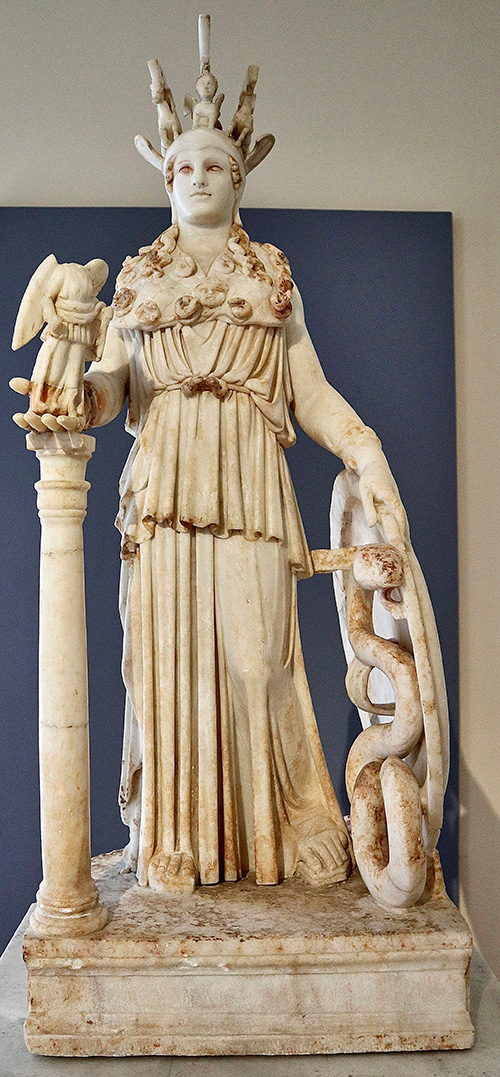
- Athena Parthenos, ~440BCE. Attributed to Phidias, a gigantic figure of the Goddess erected in the Athenian Parthenon to the city’s tutelary deity. Now destroyed, the photo shows a 200CE copy made at roughly 1/12 scale.
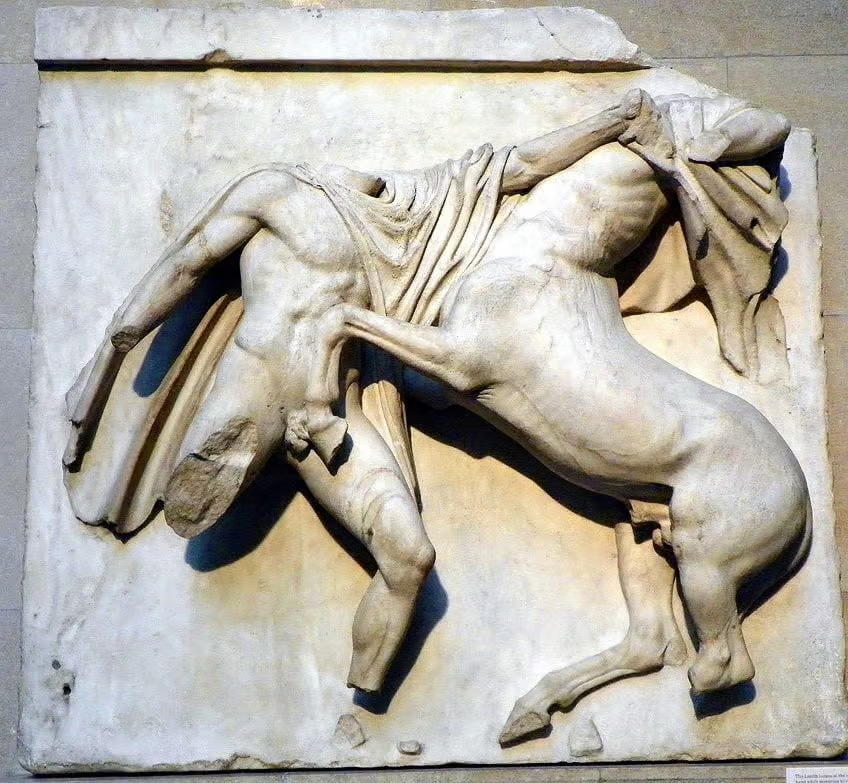
- Lapith fighting a Centaur, ~446BCE. A metope created in the workshop of Phidias for the Athenian Parthenon.
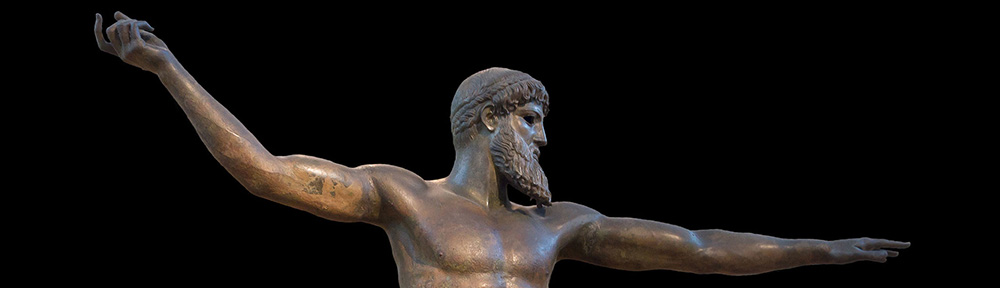
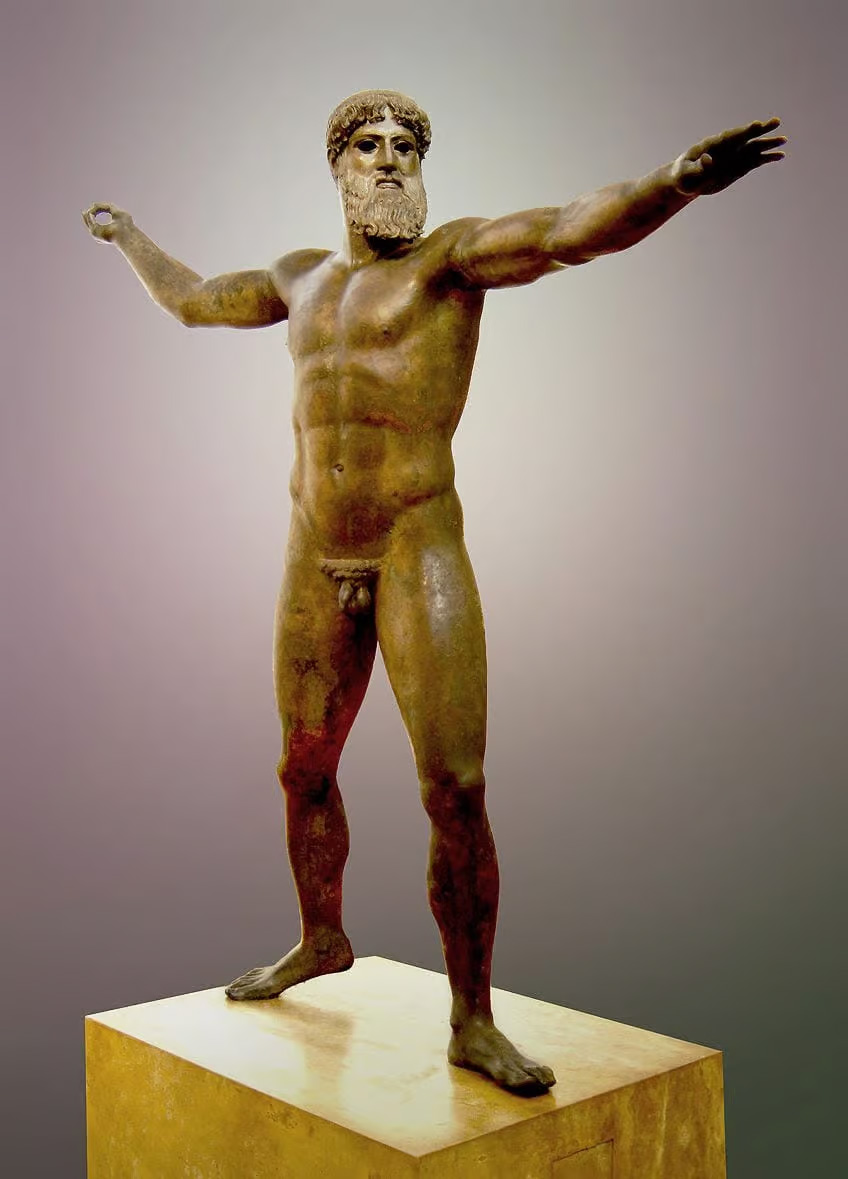
- The Artemision Bronze, 470-400 BCE. Likely a sculpture of Zeus or Poseidon, found in 1926 in a second-century BCE shipwreck.
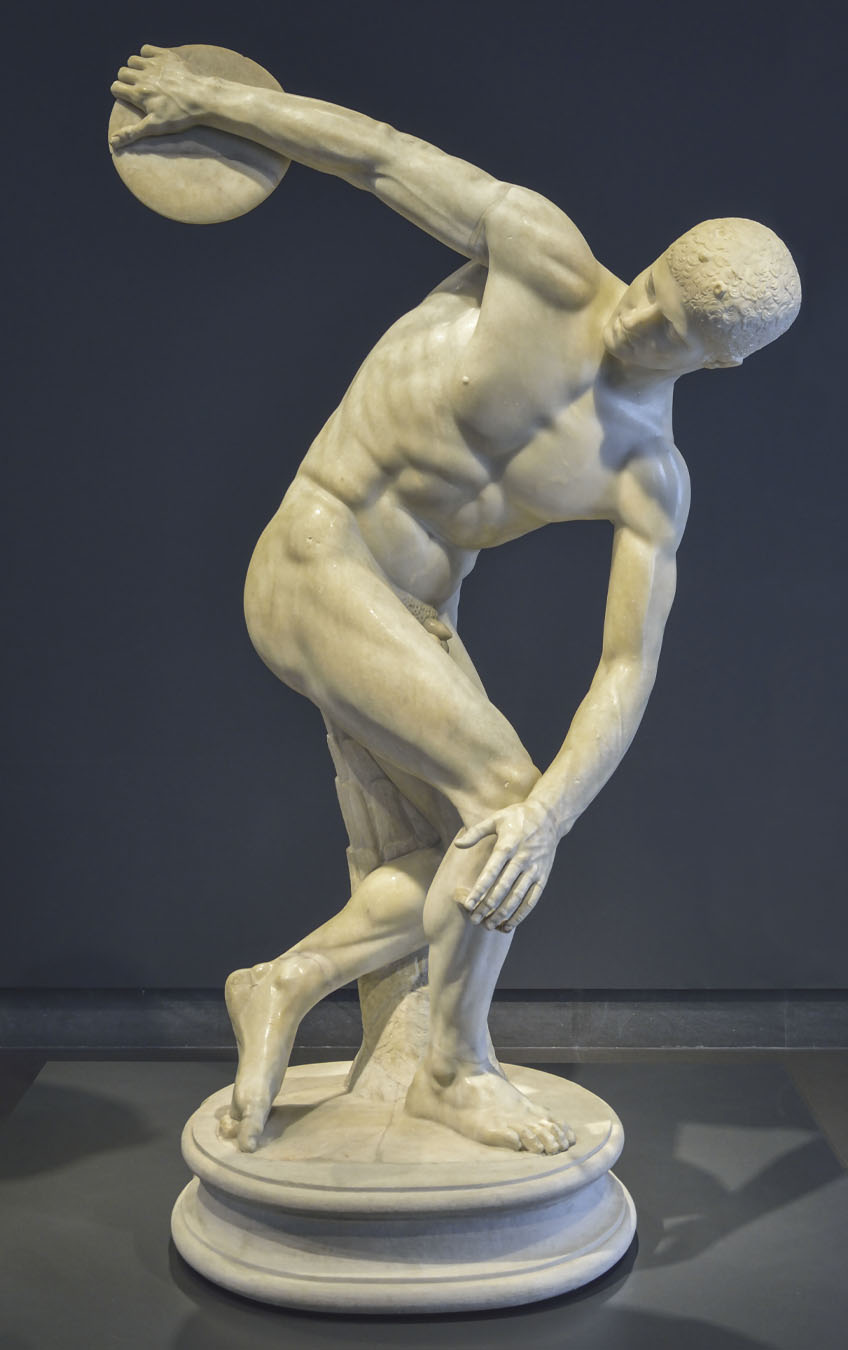
- Discobolos, ~450BCE. Attributed to Myron, a masterfully kinetic work in bronze. Now lost, this full-size marble copy dates to the Roman era (~200CE).
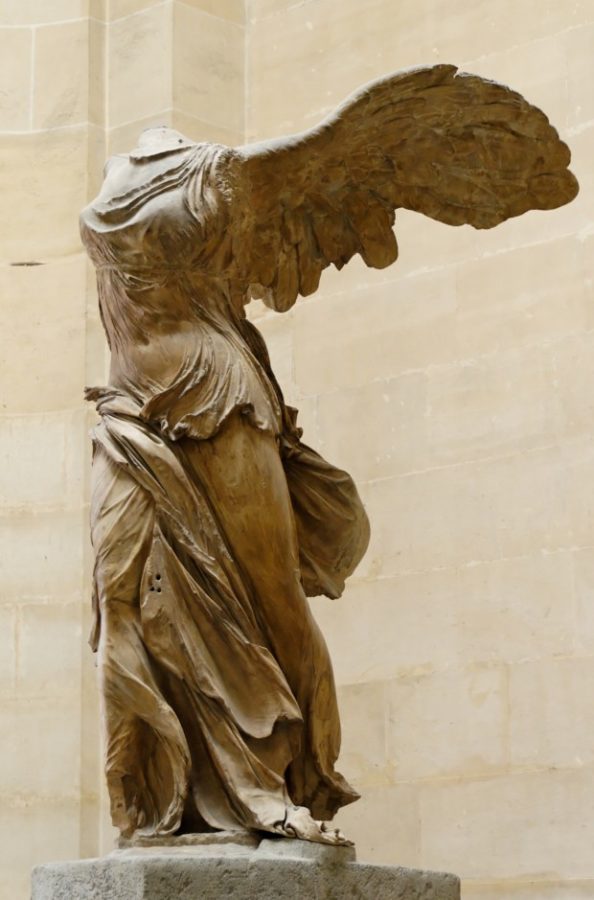
- Winged Victory of Samothrace, ~190 BCE. Also known as the Nike of Samothrace, an 18 foot votive offering (i.e. placed in the sanctuary as an act of devotion, presumably in celebration of a major victory in war).
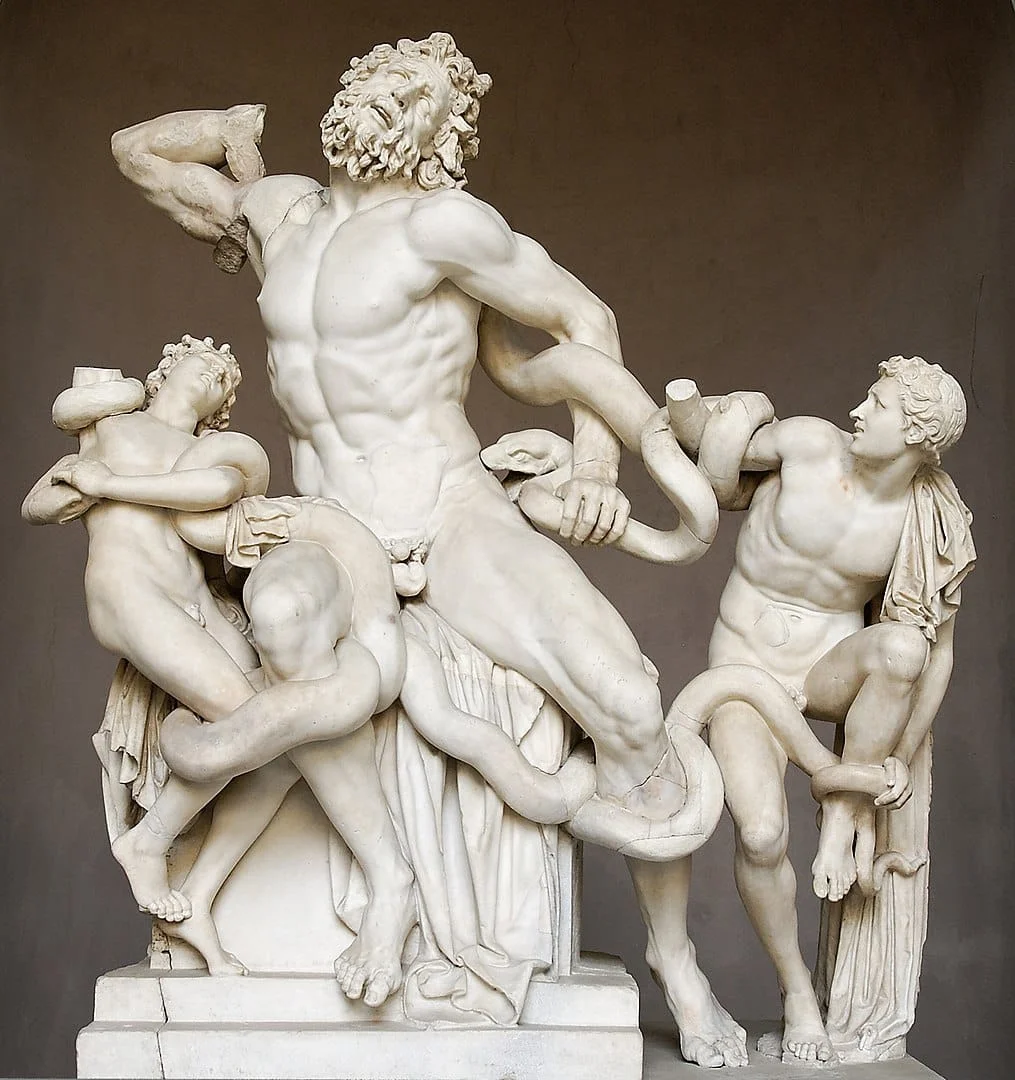
- Laocoon and his sons, 27BCE-68CE. Attributed by the ancient writer Pliny to three sculptors from the Greek island of Rhodes.
Reading: Euripides, Medea, pp 44-77.
Writing: Respond to ONE of the following prompts. Keep your response short, posting as a reply under the appropriate heading in the comments section:
- Choose two of the sculptures and point out something they share in common—or a crucial contrast. Be sure to cite visual details.
- Euripedes’ play climaxes in the heroine’s almost unthinkable act of vengeance. Why does she do it? Or is her unthinkable act also inexplicable? In answering, be sure to quote a key line.
- What do you think of the Chorus in this play? In explaining your emotional reaction, point to a key line or moment.
Comparative Analysis of Two Sculptures
⤹Click the reply button just below.
Two statues that I found to have something in common are statue 2 and statue 3. I noticed that both statues are fully naked, and both appear to be athletic and muscular. They appear naked to show the idealization of the human form.
The two statues that stood out to me were Discobolos and Laocoon and his sons. These stood out to me because they both focus on intense physical action. Each work to me showed the human anatomy and the beauty standards set in place by ancient Greece.
Two statues I found to have something in common are the Artemisian Bronze and also Discobolos. Both statues depict their individual subjects in an athletic stance, one seeming to hold a javelin or a spear of sorts that is missing and the other in an athletic stance holding a tool of sorts. Due to the athletic nature and depiction of both statues, you can assume that they are meant to be respected due to their power and ability.
Zaid, I like how you pointed out the fact that the two statues, the Artemisian Bronze and the Discobolos share the similarity in their athletic, almost victorious stances. With myself being familiar that the Greeks participated in many athletic events and pride themselves on high physical capability, I agree with your statement that the statues are meant to show respect for power and ability that influential individuals held.
The two that share aspects in common are 2 and 3. Both show a man in full display, with no garments seemingly perform some sort of activity or physical task. They both are in good physical state and have an item in one of their hands. Conversely though, one seems to be made of a bronze or darker material then the glossier stone one.
The statues of Athena Parthenos and Laocoon and his sons both depict snakes. In the statue of Athena, the snake is tame and sitting at her side, while in the statue of Laocoon, the snake is attempting to strangle the humans.
The 3rd and 4th photo were shockingly similar visually. As I don’t know the contextualization, I noticed how they both show masculinity through carved muscles. It’s almost like the artist wanted to show a natural state physique of what was common back then. The pieces of art both have visible male features and visible, vibrant muscles—through the way they are standing.
Explaining Medea’s Bloody Act
⤹Click the reply button just below.
While Medea’s act is extreme, it does have a purpose backed by legible motivations. Arguably the biggest reason for killing her sons is to make it so that Jason has no heirs to the throne, combining this with the fact that his new wife is now dead, it essentially destroys Jason’s future. After all, Jason’s decision to marry the Corinthian princess was a calculated move for power and social mobility and his sons, or the ability to procreate with his new wife, represent the continuation of that ambition. Additionally, Medea’s worldview is shaped by a code of honor so her motivations run deeper than just pure strategy. Medea was a woman who gave everything up to choose Jason: she betrayed her father, made enemies of those she loved, saved him on the Argo, and bore his sons (Medea lines 505-517). As a result, Jason’s betrayal isn’t jut heartbreak but a destruction of Medea’s identity and self-worth, making the motivations for her vengeance much more coherent.
Meditations on the Chorus in Medea
⤹Click the reply button just below.
I think the Chorus is really interesting because they represent the “normal” people watching a disaster happen. At first, they feel sorry for Medea because she is a woman being treated poorly by her husband. But as she gets more violent, they get terrified and try to beg her to stop for the sake of the children. My reaction was a mix of frustration and pity, especially when they finally try to decide if they should enter the house to save the kids but realize it is too late. It shows that even though they are on her side as women, Medea’s revenge is too extreme for them to truly support.